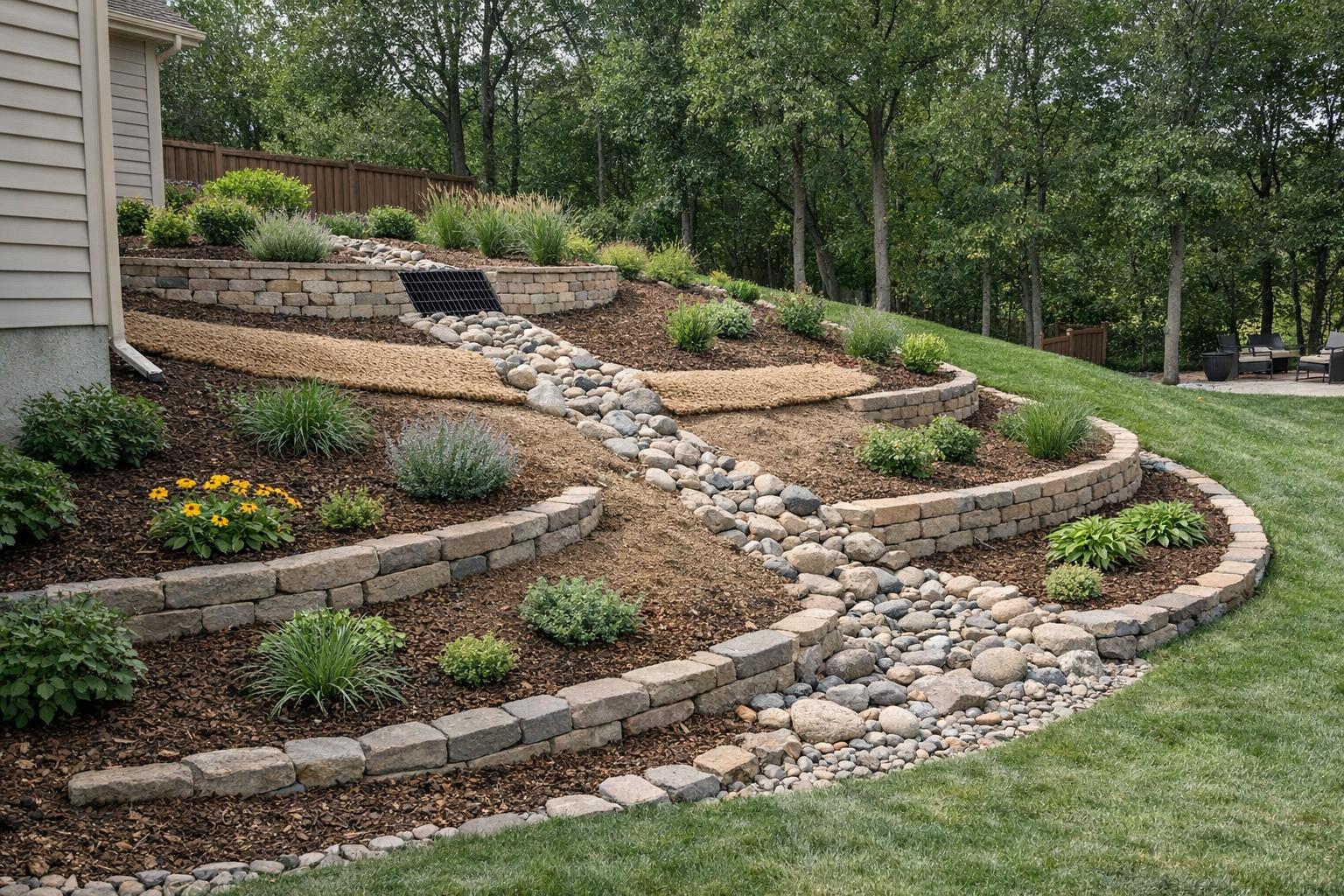
Erosion control projects can be hard to time because the visible damage is only part of the problem. Runoff patterns, slope conditions, drainage corrections, access, and stabilization methods all affect the schedule. A localized slope treatment may move fairly quickly. A broader runoff problem tied to drainage and grading can take longer and may unfold in stages.
Homeowners usually get the clearest timeline when the contractor explains diagnosis, stabilization work, and follow-up expectations as separate parts of the job.

Diagnosis and access often shape the early schedule
Before materials go in, the contractor may need to confirm runoff sources, evaluate the slope, plan site access, and decide whether drainage changes or regrading are part of the solution. Those early decisions often determine the rest of the timeline.

Stabilization may include several phases
Drainage features, soil preparation, matting, rock, planting, retaining elements, and cleanup may not all happen at once. Some projects also need time for planted material or stabilized surfaces to settle in before the homeowner sees the full result.
Compare runoff complexity and treatment method together
The erosion control guide, erosion control quote guide, and regrading signs guide help homeowners judge these schedules more clearly.
Leave a Reply