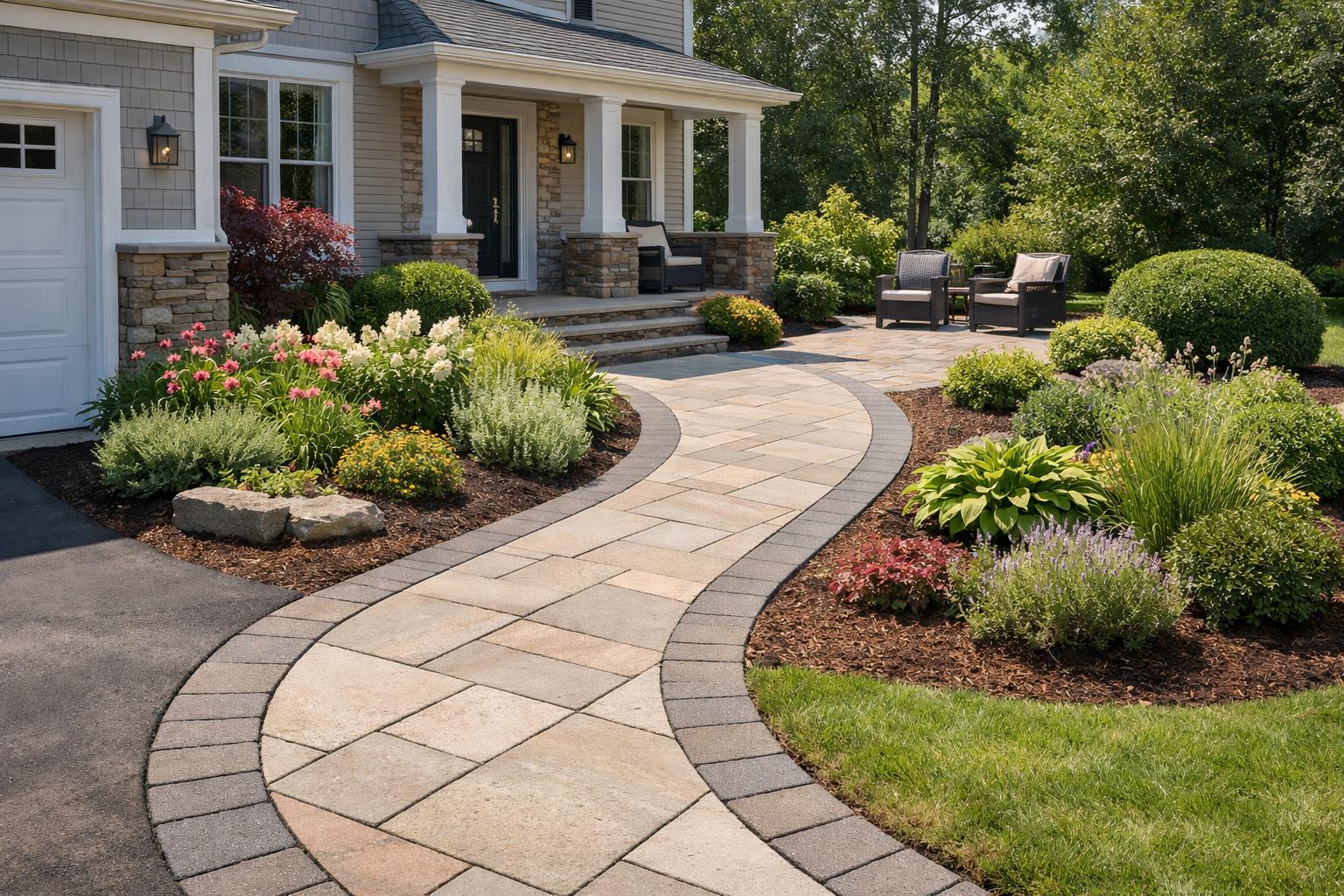
Small front yards often have less room for material mistakes because every surface is more visible. A material mix that feels layered and interesting in a larger yard can feel crowded or visually noisy in a smaller entry zone. That is why front-yard material choices often work best when they simplify circulation, support curb appeal, and avoid competing with the architecture of the house.
In a small front yard, restraint is often more effective than trying to showcase too many finishes at once.

Scale and repetition matter
Repeating a small number of compatible materials often makes a compact front yard feel more finished. Too many textures, colors, and edge styles can make the space feel busy even when each individual product is attractive.
Think about entry flow first
Walkway material, planting-bed definition, edging, and any accent surfaces should all support the way someone approaches the front door. Materials that interrupt that flow or create unnecessary visual breaks can make a small yard feel less coherent.
Use materials to support curb appeal, not compete with it
The front-yard landscaping guide, patio and walkway materials guide, and hardscape matching guide all help clarify these smaller-space decisions.
Leave a Reply