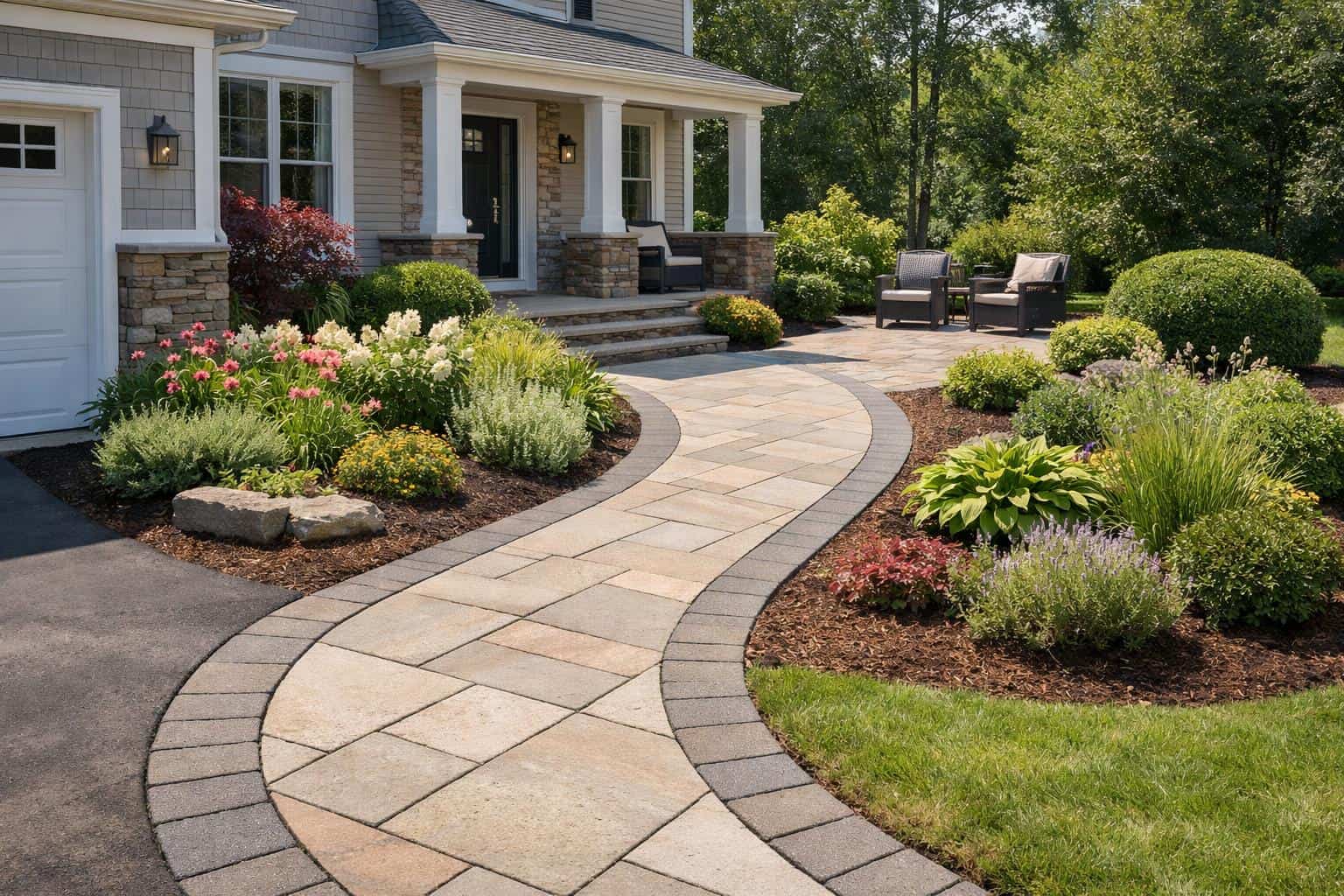
The shape of a walkway changes more than style. It affects travel flow, how formal the yard feels, and how the route relates to the home and landscape.

When straight walkways often work better
- The route is direct and formal, such as a main front entry path.
- The home architecture benefits from a cleaner, more structured approach.
- You want a simpler, more efficient travel line.
When curved walkways often work better
- The path needs to move around planting, grade, or outdoor-living zones.
- A softer garden feel is part of the design goal.
- You want the walkway to reveal the yard gradually instead of in one direct line.
How to choose the right geometry
- Let the destination and site conditions decide the route first.
- Avoid adding curves just to make the path seem more ‘designed.’
- Make sure the shape still feels natural for how people actually walk.
Bottom line
The best walkway shape is the one that fits both the movement pattern and the character of the yard, not just the one that feels more decorative on paper.
For the broader overview, continue with Walkway and Pathway Installation Guide for Homeowners.
Leave a Reply