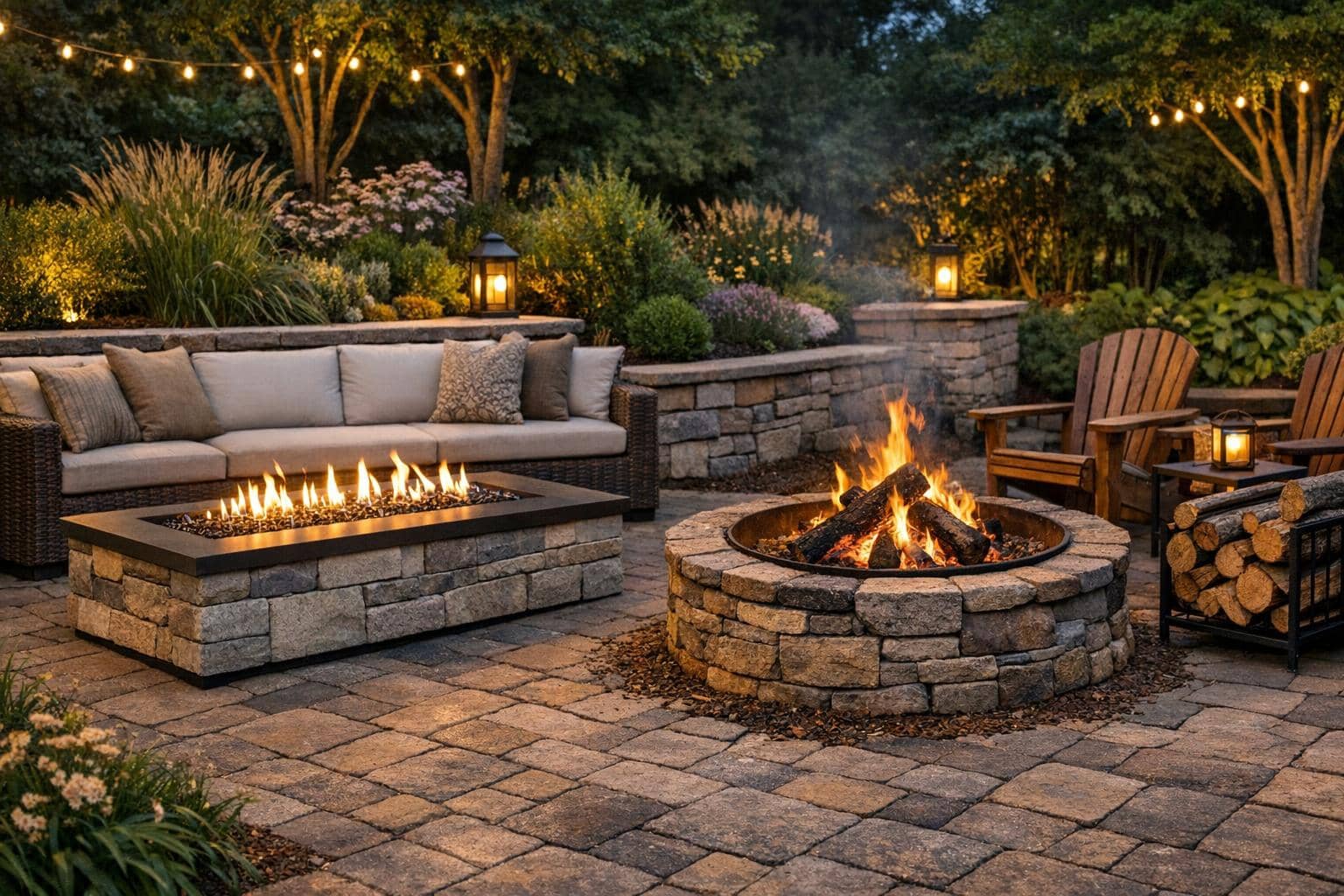
Gas and wood fire pits create very different cost patterns because one may need fuel-line work and controls while the other leans more on simpler build structure and fuel handling.

What can make gas cost more
- Gas-line routing, permits, ignition systems, and finish details.
- Coordination between hardscape and utility work.
- Premium burners and integrated controls.
What can make wood cost more
- Larger masonry builds, spark-control needs, and more robust surrounding clearances.
- Storage and cleanup expectations that influence the design.
- Site-specific code or setback issues.
How to compare the spend
- Look at installation plus how you plan to use the fire feature over time.
- Ask what code, fuel, and safety requirements apply on your property.
- Separate core function from premium finish and seating add-ons.
Bottom line
The lower-cost option depends on utility access, desired convenience, and how elaborate the fire-pit design is meant to be.
For the broader overview, continue with Fire Pit Gas vs Wood Guide for Homeowners.
Leave a Reply