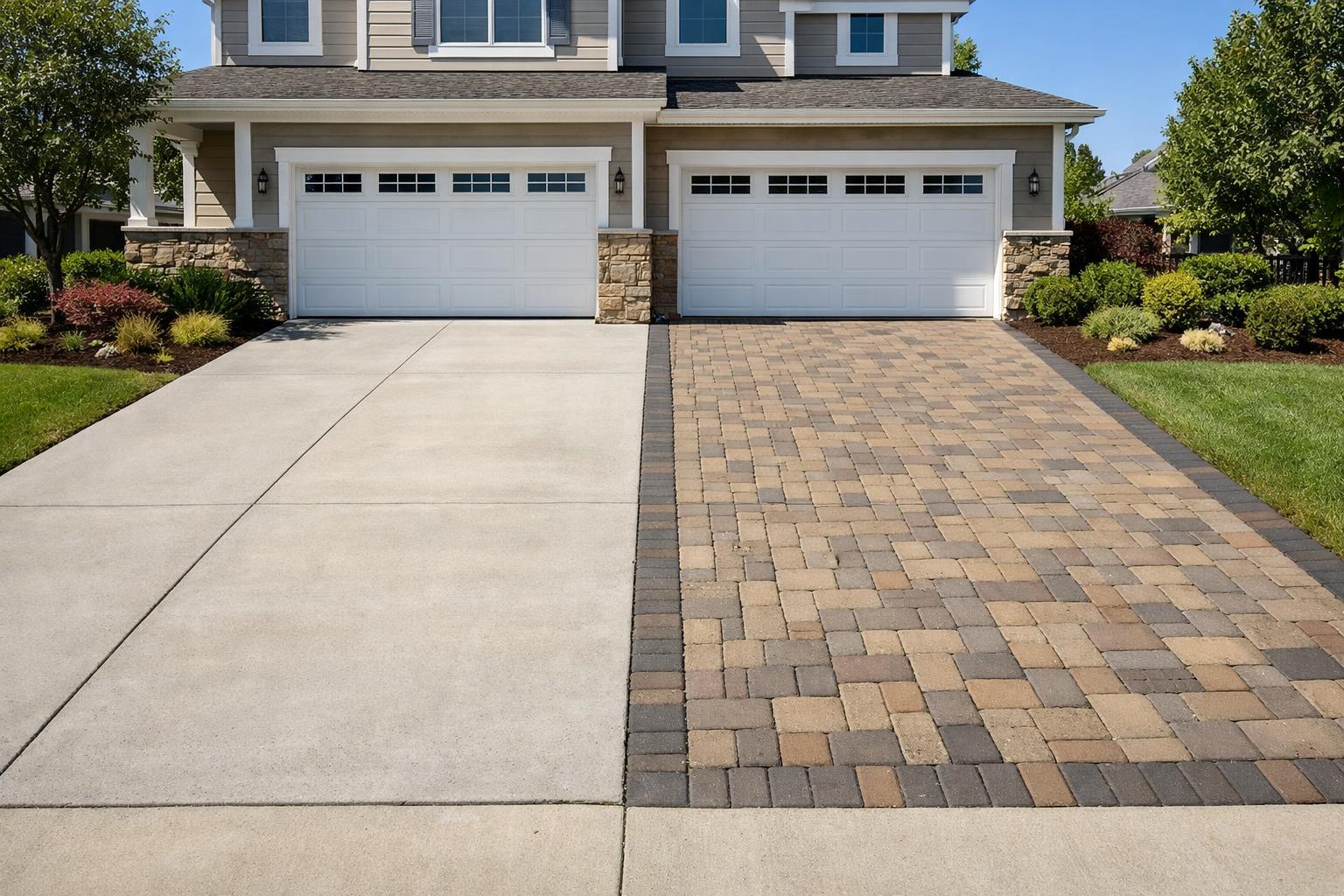
Adding new hardscape to an existing yard often creates a common homeowner question: should the new surface match the old one exactly, or should it coordinate without pretending to be the same? In most cases, the better result comes from aiming for visual harmony rather than a forced near-match that ends up drawing more attention to the difference.
That is especially true when the older surface has weathered, faded, or is no longer available in the same product line.

Look at tone, texture, and scale first
Before comparing brand names or color labels, homeowners should compare the dominant tone of the existing surface, the texture, the size of the units, and how much variation shows across the area. Those features often matter more than a product name.
Transitions matter more than exact duplication
Border courses, edge detail, steps, and transition bands can make a mixed-material project feel intentional. In many cases, that works better than trying to disguise a newer surface as if it were installed at the same time as the original one.
Use larger references whenever possible
Sample boards are useful, but they rarely show how a material will read across a larger area. The paver colors and finishes guide and patio and walkway materials guide help homeowners think through those broader design decisions.
Leave a Reply