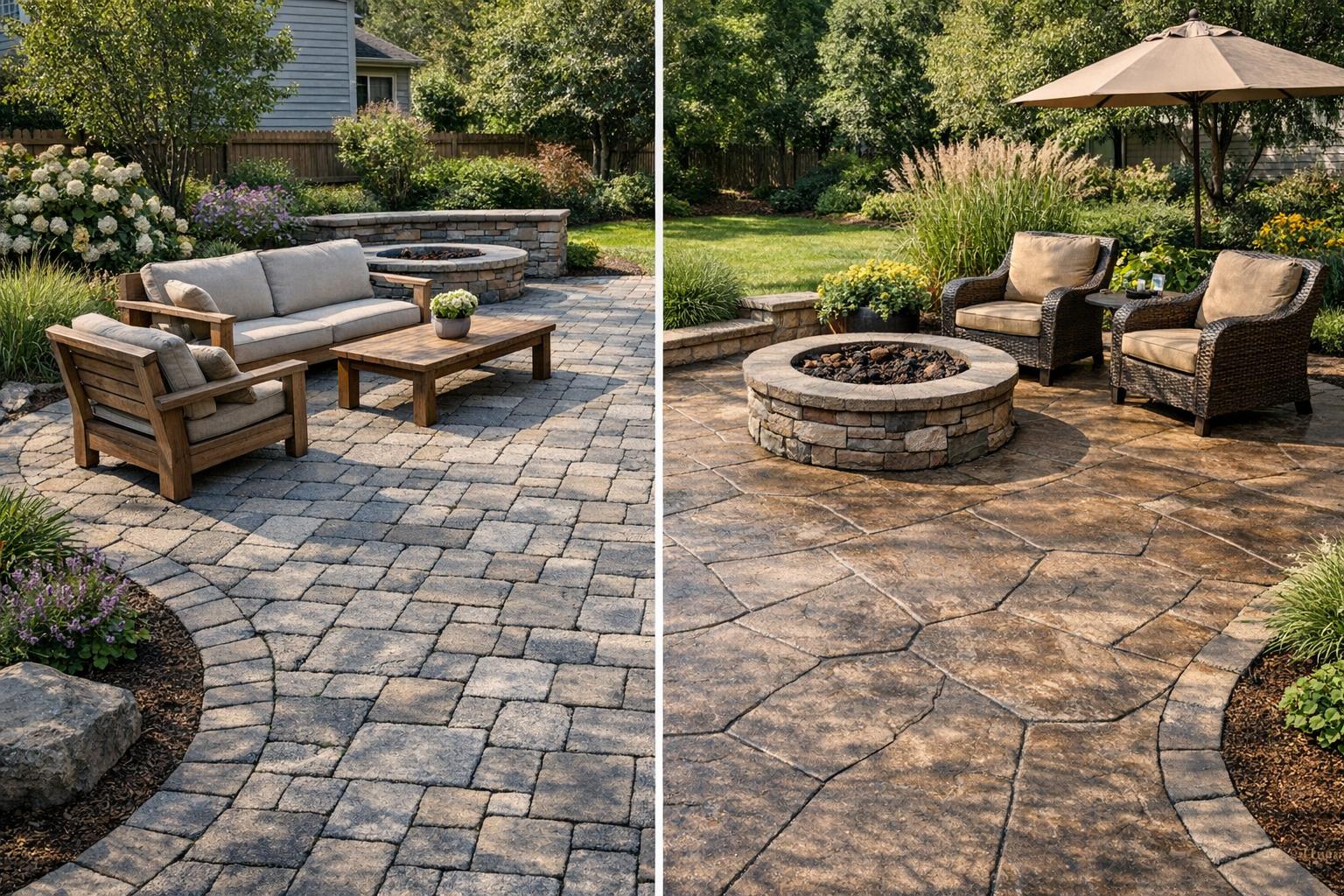
Landscaping materials do much more than change how a yard looks. They influence drainage, surface durability, weed pressure, maintenance needs, comfort underfoot, and how finished the property feels over time. That is why homeowners often get better results when they compare materials by function first and appearance second.
Some materials are best for structure and hard use. Others work better for planting beds, softer transitions, or low-water goals. The smartest choice is usually the one that fits the site conditions and the amount of upkeep the household can realistically support.

Common hardscape materials homeowners compare
Pavers, poured concrete, natural stone, gravel, decomposed granite, and decorative rock are some of the most common hardscape-related materials used in patios, walkways, driveways, and outdoor-living spaces. Each one has different strengths around cost, appearance, repairability, and surface feel.
Common softscape and ground-cover materials
Mulch, soil blends, compost, decorative rock, sod, seed, turf products, and plant material all play a different role in the landscape. Homeowners often think of these as cosmetic add-ons, but they directly affect moisture retention, weed suppression, root health, yard comfort, and long-term maintenance.
Think about material systems, not isolated items
Most landscaping projects work best when materials are selected together. A patio finish affects border detail. Ground-cover choices affect irrigation and maintenance. Soil and mulch choices affect planting performance. The more connected the materials are, the more finished the project tends to feel.
The guides on where to buy landscaping materials, what landscaping materials cost, and patio and walkway materials help homeowners move from general ideas into more practical decisions.
Leave a Reply