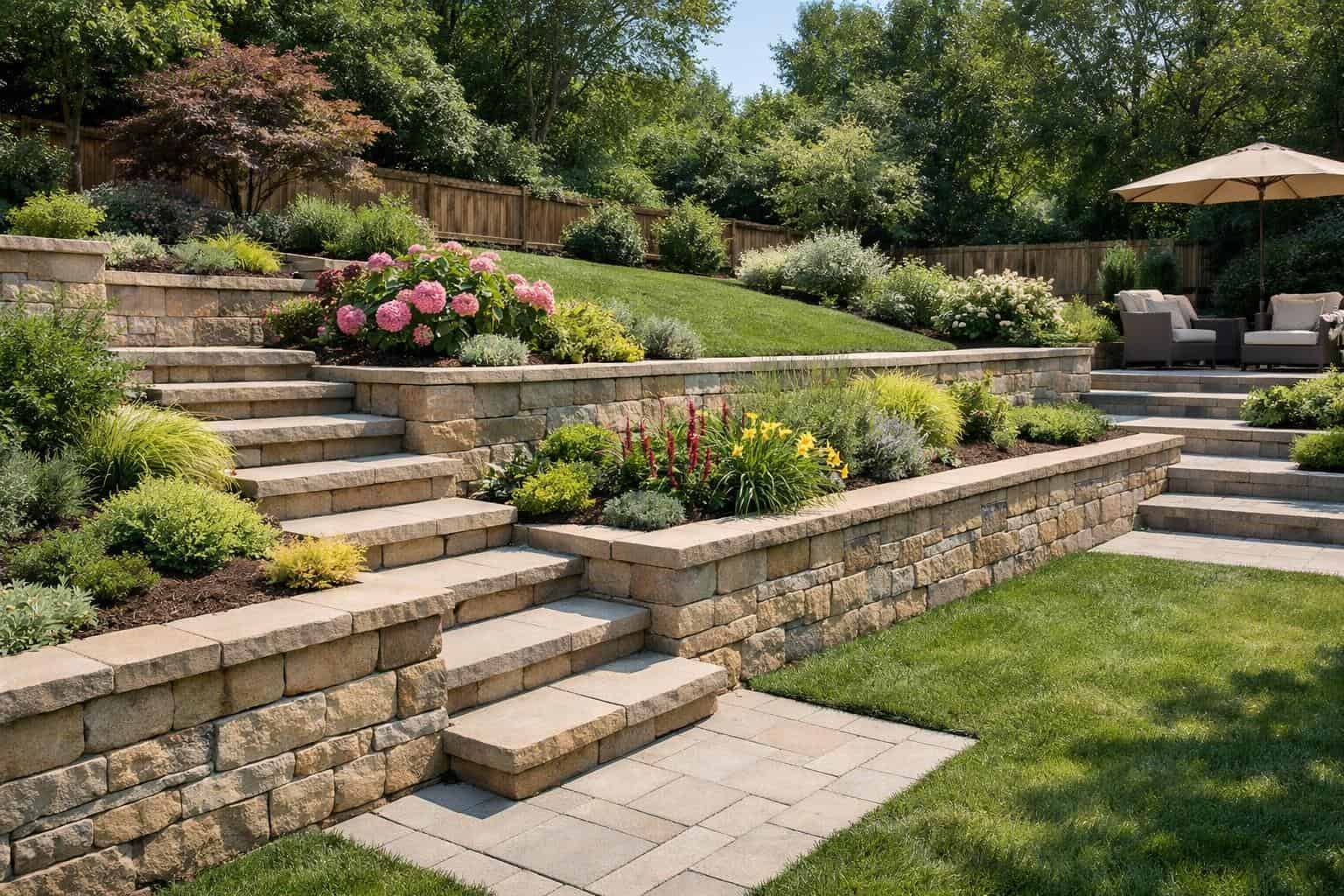
Retaining walls do not perform well when height and layout are guessed. The wall should follow the needs of the slope, drainage, and yard function, not just the line that seems easiest to build.

What height planning should respond to
- How much grade change the wall really needs to manage.
- What loads and drainage pressure the wall will handle.
- Whether one taller wall or multiple smaller terraces would make the site work better.
What layout planning should respond to
- How the wall shapes usable yard space and circulation.
- How it interacts with patios, paths, lawn, and planting areas.
- Where the wall needs to direct water instead of just hold soil.
What to avoid
- Running the wall in a line that creates awkward leftover yard space.
- Building to a visual line first and solving drainage later.
- Assuming a taller single wall is always the cleaner answer.
Bottom line
The best retaining-wall layout is the one that handles the grade while still improving how the yard functions around it.
For the broader overview, continue with Retaining Wall Guide for Homeowners.
Leave a Reply