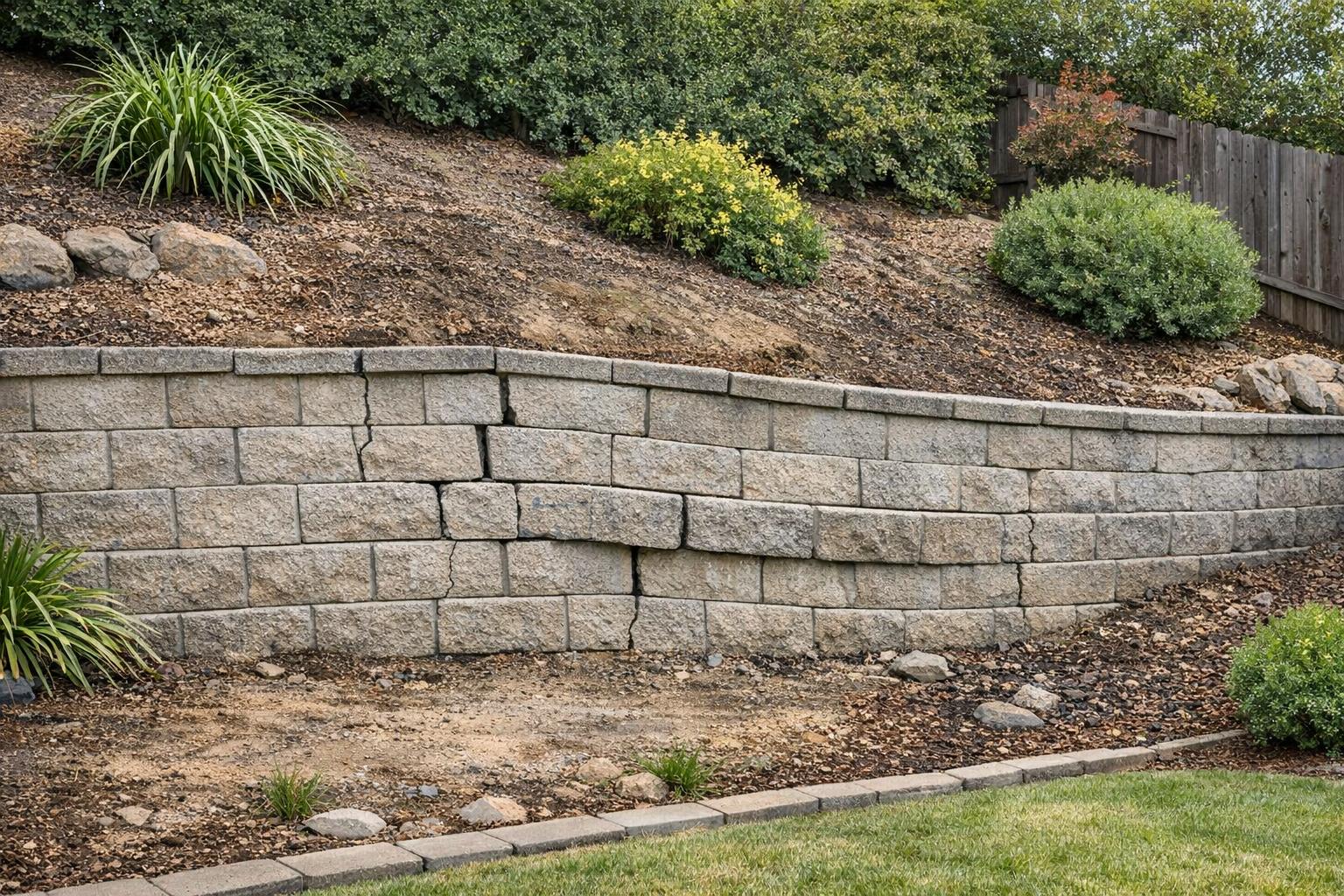
Retaining walls are built to manage soil pressure, grade change, and sometimes drainage, so even small signs of movement should be taken seriously. Homeowners may notice a wall leaning, cracking, bulging, or separating over time and assume it is only cosmetic. In many cases, those are early warnings that the wall is under stress or that water is creating pressure behind it.
The earlier these signs are recognized, the more options homeowners may have before the problem becomes more disruptive.
Common warning signs
Bulging sections, leaning, cracks, soil loss behind the wall, drainage stains, or separation between parts of the structure are all signs worth evaluating. Some walls also show trouble through the surrounding yard, such as pooling water, shifting grade, or planting that appears unstable near the wall line.
Why drainage often matters
Retaining wall problems are often tied to water. If pressure builds behind the wall because drainage is poor, the structure can begin to move even if the visible face still looks mostly intact. That is why homeowners often need to look at both the wall and the broader drainage pattern together.
The retaining wall guide, wall material comparison guide, and drainage guide all help frame what the next conversation should look like.
When to move from observation to action
If the wall is visibly changing, affecting nearby hardscape, or connected to water issues that are getting worse, it is time to move beyond observation and get the situation evaluated. Homeowners do not need to know the exact engineering cause first, but they do need to avoid assuming the problem will stay cosmetic on its own.
Leave a Reply