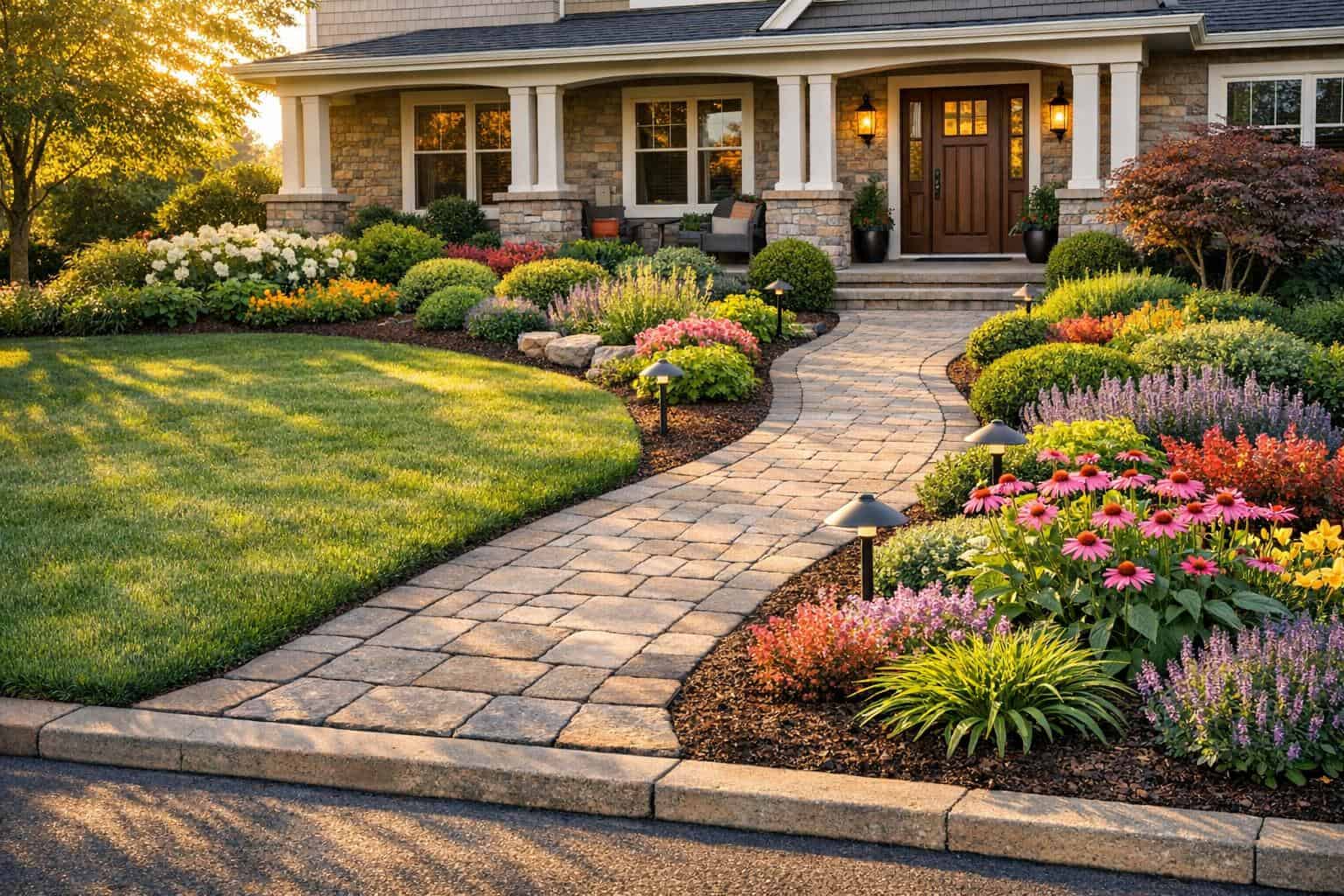
A small front yard needs more discipline than a large one. When the space is limited, every path, bed line, shrub, and material choice is more noticeable. That is why small front yards usually look best when the layout is simple, the planting is scaled correctly, and the entry sequence feels clear.

Prioritize the path and the front door
If people cannot immediately read how to get from the sidewalk or driveway to the front door, the yard will feel cluttered no matter how attractive the planting is. In tight spaces, the walkway should lead the composition. If your entry path needs work, use our Front Yard Landscaping Guide for Homeowners alongside the walkway guide to think through both design and circulation.
Use fewer larger moves instead of many tiny details
Small front yards often get overloaded with little edging changes, scattered flowers, or too many accent objects. A simpler bed shape, one specimen shrub or tree, repeated ground-level plantings, and a cleaner material palette usually feels stronger.
Keep plant size honest
Many small yards become maintenance problems because the original plant choices outgrow the space. Check mature size, not nursery size. You want room for the plants to fill in without swallowing windows, paths, or the entry stoop.
Use lighting and edging to make the yard feel finished
Because the square footage is limited, small front yards benefit from details that make the design look sharper rather than bigger. Clean edging, a defined mulch line, and a few well-placed lights can make a modest layout look much more intentional.
What homeowners should remember
Small front yard landscaping is usually not about fitting in more features. It is about removing confusion, simplifying the layout, and making the arrival experience feel polished the moment someone sees the house.
Leave a Reply