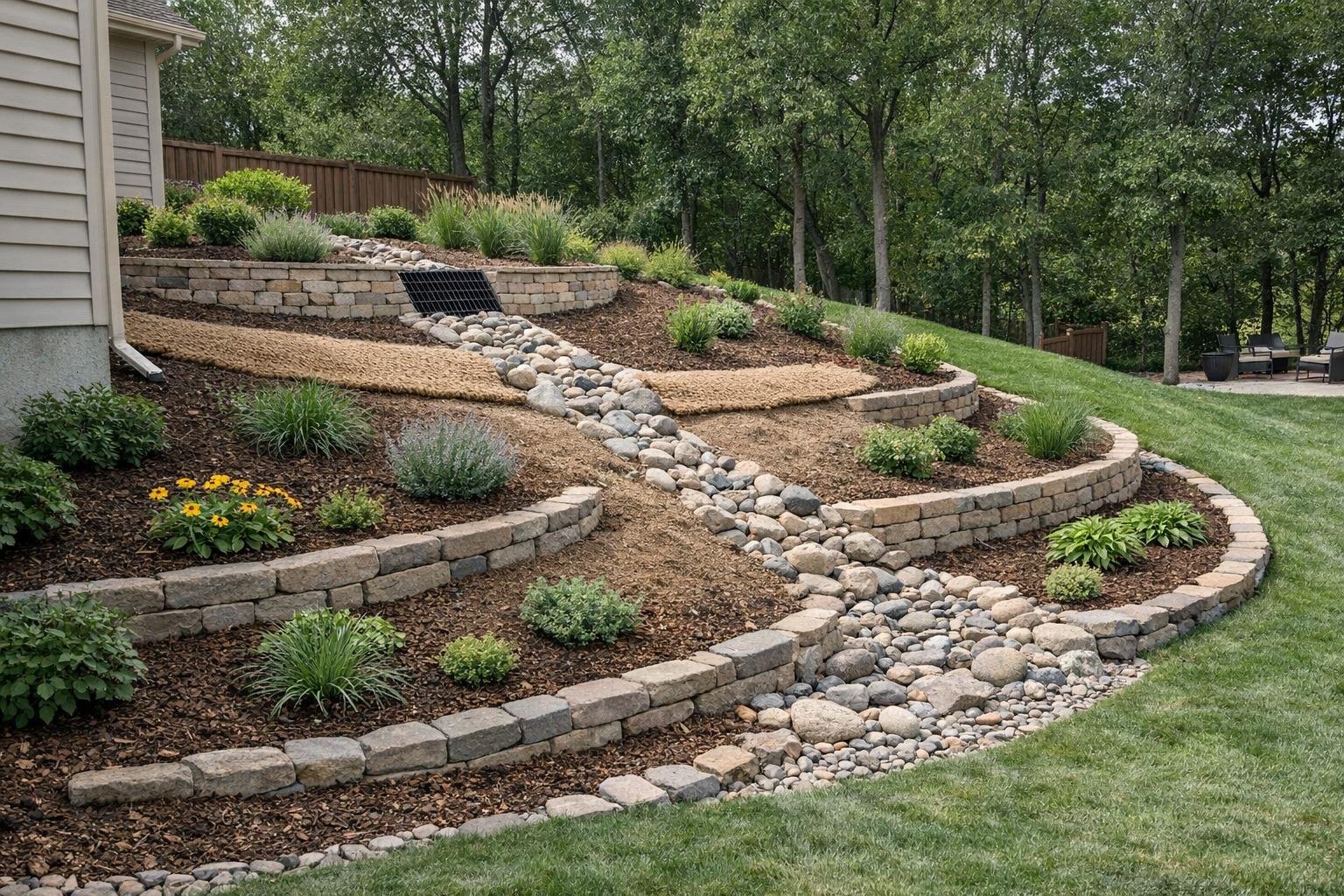
Erosion control projects can feel less visually satisfying at the start than homeowners expect because the crew is usually solving a slope or runoff problem before the site looks better. Access changes, soil movement, drainage work, stabilization materials, and planting may happen in separate phases. Some projects also need time after installation before the result looks fully settled.
Homeowners usually feel more confident in the process when they understand that early site work may look rough even when the project is moving correctly.

Diagnosis and setup often come before visible improvement
Crews may begin by confirming runoff patterns, opening access, protecting nearby areas, and preparing the slope before any final stabilization materials or planting go in. That can make the early project phase feel more technical than cosmetic.
Stabilization and follow-up may happen in stages
Drainage features, slope treatment, planting, and cleanup may not all happen on the same day. Some projects also need a short follow-up window for water movement, planted material, or surface conditions to settle in.
Compare what you see on-site to the treatment plan
The erosion control quote guide, erosion control timeline guide, and erosion control guide help homeowners connect site disruption to the actual treatment strategy.
Leave a Reply