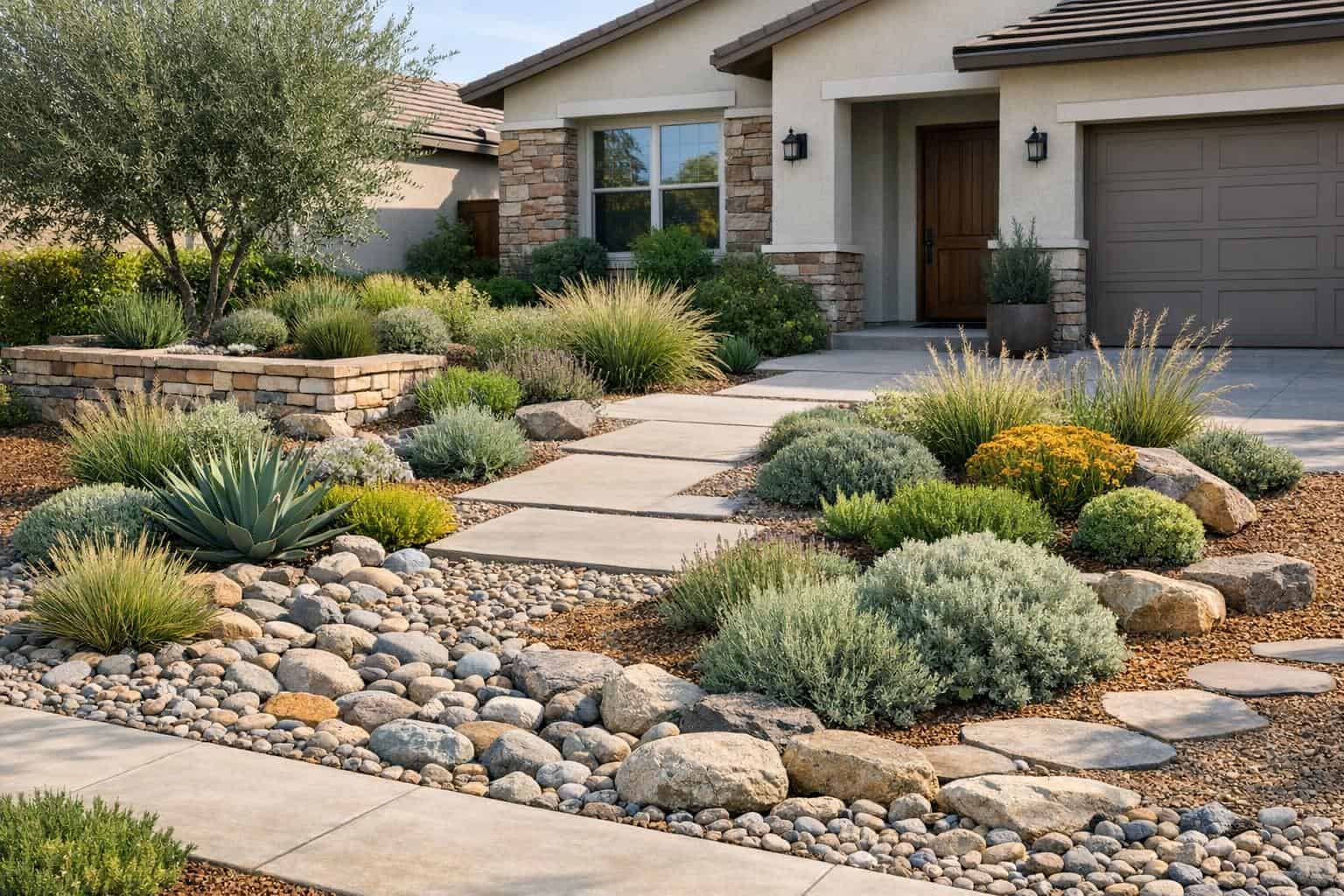
Low-water backyard landscaping does not have to mean giving up comfort or visual interest. In many cases, a lower-water yard becomes more usable because the layout is more intentional and the plant and material choices match the climate better.
Reduce lawn where it is not helping
Backyards often have turf in awkward strips or underused corners that consume water without adding much value. Replacing those areas with functional patio space, planting, or simplified ground treatment can lower water use while improving layout.

Use drought-tolerant planting with stronger grouping
When lower-water plants are grouped intentionally, the yard feels more designed and easier to maintain. For the bigger strategy, our Low-Water Landscaping Guide for Homeowners is a good starting point.
Design the backyard for how it is used
If the backyard is meant for dining, pets, kids, or relaxing, those needs should shape where lower-water planting, hardscape, and circulation go. That usually creates a better result than replacing everything evenly.
What homeowners should remember
The best low-water backyard ideas usually feel like layout improvements first and water-saving measures second. When the yard works better, the lower-water choices make more sense visually too.

Leave a Reply