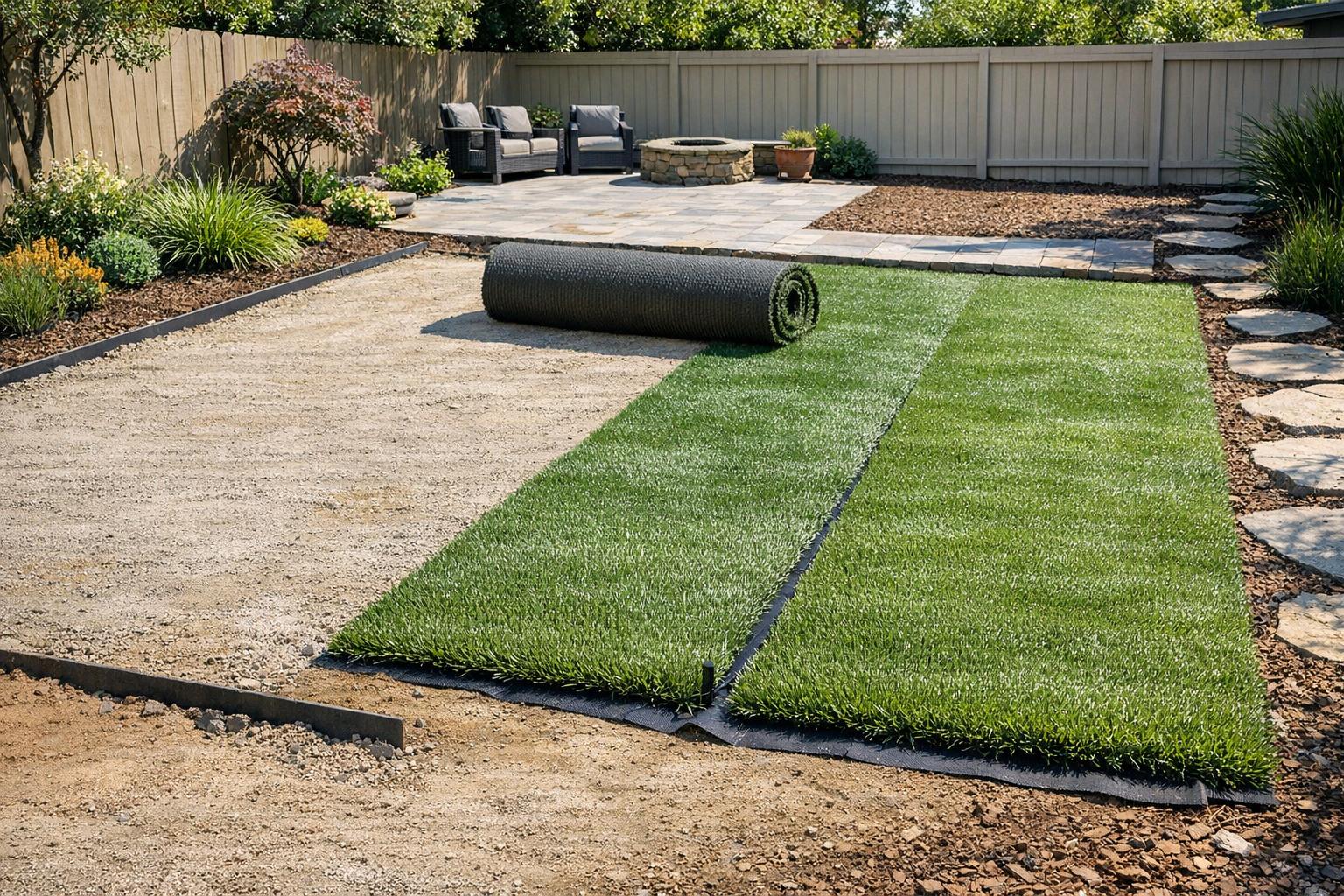
Artificial turf can reduce mowing and watering, but it does not become maintenance-free after installation. Debris, pet use, traffic patterns, odor buildup, infill movement, and seam or edge wear still affect how the surface looks and performs. Homeowners who know what routine care actually involves usually stay happier with the investment.
The goal is not constant upkeep. It is light, consistent maintenance that keeps the turf looking cleaner and performing more predictably over time.

Routine cleaning and brushing go a long way
Leaves, dirt, pet waste, and heavy-use areas can all change the way turf looks. Periodic rinsing, debris removal, and brushing traffic patterns help the surface stay more even and presentable.
Seams, edges, and odor issues deserve early attention
Small seam shifts, loose edges, drainage issues, or odor buildup are easier to address early than after they affect a larger section of the yard. Pet areas and shaded zones often need the most attention.
Good maintenance starts with a realistic installation plan
The artificial turf expectations guide, artificial turf planning mistakes guide, and artificial turf installation guide help homeowners understand why certain maintenance issues show up later.
Leave a Reply