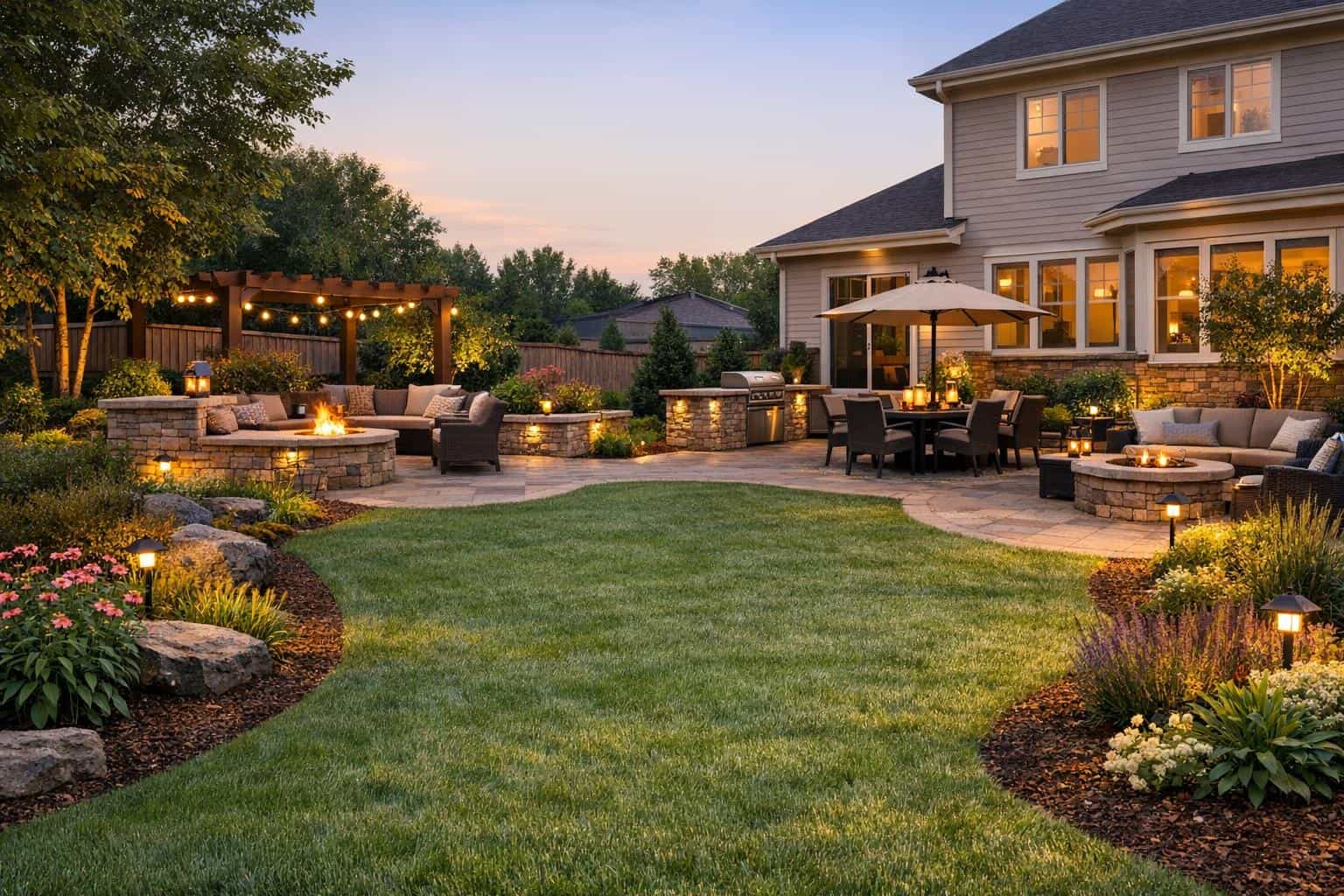
The best front and backyard landscaping ideas start with how you want to use the space and what the site allows, not with a photo of someone else’s yard. Map sun, water, slope and utilities, sort the yard into a few clear zones, then choose materials and plants that fit those zones and your upkeep tolerance. Build in the right order, problems first and finishing touches last, and even a modest budget goes a long way.
Quick answer: Plan the whole yard on paper first. Note sun, storm runoff, slope and buried lines, then give each area one main job: entry, dining, play, garden, privacy or storage. Fix drainage and grading first, then build paths and patios, then plant, then add lighting. Rough planning ranges are about $4–$10 per sq ft for a refresh, $10–$22 for a front or backyard redesign and $18–$40 for an outdoor living upgrade on a simple site with value finishes. Typical sites and finishes run closer to $6–$15, $15–$32 and $26–$59. Prices vary by region, access and site conditions.
Start with a site analysis

A site analysis is a set of notes about what your yard already does. It prevents the most expensive mistake in landscaping: building something the site works against. Draw a simple base map, then record each condition on its own copy, as UGA Extension’s site analysis guide describes.
- Sun and shade. Count hours of direct sun in each area. A patio that bakes every afternoon goes unused.
- Drainage. Walk the yard in a heavy rain. Note where downspouts dump, where puddles last more than a day and whether water runs toward the house. The drainage solutions guide matches each symptom to a fix.
- Slope. Measure it with two stakes, a string and a line level. Gentle slopes take planting and paths; steeper ones need terraces, steps or walls. See sloped yard landscaping ideas.
- Soil. Dig a few test holes and get a soil test through your county extension office. Clay, compacted fill and sand each change what grows and how water drains.
- Views and privacy. Sit where you plan to sit and note views to frame or screen.
- Utilities and fixed equipment. Mark the AC unit, meters, hose bibs, septic, gas and irrigation lines. Before any digging, including planting trees and setting fence posts, contact 811 a few business days ahead; the service is free.
- Movement. Worn paths show where people and pets actually walk; plan paths there.
Winter is a good time for this, when bare trees show the bones of the yard. The winter yard planning guide walks through it step by step.
Zones and layouts for front and back yards

A yard that works is a few clear zones connected by comfortable paths, separated by a change in surface, a low planting or a step rather than walls. Even a small yard can hold two or three. The University of Missouri Extension suggests listing what your household does outdoors, including trash, tools and pets, before drawing shapes.
Backyard zones
- Entertaining. A patio or deck near the kitchen door, sized with chairs pulled out: roughly 10 by 10 feet for a table for four, about 12 by 14 feet for six, and a 12- to 16-foot circle for fire pit seating, plus about 3 feet of clear walkway. The patio and paver guide covers materials and base work.
- Play and pets. Open lawn or turf within sight of the kitchen window and patio, with durable surfaces on the routes dogs and kids wear in. See the kid-friendly backyard guide and the pet-friendly backyard guide.
- Gardens and planting. Beds that soften edges and frame views, with vegetables where the sun is best. The garden bed and planting installation guide explains what proper bed prep includes.
- Privacy. Screen only the sightlines that matter from where you sit; a fence section or staggered evergreens often beat lining the whole property. Compare options in the privacy landscaping guide and the fence and privacy guide.
- Storage and utility. Trash, a shed and compost belong in a side yard with a firm path, screened from seating; leave the AC unit clearance for airflow and service.
Front yard zones
- The entry. A main walk about 4 feet wide and a landing at the steps. The front entry landscaping ideas guide covers paths, lighting and focal points.
- Foundation beds. Shrubs chosen by mature size so they stay below the windows. The front yard landscaping guide plans beds, lawn and lighting as one system.
- Lawn or groundcover. Keep lawn in simple shapes wider than your mower, or replace small strips with beds. The lawn guide helps if you keep grass.
- The driveway edge. Keep plants low for safe sightlines and leave room to pile snow. If the driveway itself needs work, the driveway guide compares surfaces.
Yard ideas by yard type and goal
Most yards fit one or two of these situations.

| Yard type or goal | What usually works | Rough cost level |
|---|---|---|
| Small backyard | One primary use, furniture against the edges, open center, vertical planting | Low to moderate |
| Small front yard | Wide walk, 3–5 plant types repeated, one focal point | Low to moderate |
| Sloped yard | Groundcover on gentle slopes, terraces and steps on moderate ones, engineered walls on steep ones | Moderate to high |
| Budget yard | Mulched beds, gravel paths or patio, small plants, phased work | Low |
| Low-maintenance | Fewer plant types, mature-size spacing, drip irrigation, simple lawn shapes | Moderate up front |
| Low-water | Regionally suited plants grouped by water need, less but useful lawn | Moderate |
| Kid- and pet-friendly | Visible play zone, durable paths, safe surfacing, sturdy plants, good gates | Low to moderate |
| Modern front yard | Clean lines, calm material palette, repeated plants, lighting | Moderate to high |
| Front entry upgrade | Wider walk, landing, low layered planting, entry lighting | Low to high |
Small yards
Pick one main use and keep seating and planting along the edges so the middle stays open. The small backyard landscaping ideas guide covers layout, and small space backyard design ideas that are actually buildable tests ideas against doors, gates and real furniture. For the street side, see small front yard landscaping ideas.
Sloped yards
Treat a slope as a set of levels, not a tilted lawn: groundcover on gentle grades, terraces and steps on moderate ones, engineered walls or erosion control on steep ones. The retaining wall guide explains when a wall is the right answer.
Budget yards
Spend first on what makes the yard usable, such as drainage and one good sitting area, then fill in with mulch, gravel and small plants. Budget backyard landscaping ideas groups options by cost, and backyard living space ideas by budget and yard size shows what each budget level can achieve.
Low-maintenance and low-water yards
Low maintenance means paying a bit more up front for fewer, repeated plant varieties, mature-size spacing, edging and drip irrigation. The low-maintenance landscaping guide sets expectations, and low-maintenance landscaping planning mistakes explains why rock beds still get weeds. For water savings, EPA WaterSense recommends grouping plants with similar water needs and placing lawn only where it has a practical use. The low-water landscaping guide shows how to keep it from looking empty.
Kid- and pet-friendly yards
Families need open space in view of the house, mud-proof routes, shock-absorbing surfacing under play equipment and self-closing gates. Kid-friendly backyard planning mistakes lists the seven most common ones.
Modern front yards and entries
A modern front yard comes down to a simple plant palette, sharp hardscape lines, a clear path to the door and good lighting. See modern front yard landscaping ideas. In any style, a wider walk and entry lighting often do more for curb appeal than new plants.

How to choose: a decision checklist
- What are your top two or three uses? Dining, play, gardening, privacy, curb appeal or lower upkeep.
- What does the site force first? Standing water, a slope toward the house, failing walls or trip hazards go to the top of the list.
- How much upkeep will you really do? A planting plan you cannot maintain becomes a weed plan.
- How long will you stay? Selling soon favors a clean entry and fixed problems; long stays justify patios, trees and irrigation.
- What is the budget, with a cushion? Add 10 to 15 percent for surprises such as buried debris.
- What can be phased? Decide what must come first and what can wait.
- Do you need permits or HOA approval? Fences, taller walls, grading and gas lines often do.
- Who will do the work? DIY, a designer plus contractors, or a design-build firm.
Landscaping materials compared
Choose ground covers, soil, hardscape, edging and plants together so they look related. The landscaping materials guide covers each group.

| Surface | Rough installed cost | Upkeep | Best for |
|---|---|---|---|
| Mulched beds | About $85–$125 per cubic yard of hardwood mulch installed | Top up yearly; pull early weeds | Planting beds, around trees |
| Gravel or crushed stone | About $2–$8 per sq ft | Rake, edge, weed a few times a year | Paths, budget patios, side yards |
| Sod lawn | About $1–$3 per sq ft | Mow, water, feed | Play, pets, open space |
| Broom-finish concrete | About $6–$15 per sq ft | Low; cracks over time | Durable patios and walks |
| Stamped concrete | About $10–$25 per sq ft | Reseal every few years | Decorative look at mid-range cost |
| Concrete pavers | About $10–$35 per sq ft | Joint sand, occasional weeds | Patios and walks that can be repaired in sections |
| Natural stone | About $20–$50+ per sq ft | Varies by stone | Distinctive, long-lasting features |
Ranges vary by region, base work and access. Bulk mulch, soil and gravel often cost about $25–$80 per cubic yard plus delivery of $50–$150 or more per load; what landscaping materials cost lists material-only prices. Supply yards are usually cheapest for bulk material, as where to buy landscaping materials explains. Buy mulch, rock and plants yourself if you like, but let the contractor supply pavers, wall block and base gravel; see should you buy landscaping materials yourself. For bed materials, the mulch guide covers types and depth.
What yard landscaping costs
Budget whole-yard projects per square foot of the area you are changing. The table uses the calculator’s rates: the first column assumes a simple site, easy access and value finishes; the second assumes moderate complexity and standard access and finishes, closer to most yards.

| Project type | Simple site, value finishes | Typical site, standard finishes | Typical, about 1,000 sq ft |
|---|---|---|---|
| Refresh and curb appeal | $4–$10 per sq ft | About $6–$15 | About $5,900–$14,700 |
| Front or backyard redesign | $10–$22 per sq ft | About $15–$32 | About $14,700–$32,200 |
| Full-property renovation | $12–$30 per sq ft | About $18–$44 | About $17,600–$44,000 |
| Outdoor living upgrade | $18–$40 per sq ft | About $26–$59 | About $26,400–$58,600 |
Complex sites, difficult access and premium finishes together can push the per-square-foot rates to about twice the simple-site figures. Smaller jobs are easier to price item by item: fresh mulch and bed edging at an entry often runs about $200–$1,000, foundation replanting $1,000–$5,000, a small entry lighting system $1,500–$4,000 and a new or widened front walk $2,000–$8,000 or more.
Estimate your yard landscaping cost
Pick a project type and enter the area you are changing to see a low, mid and high range; it is a planning range for setting a budget, not a quote.
Landscaping Cost Range Calculator
Estimate a broad landscaping budget range for common homeowner project types before comparing quotes.
Landscaping cost estimate
- Estimated area
- –
- Low estimate
- –
- Mid estimate
- –
- High estimate
- –
- Estimated range per sq ft
- –
What moves the price
- Site fixes. Regrading, drainage and walls often take a large share of phase one.
- Hardscape share. Patios, walls and steps cost far more per square foot than beds or lawn.
- Access. If machines cannot reach the backyard, labor rises.
- Removal. Old concrete, overgrown shrubs and stumps add labor and disposal.
- Plant size. Large trees and shrubs give an instant look at a much higher price.
- Irrigation and lighting. Both are cheaper to sleeve and wire before paving and planting than after.
- Design. A paid plan adds cost up front but often saves more by preventing rework.
Landscaping costs explained breaks down how contractors build these numbers.
Phasing a yard project over several years
Most homeowners build a yard over two to five seasons, which works as long as the whole yard is planned first. The Missouri Extension advice is the same: set priorities and develop the plan as time and money allow.

| Phase | What goes in | Why this order |
|---|---|---|
| 1. Fix the site | Drainage, grading, walls, tree removal, utility sleeves and irrigation mains | Everything later sits on top of it |
| 2. Build the structure | Main paths, patio or deck, bed outlines, lawn areas, fences | Defines the zones and how people move |
| 3. Plant | Trees first, then shrubs, then perennials and groundcovers, then mulch | Trees need the longest to grow; small plants fill in last |
| 4. Finish | Lighting fixtures, shade, furniture, containers, decor | Easy to add once the bones are set |
Run empty sleeves under future patios and paths in phase two, even if lighting or irrigation is years away. The guide to phasing a landscaping project covers sequencing in detail, and the backyard renovation planning guide shows how to write each phase into a contractor scope.
What a well-built yard project looks like

Good landscaping is mostly what you cannot see.
- Water moves away. Soil and paving slope away from the house, downspouts discharge clear of beds and patios, and nothing ponds.
- Hardscape sits on a real base. Compacted gravel at a depth suited to your soil and climate, with edge restraint for pavers.
- Beds are prepared, not just planted. Weeds removed, soil loosened and amended, clean edging.
- Plants are spaced for mature size. A new bed should look a little sparse for a season or two.
- Trees are planted at the right depth. The root flare should be visible at the surface, with mulch in a flat ring, never piled against the trunk.
- Irrigation matches the plants. Drip for beds, spray or rotors for lawn, and separate zones for each.
- Paths are wide enough. About 4 feet for a main entry walk and 3 to 4 feet for main backyard routes.
Red flags during installation
- Plants installed before drainage or grading problems are dealt with.
- Pavers or stone laid on bare soil or a thin layer of sand.
- Landscape fabric under mulch in planting beds, where it tends to trap debris and fail over time.
- Plants set deeper than they grew in the pot, or mulch volcanoes around trees.
- No call to 811 before digging.
The planting installation guide covers bed work, and what to expect during a landscaping project explains how a typical job unfolds.

Common layout mistakes and when to redesign
A layout is failing when the yard looks fine in photos but nobody uses it. The causes are usually how spaces connect, not plants.
- Worn shortcut paths. They show where the walk should be. Build a real path on that line.
- A patio too small for real furniture. If chairs end up half on the lawn, expand with a border band instead of rebuilding.
- Seating in harsh sun or damp shade. Add shade on the west side, or a second small seating spot.
- No clear zones. One open lawn with furniture around the edges feels unfinished.
- Utilities in the best spot. Trash, AC units and sheds placed first.
- Too many features and plant types. No open space and a busy look.
- Lawn shapes that fight the mower. Narrow strips and islands take the most time per square foot.
One or two of these usually need only targeted fixes. If water problems run through the whole yard or the main spaces are in the wrong places, fix grading first and consider a redesign. Signs your backyard layout is not working has a fix-or-redesign table.
Seasonal planning and maintenance calendar
Plan in winter, build hardscape when the ground is workable, and plant when roots can grow before summer heat. Tie exact dates to your local frost dates.

| Season | Planning and building | Care |
|---|---|---|
| Winter | Observe water, ice and privacy gaps; sketch; get estimates and book contractors | Prune most dormant trees and shrubs; keep off frozen lawn |
| Spring | Start hardscape once the ground is dry; prepare beds; plant after the last frost | Clean up, soil test, irrigation start-up, mulch |
| Summer | Good time to watch how spaces get used and where shade falls | Water deeply and less often, mow higher, weed early |
| Fall | Main planting season for trees and shrubs in many regions; finish hardscape before freeze | Seed or aerate cool-season lawns, handle leaves, winterize irrigation |
Each season has its own checklist: spring, summer, fall and the winter planning guide. For pruning and when to call an arborist, see the tree care guide.
DIY, designer or design-build: hiring the right help
| Route | How it works | Best for | Watch out for |
|---|---|---|---|
| DIY | You plan, buy and build | Beds, mulch, planting, gravel paths, small projects | Grading, walls, gas and electrical |
| Designer, then contractors | You pay for a plan, then bid it out | Larger yards, slopes, drainage issues, multi-year phasing | Plans too vague to bid |
| Design-build firm | One company designs and installs | Busy owners who want one accountable party | Design cost hidden in the install price; plan may not transfer |

Many designers charge a few hundred dollars for a site visit and concept, and more for a full plan. On a budget, one paid consultation or hiring out only the hardest step, such as grading, can prevent expensive mistakes. Landscape designers vs landscaping companies explains who does what.
Questions to ask
- Where will water go during a heavy rain, and does your plan change that?
- Will my furniture fit each seating area with room to move?
- What site conditions could change the price after work starts?
- How many hours a month will this planting plan need in each season?
- What has to be built first if we phase the work?
What the quote must include
A good quote lists each area’s dimensions, removal, grading and drainage, base depth, surface material, plants with sizes and quantities, soil prep, edging, irrigation and lighting scope, permits, cleanup, schedule, payment terms and warranties. Give every bidder the same written scope; how to compare landscaping quotes and what a hardscape estimate should include help.
Red flags
- A single lump-sum price with no breakdown of materials, base or plants.
- No mention of drainage on a yard that obviously holds water.
- A large cash deposit or pressure to sign the same day.
- No proof of license where required, or no insurance.
See questions to ask before hiring a landscaper for licensing, insurance and contract checks.

Problems homeowners run into
These stories come up again and again in homeowner forums and design columns.
- Buying plants before having a plan. Nursery impulse buys ended up in the wrong sun or crowded each other and had to be moved within two years.
- Fixing one thing at a time. Disconnected upgrades left yards without flow, and early work got torn up later.
- Planting at the wrong time. Crews that started planting in midsummer heat left owners nursing stressed shrubs and replacing dead grasses.
- Gravel and rock that were supposed to be easy. Without good edging and a weed plan, gravel areas became a constant weeding job.
- Water discovered after the patio. New hardscape or beds flooded in the first big storm because drainage was never checked.
- Handing everything to the crew. Owners who never checked the plan or the work found spacing and depth problems later.
Frequently asked questions
Where do I start with landscaping a yard?
Start with a site analysis: sun, drainage, slope, soil, views and utilities. Then list your top uses, sketch zones and fix any drainage or grading problems before buying plants or materials.
Should I do the front yard or the backyard first?
Fix whichever has drainage or safety problems first. After that, many owners do the yard they will use most. The front yard is often the better first project if you plan to sell soon.
How much does it cost to landscape a backyard?
On easy sites with value finishes, about $4–$10 per sq ft for a refresh, $10–$22 for a redesign and $18–$40 for an outdoor living upgrade; typical sites cost more. Use the calculator above.
Do I need a landscape designer?
Not for a simple refresh. A paid plan is worth it for larger yards, slopes, drainage problems or projects you will build over several years.
What is the cheapest way to make a yard look better?
Clean, crisp bed edges, fresh mulch, removing overgrown shrubs, a few plants repeated in groups and a tidy entry. Most of this is DIY.
How long does it take to landscape a yard?
Planting jobs take days; a redesign with hardscape often takes several weeks, and many owners spread the plan over two to five seasons.
Yard design and planning guide library
Every yard design and planning guide on the site, grouped by decision.
Planning a backyard
- Backyard renovation planning guide — goals, site conditions, phases and scope in order.
- Backyard living space ideas by budget and yard size — what each budget and yard size can hold.
- Signs your backyard layout is not working — reading problem spots and deciding to fix or redesign.
Small yards
- Small backyard landscaping ideas — layout, privacy and multi-use features for compact yards.
- Small space backyard design ideas that are actually buildable — ideas tested against doors, gates and furniture.
- Small front yard landscaping ideas — paths and plant palettes that make a tight yard feel larger.
Front yards and entries
- Front yard landscaping guide — curb appeal, lighting, lawn and upkeep as one plan.
- Front entry landscaping ideas — walkways, entry planting, lighting and costs.
- Modern front yard landscaping ideas — clean lines, calm materials, repeated plants.
Ideas by yard type and goal
- Sloped yard landscaping ideas — matching groundcover, terraces, steps or walls to the grade.
- Budget backyard landscaping ideas — low-cost ideas and where not to cut corners.
- Low-maintenance landscaping guide — what lower upkeep really involves.
- Low-maintenance landscaping planning mistakes — shortcuts that turn an easy yard into a chore.
- Low-water landscaping guide — planting, irrigation and ground covers for drier yards.
Families and pets
- Kid-friendly backyard landscaping — open space, visibility and durable surfaces.
- Kid-friendly backyard planning mistakes — sight lines, play surfacing and gates.
- Pet-friendly backyard landscaping — durable routes, drainage and cleanup for dogs.
Planting
- Garden bed and planting installation — what bed prep and planting include, and cost drivers.
Materials
- Landscaping materials guide — ground covers, soil, hardscape, edging and plants.
- What landscaping materials cost — material prices, delivery and hidden base costs.
- Where to buy landscaping materials — supply yards, nurseries, home centers; bulk vs bagged.
- Buy materials yourself or let the contractor supply them — when self-buying saves money and when it adds risk.
Seasonal planning and care
- Winter yard planning — observing, budgeting and booking in the off-season.
- Spring landscaping checklist — cleanup, soil, planting and irrigation by frost date.
- Summer landscaping maintenance — watering, mowing, weeds and heat stress.
- Fall landscaping checklist — lawn work, planting and winterizing.
More complete guides
- Patio and paver guide — materials, costs, base work and care.
- Lawn guide — grass types, new lawns and yearly care.
- Drainage solutions guide — matching wet spots to the right fix.
- Retaining wall guide — walls, regrading and what makes a wall last.
- Fence and privacy guide — fence materials, heights and costs.
- Mulch guide — mulch types, depth and quantities.
- Tree care guide — pruning, warning signs and removal.
- Driveway guide — choosing, pricing and maintaining a driveway.