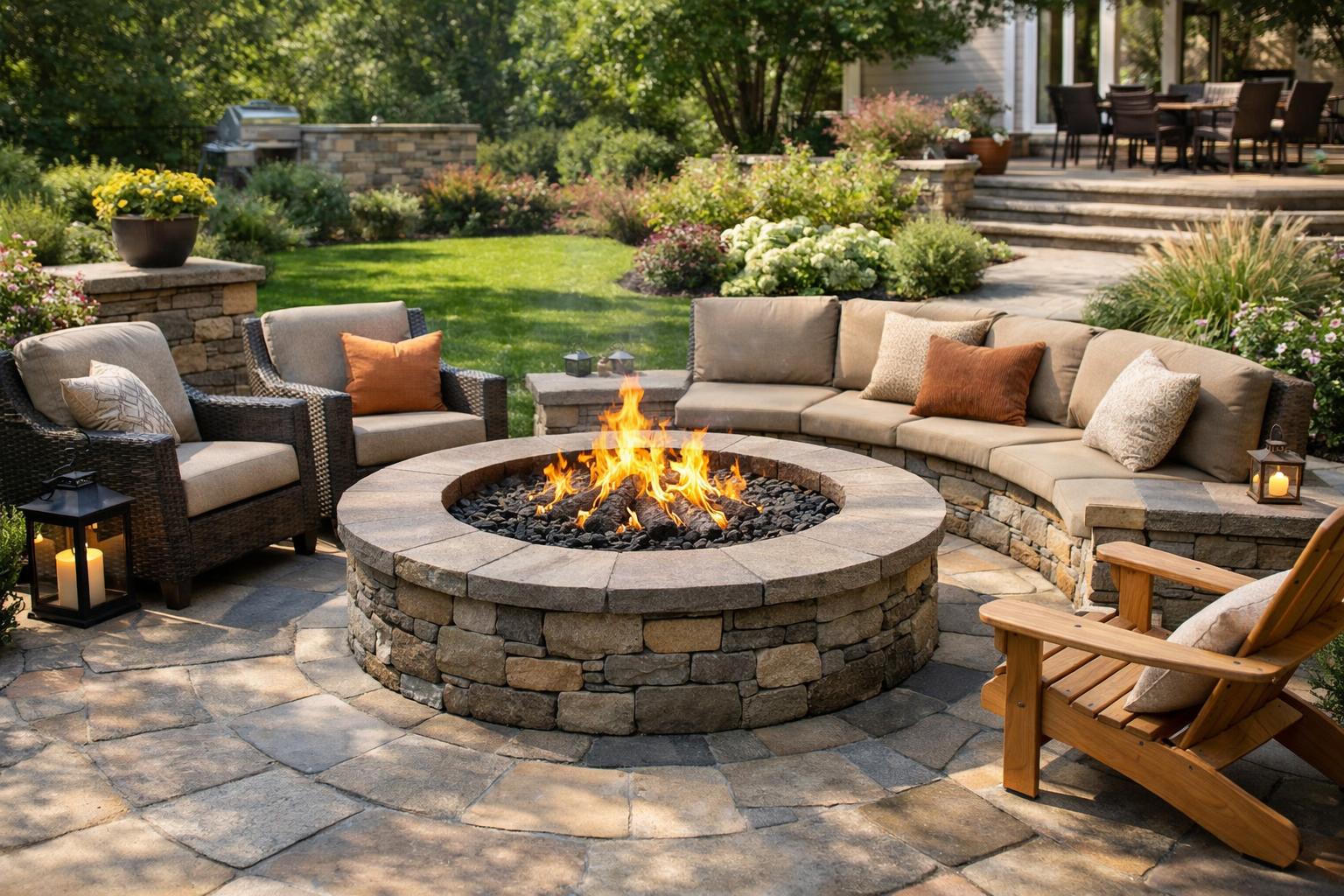
Fire pit projects often run into trouble long before construction begins. Many homeowner mistakes come from treating the feature as a simple add-on instead of part of a larger outdoor-living layout. Placement, seating distance, fuel assumptions, utility planning, and surrounding hardscape all affect how the finished space actually feels to use.
A fire pit that looks good in isolation can still function poorly if the planning decisions around it are weak.

Poor placement creates long-term frustration
Placing the fire pit too close to the house, too far from seating, or in a location that traps smoke or interrupts yard circulation can make the finished space much less comfortable. These issues are easier to prevent than to fix afterward.
Utility and finish assumptions are often too loose
Gas vs wood decisions, hardscape tie-ins, drainage, seating, lighting, and cleanup details often get glossed over early. That can lead to change orders, awkward layout compromises, or a feature that feels less complete than expected.
Compare mistakes against scope and timeline
The fire pit quote guide, fire pit timeline guide, and fire pit expectations guide help homeowners spot these issues before the project starts.
Leave a Reply