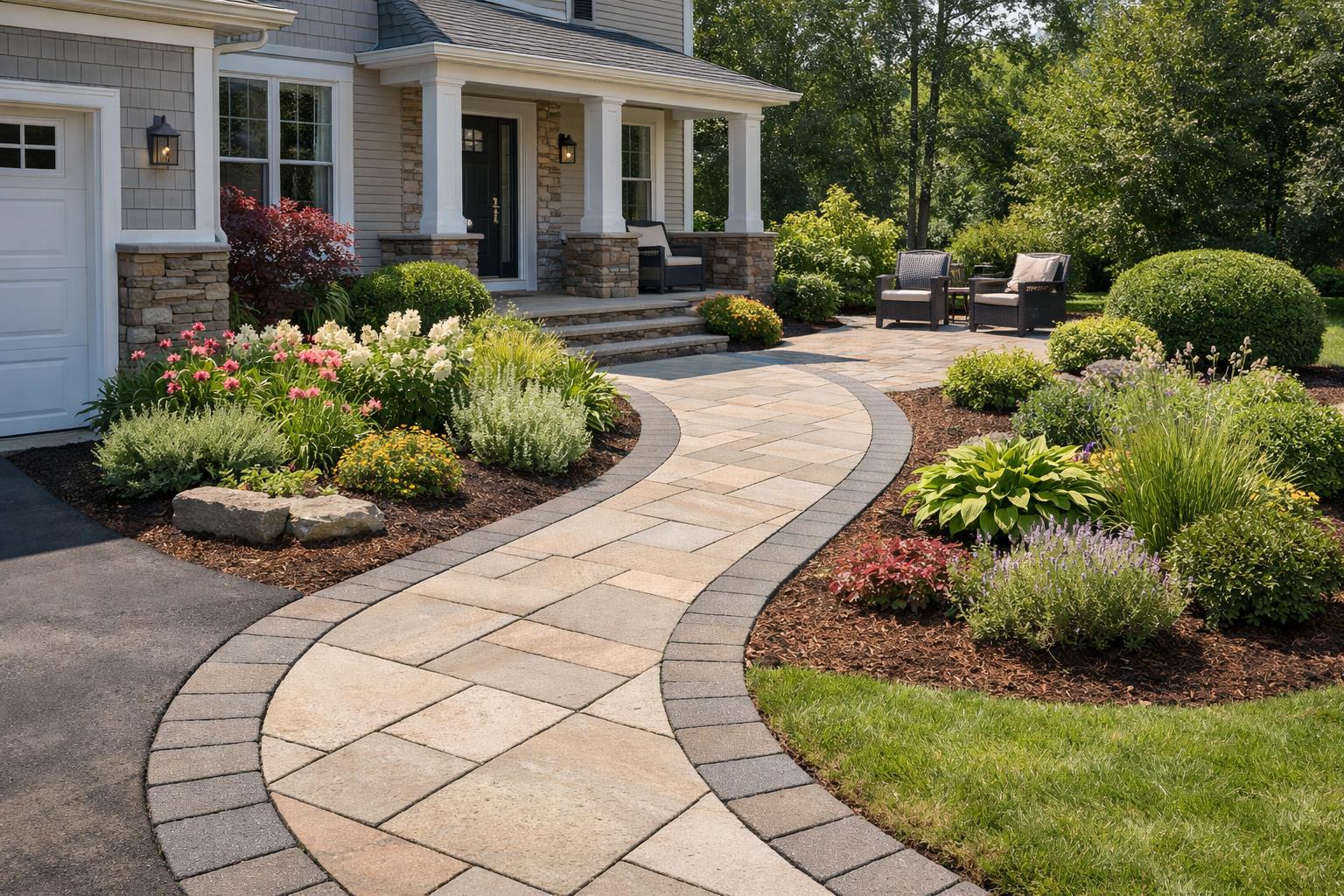
Walkway and pathway projects often seem simple from the homeowner perspective, but the timeline depends on more than the visible path itself. Length, curves, demolition, base depth, drainage corrections, material type, and tight backyard access can all change how long the work takes. A short straight path may move quickly, while a more detailed path with steps, borders, or complex tie-ins takes longer.
Homeowners usually compare timelines more accurately when they break the job into preparation, installation, and finish-detail phases.

Preparation often decides the pace
Layout approval, demolition, excavation, haul-off, and base preparation are often the most variable parts of the schedule. If the crew discovers drainage issues or unstable subgrade, that can shift the timeline immediately.
Surface installation is only part of the job
Pavers, stone, or poured surfaces may go in once the base is ready, but edge restraint, cuts, transitions, and restoration around the path still take time. Those finish details are often what make one walkway feel much more polished than another.
Compare the path shape and site constraints together
The walkway installation guide, walkway cost guide, and walkway quote guide help homeowners evaluate these schedules more realistically.
Leave a Reply