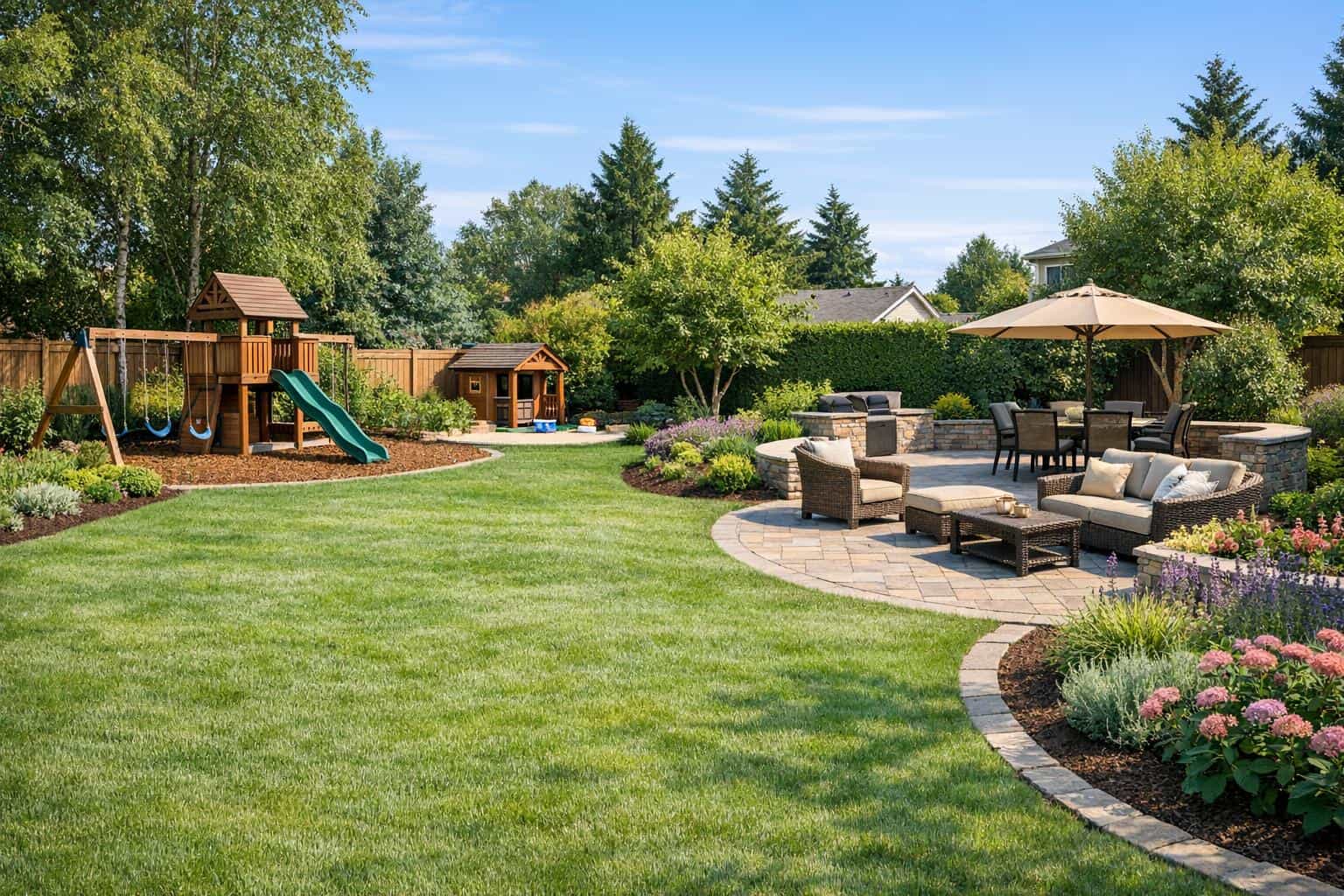
A family-friendly yard only stays easy to use when the surfaces, play zones, sightlines, and plantings are maintained with safety in mind.

What good upkeep looks like
Kid-friendly backyard landscaping should not feel like random chores. Good maintenance means knowing what to inspect, what to clean, what to adjust, and when to bring in help before small issues grow.
- Walk the yard regularly to look for tripping hazards, loose edging, exposed hardware, and worn surfacing
- Keep drainage flowing so muddy areas and slippery buildup do not develop around play zones
- Prune shrubs and trees so visibility stays open and circulation paths remain clear
- Check irrigation coverage so turf and planting beds stay healthy without creating slick areas
- Inspect outdoor lighting, gates, seating, and shade structures for loose or damaged parts
How often homeowners should check in
Most homeowners benefit from a quick weekly scan during heavy use months and a more thorough seasonal review when weather changes.
- Weekly: scan for hazards, cleanup needs, and damaged play areas
- Monthly: check irrigation, edging, mulch depth, and pathway condition
- Seasonally: review drainage, turf wear, pruning, and hardware condition
When maintenance turns into repair
Some signs point to a bigger issue than routine upkeep. If you notice repeated failures, movement, drainage problems, dead areas, loose components, or safety concerns, it is time to stop treating the issue as simple maintenance.
- Pooling water, muddy wear zones, or slippery hardscape near active areas
- Broken edging, exposed anchors, or loose pavers in walkways and seating zones
- Plants blocking supervision sightlines or crowding primary play paths
- Turf thinning or synthetic surfaces lifting where kids run most often
Bottom line
A consistent homeowner maintenance routine protects the appearance, function, and lifespan of kid-friendly backyard landscaping.
For broader planning context, revisit the main Kid-Friendly Backyard Landscaping Guide for Homeowners and make sure the original design goals still match how you use the space today.
Leave a Reply