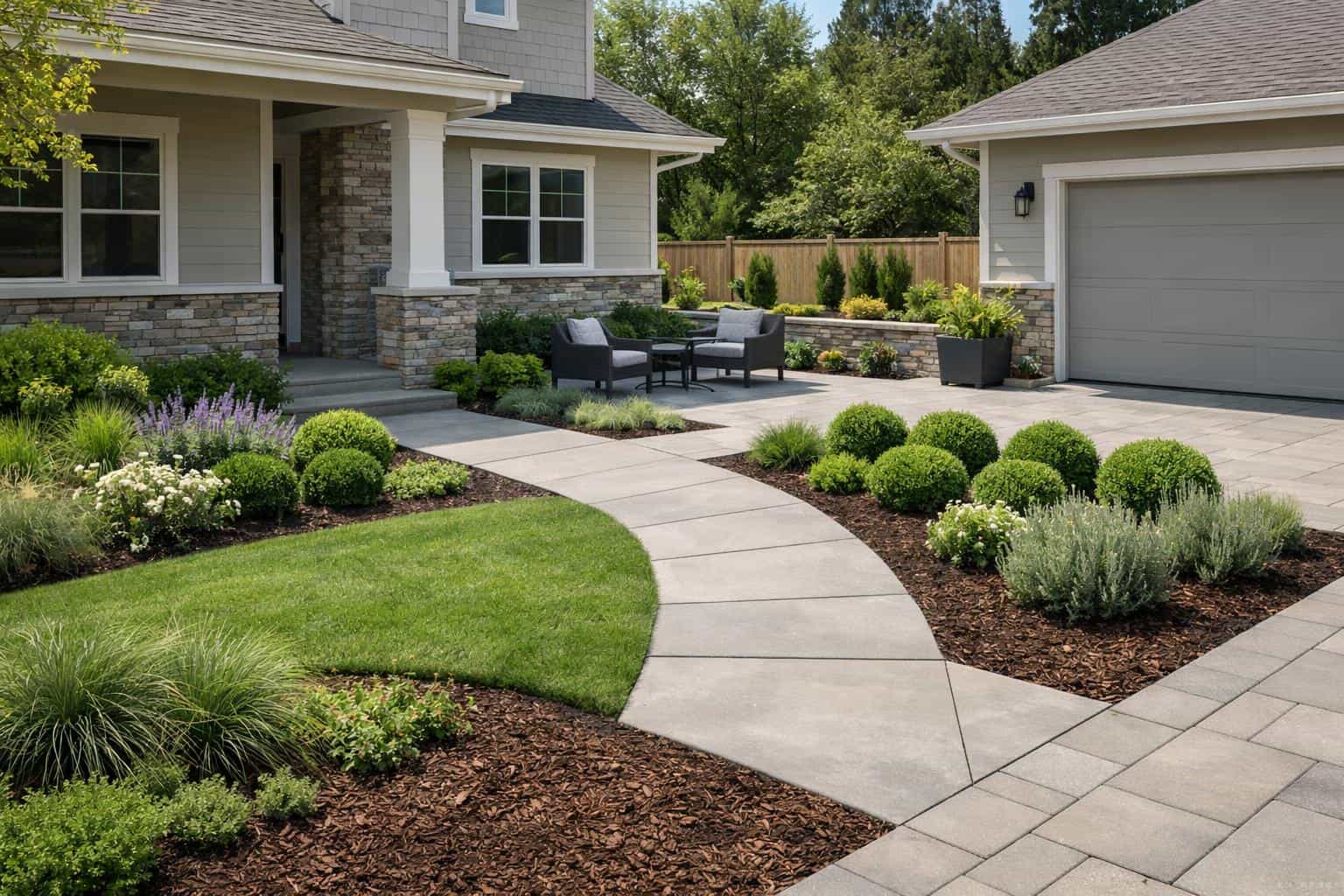
Narrow beds are easy to overplant because the space feels small and homeowners often want it to do too much. The best low-maintenance narrow-bed designs keep the palette simpler, the scale appropriate, and the maintenance demands realistic.

Keep the planting proportional to the bed depth
Narrow beds usually work better with fewer, more controlled plant forms than with a mixed collection of shrubs that quickly outgrow the space.
Use the bed to support the edge, not steal the route
Many narrow beds sit next to a walk, fence, or house wall, so their planting has to respect how the adjacent space is used. Use this with our Low-Maintenance Fence Line Landscaping Guide if the bed is part of a longer boundary condition.
Choose easy-care materials carefully
Mulch, edging, and plant repetition can all help narrow beds look cleaner and stay easier to manage.
What homeowners should remember
The best narrow-bed landscaping looks intentional because it works with the limits of the space instead of fighting them.
Leave a Reply