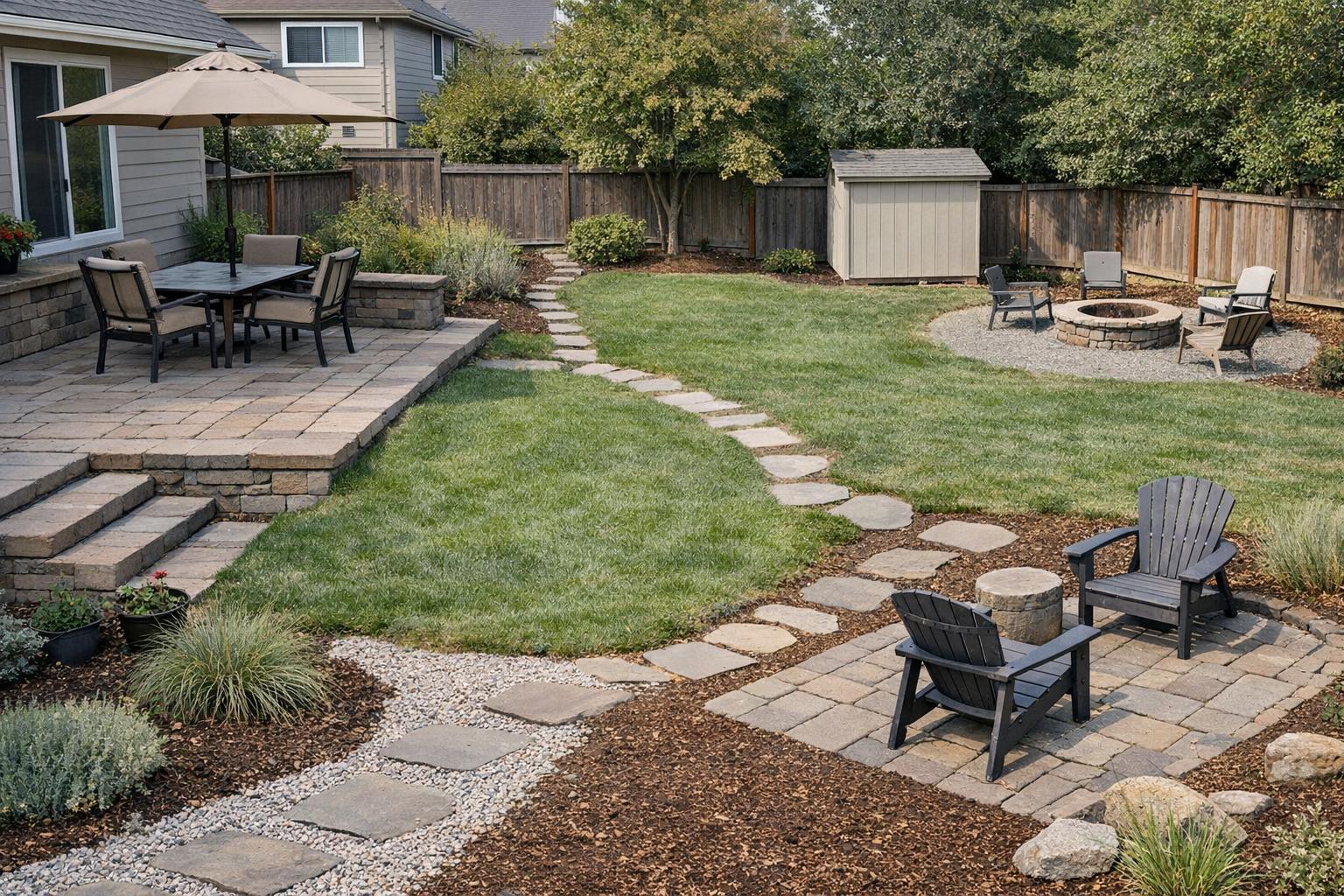
A backyard does not have to be broken to feel disappointing. Many homeowners have a yard that looks acceptable in photos but never feels natural to use. Seating may feel isolated, circulation may be awkward, privacy may be weak where it matters most, or one area may stay unused while another feels cramped. Those are often layout problems rather than decoration problems.
The hard part is that layout issues can be easy to normalize. If the yard has always functioned awkwardly, homeowners may assume the answer is simply to add another feature rather than rethink the arrangement.
Common signs the layout is not working
If the main seating area feels disconnected, if people cut awkwardly across lawn or beds, if one part of the yard gets all the use while another stays empty, or if the backyard never feels comfortable for the activities you want, the layout may be the real issue. A finished patio or fire pit does not guarantee the space works well.
Why more features do not always fix the problem
Homeowners often respond to layout frustration by adding one more feature, but that can make the yard feel even more crowded if the underlying circulation and zoning have not been solved. The backyard planning guide is the best follow-up because it focuses on how a yard should function before more features are layered in.
When a layout rethink pays off
If the backyard is already due for a patio, privacy, lawn, or lighting change, that is often the right moment to revisit the full layout rather than patch one weak area. Homeowners usually get better long-term results when they solve circulation, visibility, and use patterns before making another isolated upgrade.
Leave a Reply