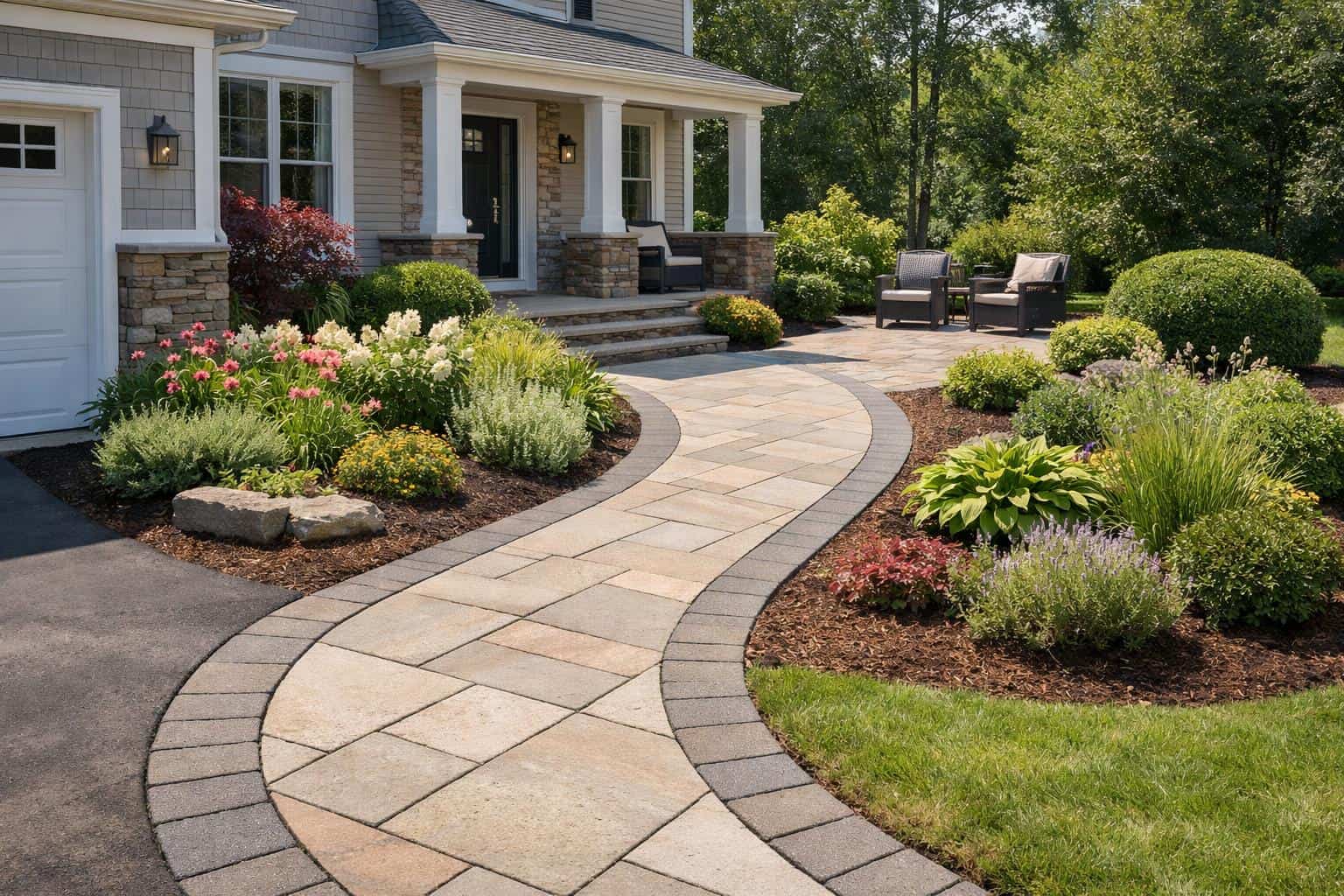
Walkways and pathways do more than connect one point of the yard to another. They shape how people move through the property, influence drainage patterns, improve safety, and help outdoor spaces feel finished. When they are planned well, they support the whole landscape. When they are added as an afterthought, they can feel awkward, drain poorly, or create maintenance headaches.
This guide explains what walkway installation usually includes, what affects cost and material choice, and what homeowners should think about before hiring.
What walkway installation usually includes
Walkway projects often involve layout planning, excavation, base preparation, edge definition, grade adjustments, and final surface installation. Depending on the property, the project may also include lighting, step transitions, drainage adjustments, planting-bed integration, or connections to patios, driveways, and entry areas.
- Common materials: poured concrete, pavers, natural stone, gravel, and stepping-stone style paths.
- Common goals: improve access, create clearer circulation, connect activity zones, and reduce worn paths through lawn or beds.
- Main performance factors: base prep, slope, width, edge restraint, and how the path fits the way the property is actually used.
Circulation comes before material
Homeowners often start with the finish they like, but layout is usually the more important question. A good walkway should follow natural movement patterns and make the yard easier to navigate. It should feel obvious, not forced. That is especially true around entries, side yards, backyard gathering areas, and transitions between the driveway, patio, and lawn.
This is one reason walkway planning belongs inside the broader framework described in our landscaping services guide.
Material choice changes look and maintenance
Concrete can be practical and clean-lined. Pavers offer pattern variety and easier localized repair. Natural stone can create a more organic look but may increase cost and installation complexity. Gravel paths can work well in some gardens, though they behave differently under traffic and maintenance.
The right material depends on style, budget, climate, maintenance tolerance, and how formal or informal the space should feel.
Drainage and grade matter on pathways too
A walkway should not collect water, create slippery low spots, or send runoff toward the house. Paths are often small enough that homeowners underestimate drainage, but poor water handling can still shorten surface life and create safety issues. If the area already has runoff problems, read our drainage guide alongside this one.
Questions to ask before hiring
- How wide should this walkway be for the way we use the space?
- How will slope and drainage be handled?
- What base preparation is included?
- How will the walkway connect to patios, steps, or the driveway?
- What maintenance should I expect from this material choice?
What homeowners should remember
A walkway is one of the most useful connective features in a landscape. The best ones improve movement, support drainage, and make the whole property feel more intentional. The more clearly a contractor explains layout and grade, the more likely the path will feel natural and last well.
Cost guide: Homeowners pricing routes and surface options can compare scope in the Walkway and Pathway Cost Guide.
Leave a Reply