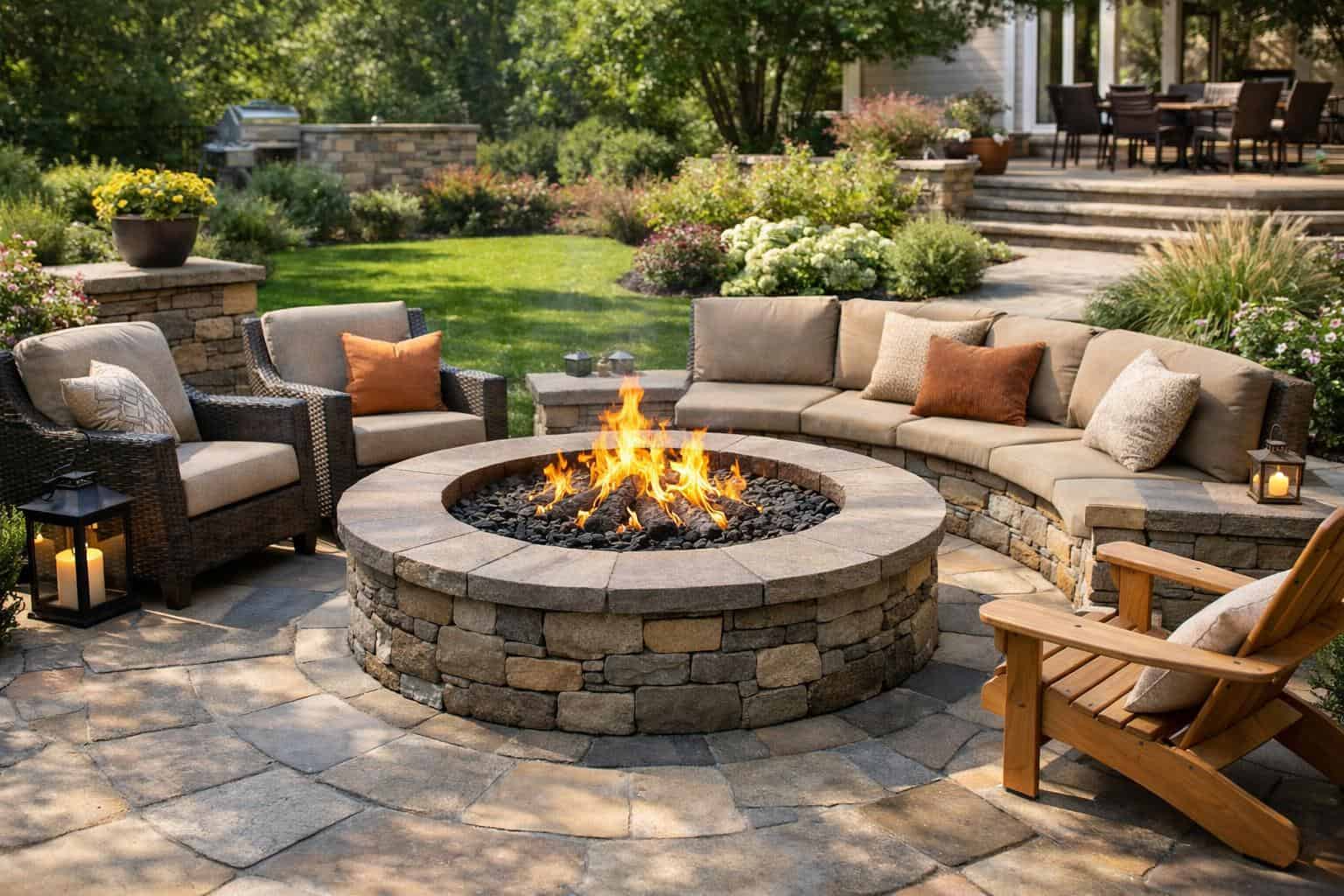
A fire pit can turn an ordinary patio or backyard into a true gathering space, but it works best when it is planned as part of the larger layout rather than dropped into the yard wherever there seems to be space. Seating distance, surface materials, circulation, lighting, and surrounding planting all affect how comfortable and practical the feature feels once it is built.
Part of our Complete Patio and Paver Guide: materials, costs, installation, repair and hiring in one place.
This guide helps homeowners understand what fire pit installation usually includes and what to think through before hiring.
What fire pit installation usually includes
Residential fire pit projects may include excavation, base preparation, the fire feature itself, surrounding hardscape, seating layout, and sometimes lighting or low walls. On some properties, the fire pit is the centerpiece of a larger patio plan. On others it is a secondary destination tied to walkways or a backyard seating area.
- Common formats: built-in masonry fire pits, block systems, gas fire features, and integrated patio/fire-pit zones.
- Common project needs: proper clearances, stable surrounding surfaces, seating space, and good circulation around the feature.
- Main planning factors: size, location, fuel type, wind exposure, nearby structures, and how the fire pit fits the rest of the yard.

Location matters as much as the feature itself
Homeowners often imagine the fire pit first and the layout second, but the surrounding space is what determines whether the feature feels enjoyable or cramped. A fire pit should work comfortably with seating, access paths, and nearby patios or planting beds. It should also feel appropriately separated from structures and overhanging elements.
If the feature is part of a larger outdoor-living area, our patio guide is a useful companion.

Surface and seating planning
Fire pits work best when the ground around them is stable, intentional, and easy to move through. That usually means hardscape, compacted surface planning, or another defined treatment instead of loose improvised space. Homeowners should also think about how many people the area should comfortably hold and whether the fire feature is a primary gathering area or a secondary accent.
Questions to ask before hiring
- How should the fire pit be positioned relative to seating and circulation?
- What surrounding surface is included in the project?
- How will the feature connect to nearby patio or pathway areas?
- What maintenance should I expect for this material and fuel type?
- How will lighting and surrounding planting be handled so the area feels finished at night?
What homeowners should remember

A fire pit is not just an object. It is a gathering zone. The best results come when the feature is planned with the surrounding patio, lighting, and circulation in mind so it feels like part of the landscape instead of a standalone add-on.
Planning tip: If your fire feature is part of a larger entertaining zone, the Outdoor Kitchen Guide for Homeowners can help you think through layout, utility planning, and how multiple features should work together.
Compare fuel types: If you are deciding what kind of fire feature fits your yard best, the Fire Pit Gas vs Wood Guide for Homeowners breaks down convenience, atmosphere, and cleanup tradeoffs.
Cost guide: Homeowners comparing proposals can use the What Affects Fire Pit Cost Guide to connect fuel type and hardscape scope with the budget.
Quote guide: The fire pit quote guide helps homeowners compare fuel assumptions, hardscape tie-ins, and finish scope across bids.
Timeline guide: The fire pit timeline guide helps homeowners compare planning, utility coordination, installation, and finish-detail timing.
Expectations guide: The fire pit expectations guide helps homeowners understand access changes, utility coordination, and finish-work flow during the project.
Mistakes guide: The fire pit planning mistakes guide helps homeowners catch layout, fuel, and seating mistakes before construction starts.
Maintenance guide: The fire pit maintenance guide helps homeowners protect the feature, surrounding surfaces, and seasonal usability over time.