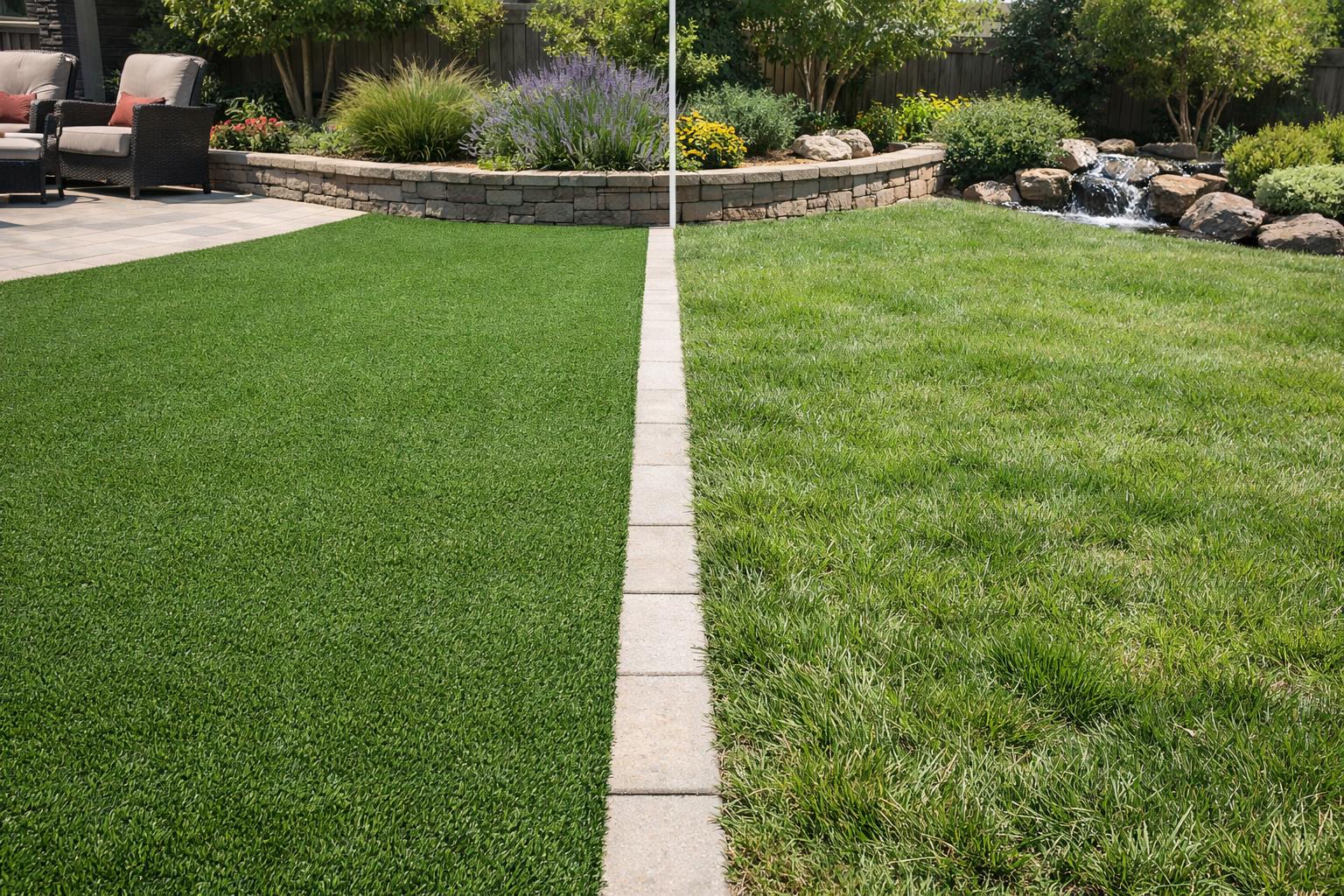
Artificial turf pricing is often described in broad per-square-foot ranges, but homeowners should expect real project cost to depend on much more than the turf material itself. Excavation, base preparation, grading, drainage, edge detail, and transitions into patios or planting areas all affect the final number. A simple rectangle on a flat site is usually very different from a turf area shaped around slopes, pets, play space, or several yard features.
That is why turf bids should be compared as installation systems, not just material quotes.

Site prep is one of the biggest cost drivers
Removing existing lawn, handling weeds or irrigation, adjusting grade, preparing the base, and solving drainage issues can all raise the cost of a turf installation. If the area has pet use, shade issues, tight access, or several borders and curves, labor usually increases as well.
Product choices are only part of the budget
Turf product quality, infill choices, padding, seam detail, and edging can all influence price, but those material decisions sit on top of site-prep and installation requirements. Homeowners should make sure bids describe both what product is being used and what is happening below it.
Compare turf to alternatives honestly
Some homeowners decide turf is worth the investment because it supports low-water goals or easier maintenance. Others prefer sod or planting-based alternatives. The artificial turf installation guide, turf vs natural grass guide, and sod vs seed guide help put those options in context.
Leave a Reply