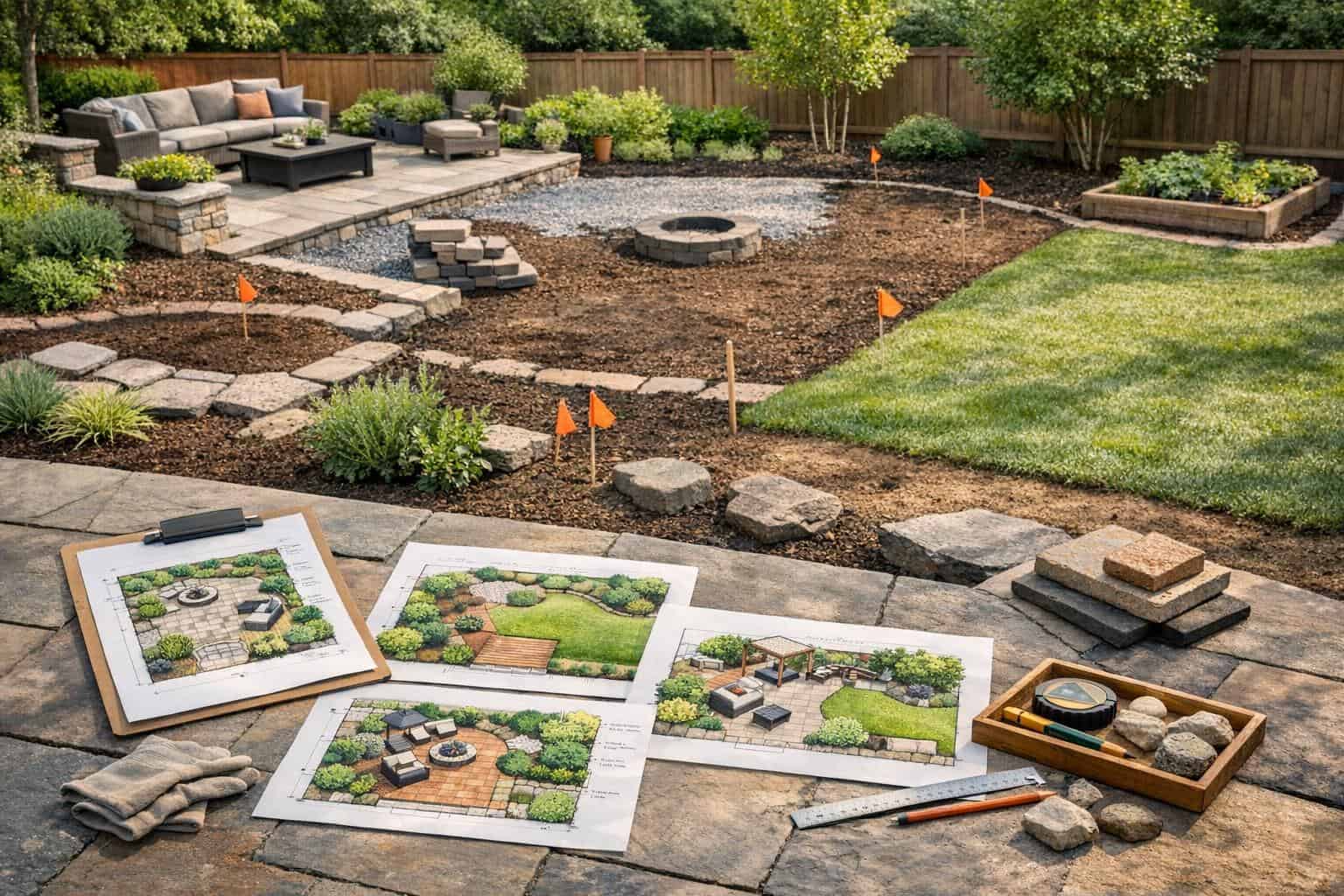
Phasing gets easier when you decide what absolutely belongs in the current budget and what can wait without hurting the long-term plan.

Projects that usually belong in the current phase
- Any work that fixes water movement, grade, safety, or access issues
- Infrastructure that future phases will depend on
- Work in the part of the yard you use most right now
- High-impact cleanup that helps the yard feel functional immediately
Projects that often make sense later
Later phases are a better home for upgrades that are primarily aesthetic, highly optional, or easy to add without disturbing completed work.
- Secondary seating or specialty feature zones
- Extra lighting layers beyond the core functional plan
- Decorative upgrades that can wait until the main structure is finished
How to make the split wisely
- Ask whether future work would damage or duplicate the current phase
- Plan rough-ins now if they will save money later
- Keep the current phase visually intentional even if the full dream plan is years away
Bottom line
A smart phased plan creates a yard that feels complete enough today while still leaving room for a stronger future buildout.
If you want more context, continue with the main How to Phase a Landscaping Project Guide.
Leave a Reply