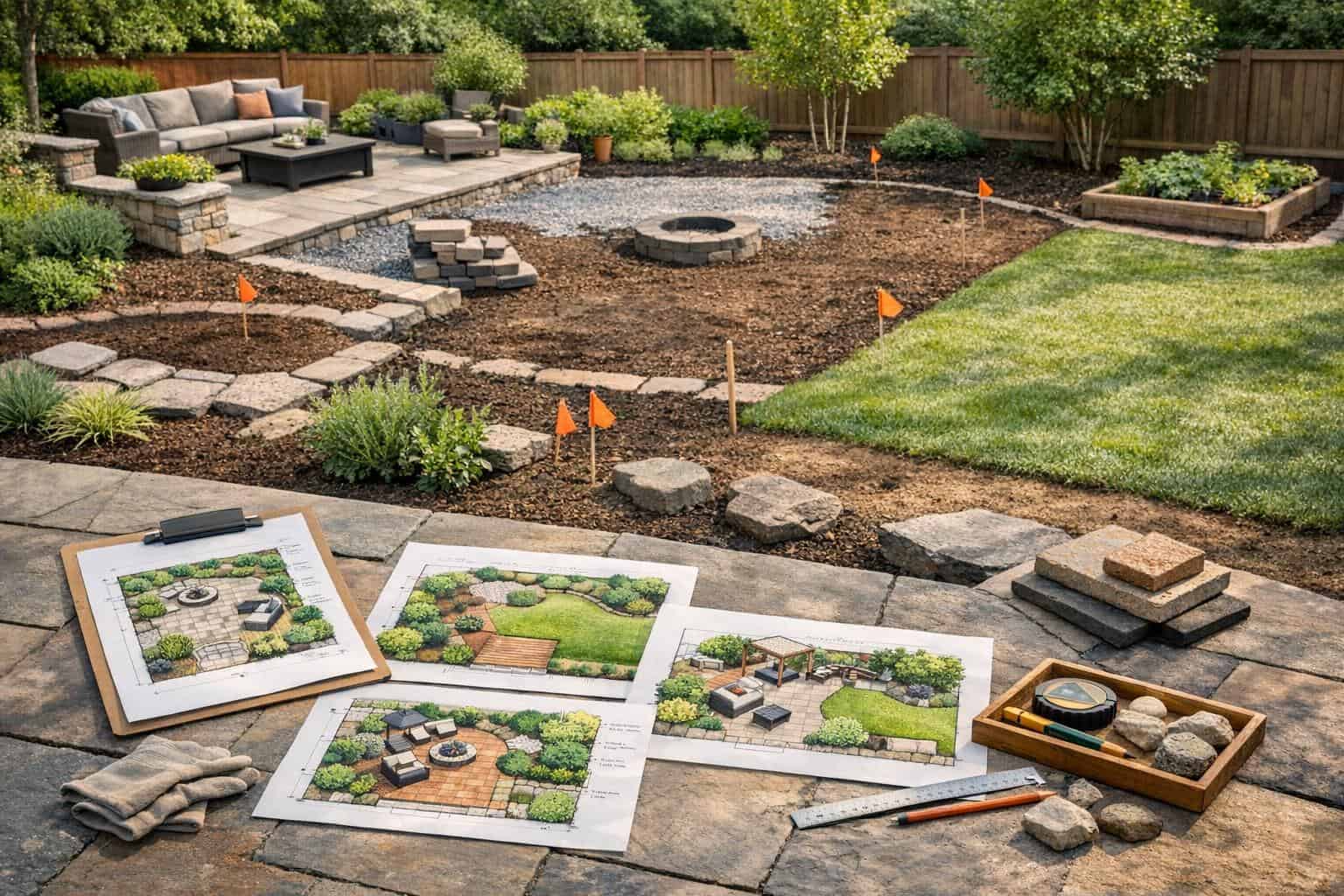
If the yard needs several improvements, the order matters. Good sequencing keeps new work from being torn up, reworked, or blocked by unfinished infrastructure.

The usual priority order
- Drainage, grading, erosion, and structural site corrections
- Major hardscape layout and circulation decisions
- Utility and irrigation work that supports later phases
- Planting, lawn, and decorative finish work after the heavy construction is settled
Why sequence changes from yard to yard
The best order depends on access, slope, existing conditions, and what parts of the yard you plan to keep. A sloped backyard with drainage issues does not phase the same way as a flat front entry refresh.
- Look for the issue that can damage other work if ignored
- Ask which phase will create the most access disruption and plan around it
- Protect any existing features that must survive later construction
Projects that usually belong later
- Finish plantings that could be damaged by later heavy work
- Decorative materials that depend on settled grades and edges
- Optional features that do not change the basic functionality of the yard
Bottom line
The right first project is usually the one that stabilizes the site and clears the path for everything else.
If you want more context, continue with the main How to Phase a Landscaping Project Guide.
Leave a Reply