Materials and Finish Choices

Material and finish comparison guides for homeowners deciding between surface options, appearance, maintenance, and long-term durability.

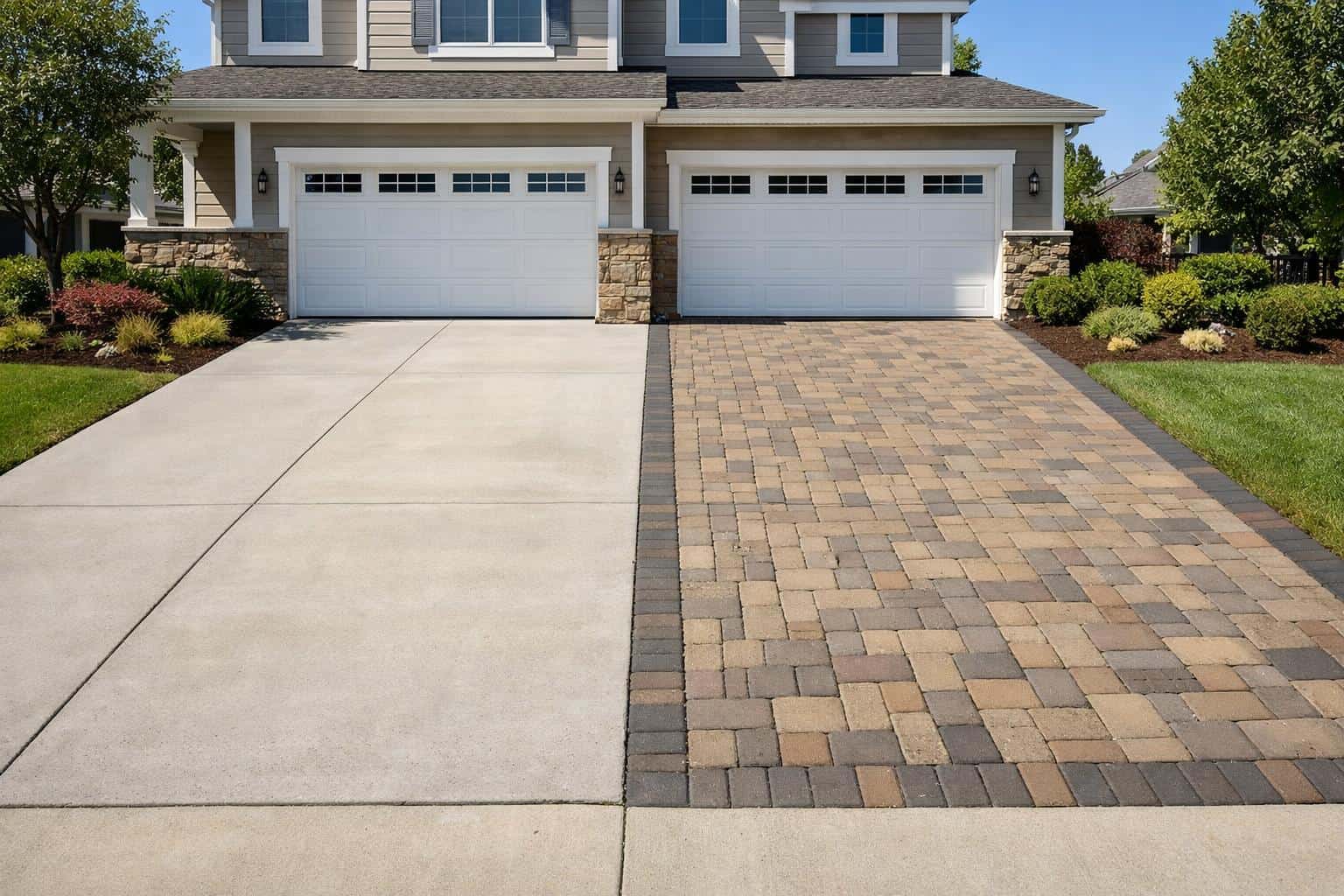
  • Concrete vs Paver Driveway Guide for Homeowners

    Concrete vs Paver Driveway Guide for Homeowners

    Homeowners comparing concrete and paver driveways are usually trying to balance cost, appearance, maintenance, and long-term performance. Both options can work well, but they solve those priorities differently. The best choice depends on budget, climate, design goals, and how much upkeep you are willing to take on over time.

    This guide breaks the decision into practical homeowner terms so you can compare more than just the surface look.

    How concrete and pavers differ at a glance

    • Concrete driveways: often offer a cleaner monolithic look and a lower upfront cost in many markets.
    • Paver driveways: offer modular flexibility, pattern variety, and easier spot repair when installed well.
    • Key tradeoff: concrete can be simpler and more budget-friendly, while pavers often provide more design range and repair flexibility at a higher installation cost.

    Cost and installation differences

    Concrete often wins on initial price, especially for straightforward pours with good access. Pavers usually cost more because the installation is more labor-intensive and material pricing can rise quickly depending on style and pattern complexity.

    However, base preparation matters for both. If you are comparing bids, read our landscaping cost guide and concrete driveway installation guide so you can compare scope accurately.

    Appearance and design flexibility

    Pavers offer more visual variety through color, pattern, border detail, and texture. Concrete can still look excellent, especially with broom, exposed aggregate, or decorative finish choices, but it usually presents a more unified surface.

    Maintenance and repair

    Pavers are often easier to repair in localized areas because individual units can be lifted and reset. Concrete repairs can be more visible, especially if color or aging makes patches stand out. On the other hand, pavers may need periodic joint-sand attention or weed management depending on the system and upkeep.

    For concrete-specific care, see our maintenance and sealing guide.

    Questions homeowners should ask

    • What look fits the house and surrounding hardscape better?
    • How does the local climate affect each option?
    • What maintenance am I realistically willing to handle?
    • What prep work is included for each estimate?

    What homeowners should remember

    Concrete and pavers can both perform well when the installation is planned correctly. The best choice is usually the one that aligns with your budget, repair expectations, and overall landscape style rather than whichever material sounds more premium on paper.

    Materials guide: The Patio and Walkway Materials Guide is useful if you want to compare pavers, concrete, and stone across more than one project type.

  • Broom Finish vs Stamped Concrete Driveways

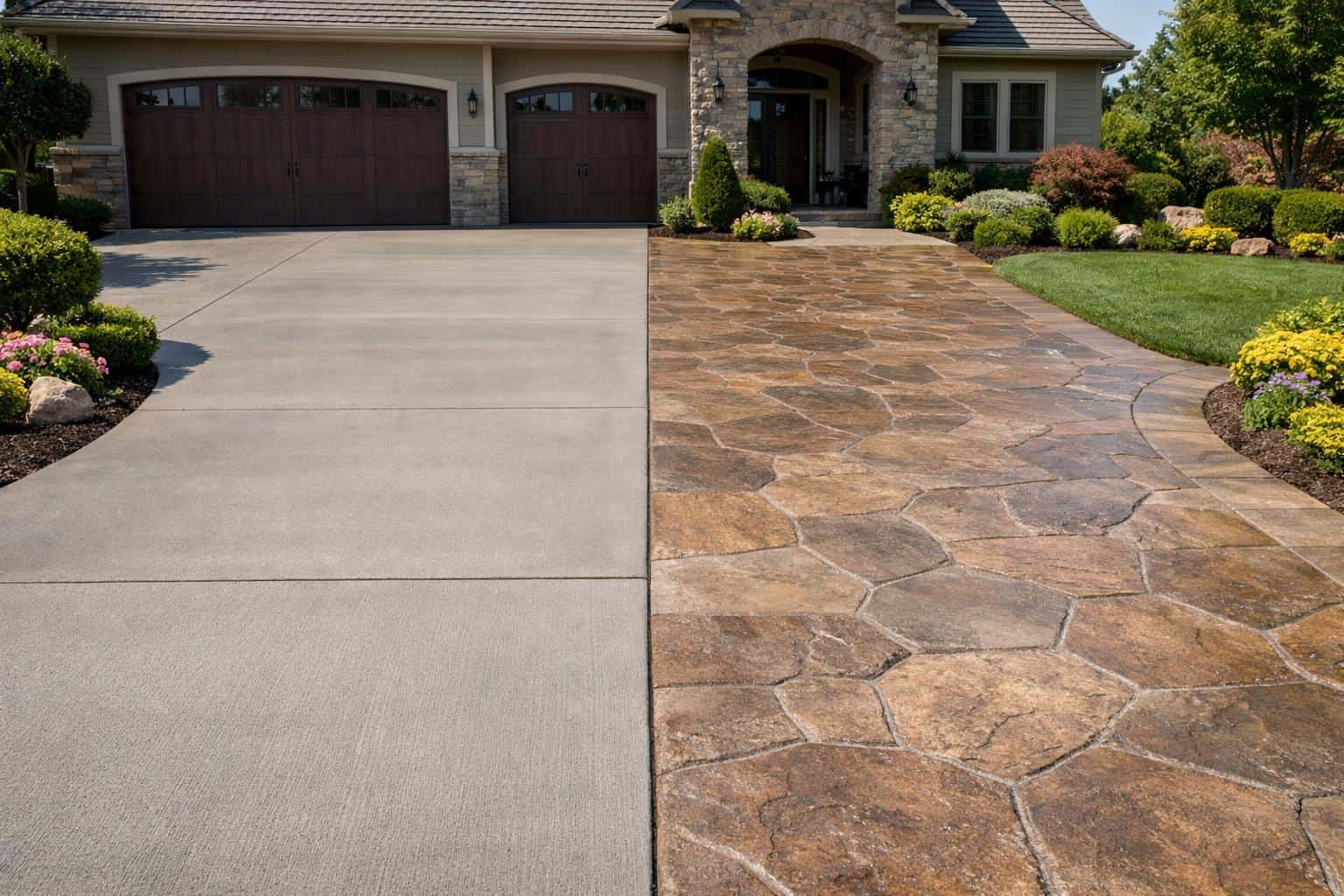
    Broom Finish vs Stamped Concrete Driveways

    Driveway finish affects more than appearance. It changes traction, maintenance, cost, and how the concrete fits the style of the home. For many homeowners, the first real design decision is whether to choose a simple broom finish or spend more for a stamped surface.

    Neither option is automatically better. The right choice depends on how important low maintenance, decorative detail, budget control, and long-term upkeep are for the property.

    What a broom finish offers

    A broom finish is the classic textured driveway surface most homeowners recognize. After the concrete is placed and floated, the surface is brushed to create light traction lines. The result is clean, practical, and usually the most budget-friendly choice.

    • Good traction for everyday vehicle and foot traffic.
    • Simple appearance that suits many homes.
    • Lower installation cost than stamped decorative work.
    • Easier touch-ups and straightforward maintenance.

    For homeowners who care most about durability, function, and cost control, broom finish is often the easiest answer to justify.

    What stamped concrete adds

    Stamped concrete is chosen for style. It can mimic stone, pavers, slate, or other decorative looks while still being a poured slab. That makes it attractive for homeowners who want the driveway to contribute more strongly to curb appeal.

    • More decorative character and visual texture.
    • Better alignment with custom hardscape design goals.
    • Potential to tie together patios, walkways, and entry areas.

    The tradeoff is that stamped work is more detail-sensitive. Pattern, coloring, release products, and sealing all matter more than they do on a standard broom-finished driveway.

    Cost and maintenance differences

    Stamped concrete usually costs more because it requires more labor, tools, timing, and finishing control. Homeowners should also expect more ongoing attention if they want the decorative surface to keep its best appearance over time. Sealing is often more important on stamped work than on a basic broom finish.

    Broom finish is simpler to maintain and easier to evaluate from a functional standpoint. Stamped concrete can be worth the premium when appearance is a top priority, but it should be chosen with clear expectations about care and budget.

    Questions to ask before deciding

    • Is the driveway mainly a practical surface, or is it a major curb-appeal feature?
    • How important is slip resistance in the specific climate and location?
    • Does the budget allow for decorative work and future resealing?
    • Will the finish still suit the home several years from now?

    Bottom line

    Broom finish is usually the best choice for homeowners who want a proven, practical, lower-maintenance driveway. Stamped concrete is a design-forward option for homeowners willing to spend more for a more decorative result. If you are also comparing lifespan and upkeep, read our maintenance and sealing guide and our breakdown of driveway lifespan.

    Plan the Bigger Project

    Concrete work is often just one part of a broader exterior upgrade. If you are still mapping out the full project, also read our landscaping services guide, questions to ask before hiring a landscaper, what to expect during a landscaping project, and our landscaping costs guide for homeowners.