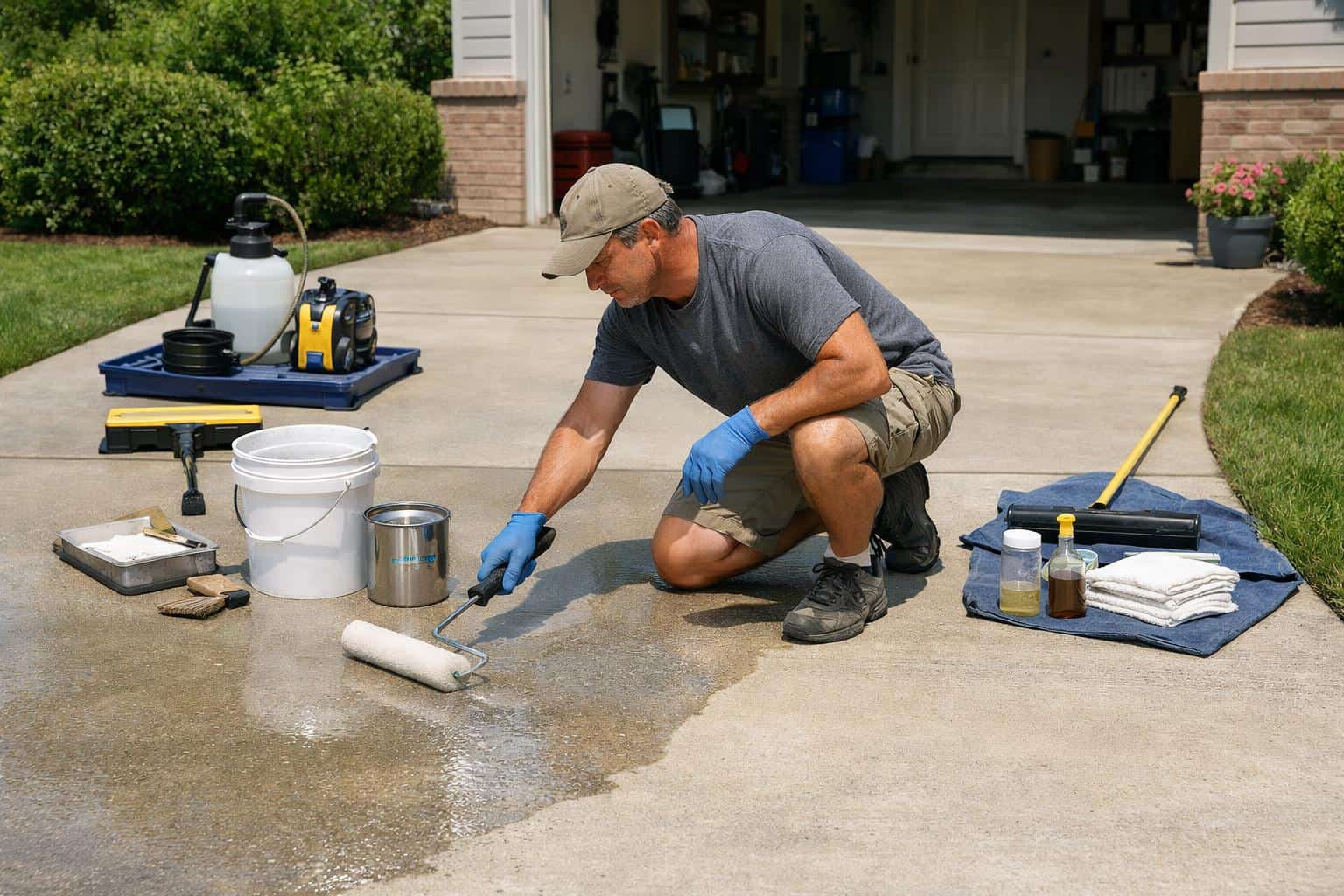
A concrete driveway does not need constant attention, but it does reward consistent care. Homeowners usually get the best long-term results when they treat maintenance as a routine part of ownership instead of waiting until stains, cracks, or surface wear become obvious.
Part of our Complete Driveway Guide: types, costs, installation, repair and hiring in one place.
The goal is not to make concrete look perfect forever. The goal is to keep water, heavy contamination, and small surface issues from turning into larger repair problems. A simple maintenance plan is often enough to extend appearance and service life.

What routine maintenance actually includes
Regular maintenance starts with keeping the surface clean and watching how water behaves on the slab. Dirt and leaves can trap moisture, while oil and rust stains become harder to remove the longer they sit. Seasonal cleaning also gives homeowners a chance to notice new cracking, edge breakdown, or drainage changes early.
- Sweep debris off the driveway regularly.
- Rinse off dirt, mud, and fertilizer residue before it bakes in.
- Clean automotive fluids quickly so they do not set deeply.
- Watch for standing water after rain or irrigation.
- Inspect joints, edges, and previously repaired areas once or twice a year.
When sealing helps and when it is overhyped
Sealing can help reduce staining and slow water penetration, especially on decorative concrete or in driveways that see frequent moisture, leaf tannins, or oil exposure. It can also refresh the appearance of some surfaces. What sealing does not do is fix structural problems, stop major movement, or substitute for proper thickness and drainage.
That is why sealing works best as a protection step on a sound driveway, not as a rescue plan for a failing one. If the slab is badly cracked or settling, a sealer may improve appearance for a short time while doing nothing to address the real cause.

How often should a concrete driveway be sealed?
There is no universal schedule that fits every driveway. The right timing depends on the product used, the local climate, traffic, and the type of finish. Some homeowners reseal every few years, while others only need it occasionally. Decorative finishes and exposed surfaces often benefit from more attention than a plain broom-finished driveway.
Instead of sealing on autopilot, look for signs such as fading appearance, reduced water beading, easier staining, or a surface that is harder to clean than it used to be. Those signs are more useful than a one-size-fits-all calendar rule.
Common maintenance mistakes
- Using harsh de-icing habits without checking whether the product is safe for the surface.
- Ignoring drainage issues that repeatedly hold water on the slab.
- Assuming every crack is cosmetic and never worth monitoring.
- Applying sealer over a dirty or damp surface.
- Expecting sealer to correct spalling, settling, or structural weakness.

When to bring in a contractor
Routine cleaning is a homeowner task. Evaluating widening cracks, surface scaling, trip edges, or drainage failure is different. If the driveway is changing shape, not just changing color, it is worth getting a professional opinion before spending money on products that do not solve the underlying issue.
Homeowners who want the clearest long-term plan should pair maintenance decisions with an honest assessment of the slab’s age, thickness, and condition. If you are trying to decide whether upkeep still makes sense or whether replacement is the better investment, compare this guide with our breakdown of driveway replacement versus new concrete.
Bottom line
Good driveway maintenance is mostly about consistency: keep the surface clean, watch how it drains, address stains early, and use sealing as a protective step instead of a miracle fix. When a driveway is structurally sound, those habits can preserve appearance and help you get more years out of the slab.

Plan the Bigger Project
Concrete work is often just one part of a broader exterior upgrade. If you are still mapping out the full project, also read our landscaping services guide, questions to ask before hiring a landscaper, what to expect during a landscaping project, and our landscaping costs guide for homeowners.