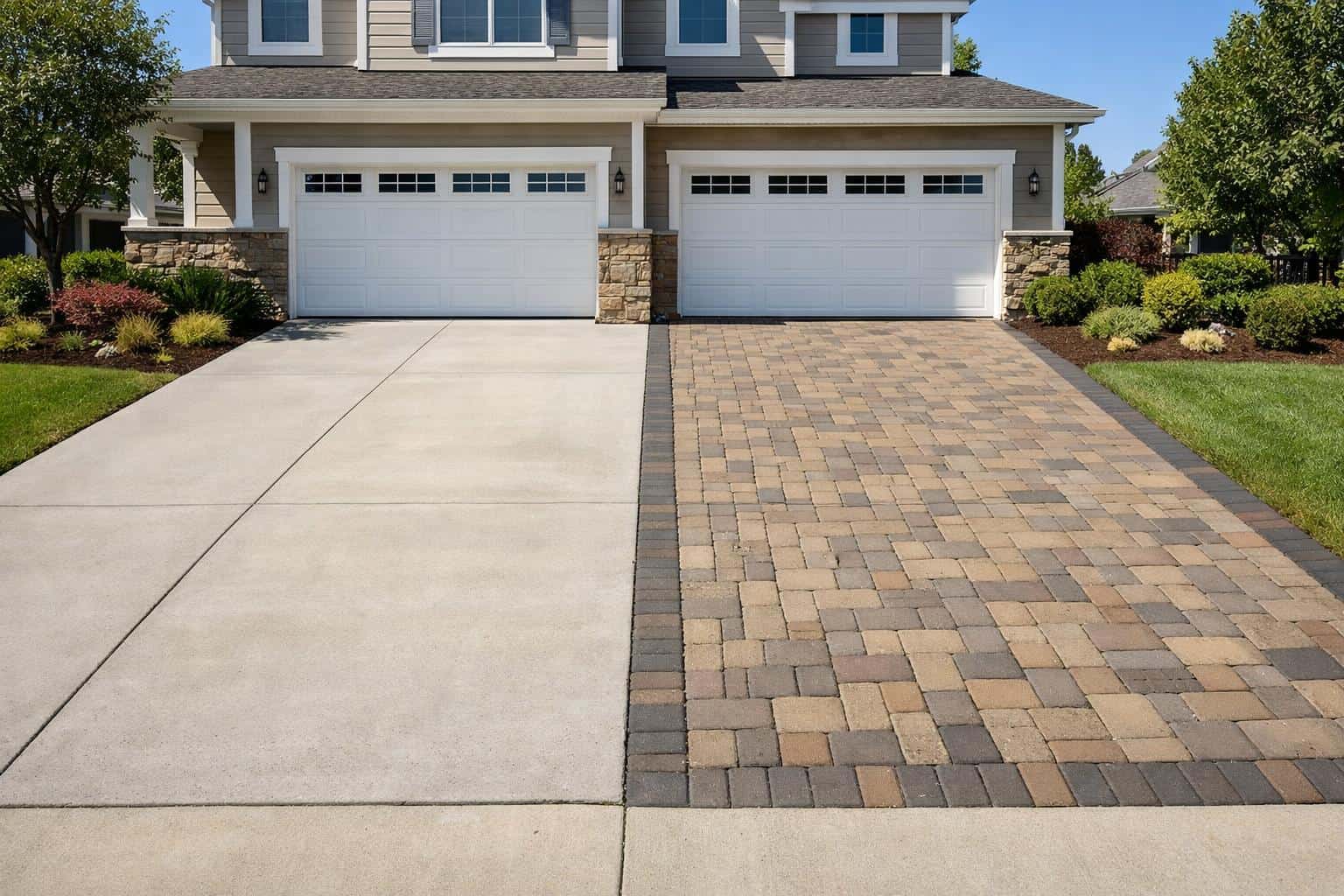
Concrete and paver driveways can both be solid investments, but the upfront number, repair pattern, and long-term upkeep costs can look very different depending on the property and finish level.

Where the upfront price changes
- Concrete often starts lower when the layout is straightforward and the finish is simple.
- Pavers usually cost more up front because they involve more material handling, edge restraint, and detailed base work.
- Demolition, access, drainage, and border complexity can move both quotes more than homeowners expect.
What long-term cost can look like
The cheaper option on day one is not always the cheaper option over the life of the driveway.
- Concrete may need crack management, sealing, or eventual section replacement.
- Pavers can be easier to repair selectively, but joint sand, weed control, and edge stability matter.
- Decorative upgrades can change the math quickly on either side.
How to compare quotes fairly
- Match thickness, base work, drainage handling, and finish level before comparing totals.
- Ask what future maintenance the contractor expects for each option.
- Separate essential structure from decorative upgrades.
Bottom line
The better value depends on whether you prioritize lower upfront spend, easier spot repair, decorative flexibility, or simpler ongoing upkeep.
For the broader overview, continue with Concrete vs Paver Driveway Guide for Homeowners.
Leave a Reply