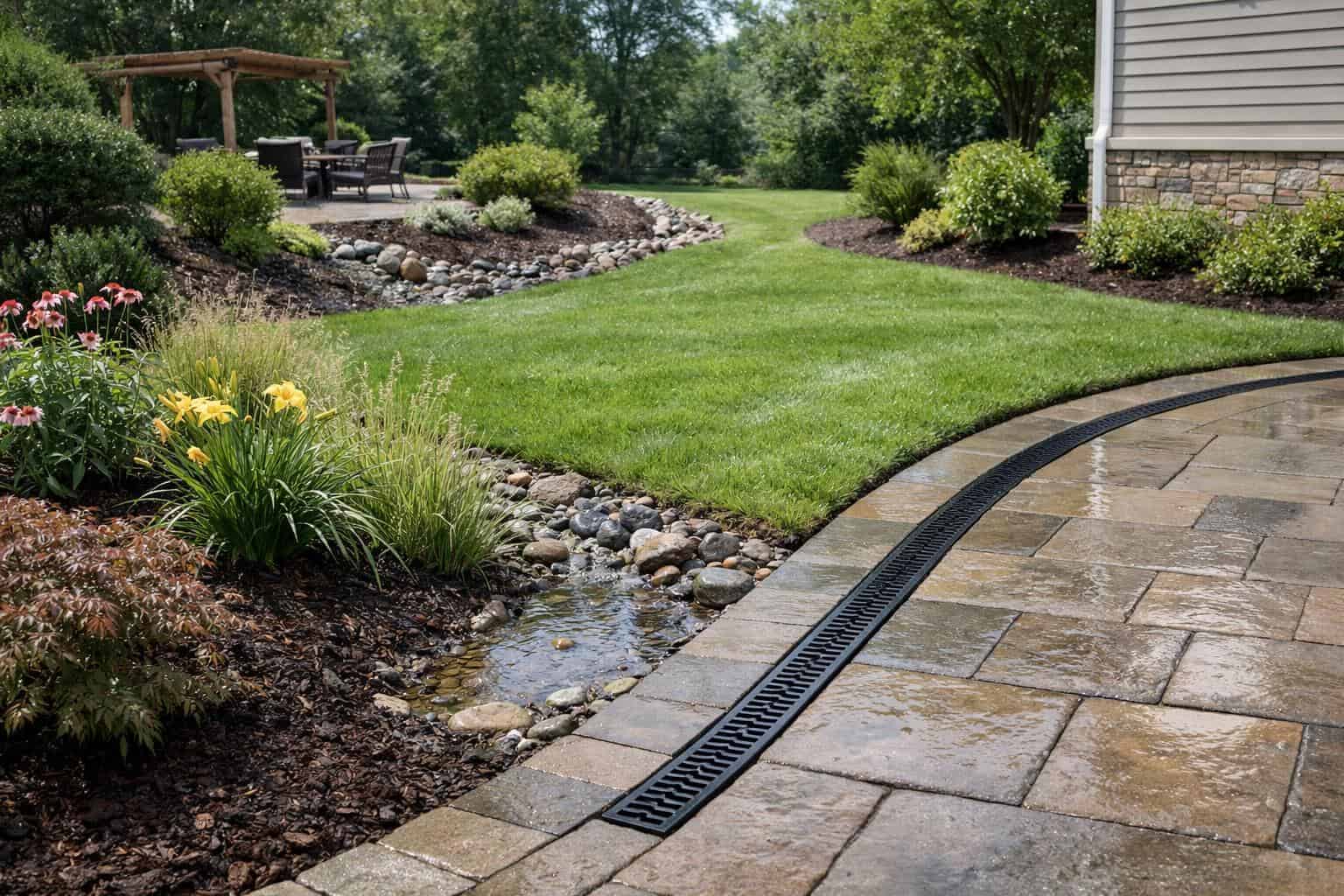
Drainage problems are easy to ignore until they start damaging the parts of the property homeowners care about most. Pooling water, soggy lawn edges, washed-out mulch, slippery walkways, runoff toward the garage, and erosion near retaining walls are all signs that water is moving the wrong way. Once those issues start affecting hardscapes, planting beds, or the foundation, they usually get more expensive to fix.
This guide explains the most common residential drainage solutions, when homeowners should address water problems before other upgrades, and what to ask a contractor when drainage is part of the project scope.
Signs a yard needs drainage work
Not every wet spot means a full drainage system is needed, but recurring water issues usually point to a bigger grading or runoff problem. The key is to watch what happens after heavy irrigation or rainfall, not just how the property looks on a dry day.
- Water stands in the yard long after rain stops.
- Mulch or soil washes out from planting beds.
- Water collects near the house, garage, or patio edge.
- Lawn areas stay muddy or soft when surrounding areas dry out.
- Walkways, driveways, or retaining walls show signs of undermining or settlement.
Common residential drainage solutions
The right drainage fix depends on what kind of water you are dealing with. Surface runoff, roof discharge, oversaturated planting beds, and low spots in the lawn do not always need the same solution.
- Grading corrections: reshape the surface so water flows away from structures and gathering areas.
- Channel drains and catch basins: collect and redirect water from hardscape areas where flow concentrates.
- French drains: help intercept subsurface or slow-moving water in some landscape conditions.
- Downspout extensions: move roof runoff away from the immediate foundation zone.
- Swales and surface pathways: guide water across the property in a controlled way.
Some projects use more than one method because the problem is not a single low spot, but a larger site-planning issue.
Why drainage should often come before other upgrades
Homeowners sometimes want to start with the visible improvements first: a patio, new lawn, walkway, or planting beds. But if water movement is already poor, finishing surfaces before fixing drainage can shorten the life of everything that follows.
Drainage is often part of the structural side of landscaping. It belongs in the same planning conversation as patios, retaining walls, and access surfaces because those features all depend on stable grades and predictable runoff.
How contractors evaluate drainage problems
A strong contractor should look beyond the obvious puddle. They should be paying attention to slope, elevation changes, hardscape edges, downspout discharge, soil conditions, and where water is likely entering or concentrating across the site.
- Where does the water start?
- Where is it supposed to go?
- What surfaces or beds are interrupting that movement?
- Are there signs of settlement, erosion, or poor compaction nearby?
Those questions usually tell you more than a fast suggestion to “just add a drain.”
Drainage work and project cost
Drainage can feel expensive because much of the value is invisible once the job is complete. But invisible does not mean optional. The cost usually reflects excavation, pipe or collection components, grading labor, disposal, and the coordination needed to make water move correctly without creating a new problem elsewhere on the property.
If you are reviewing bids, our landscaping costs guide can help you compare scope more accurately.
Questions to ask before approving drainage work
- What is causing the water issue in the first place?
- How will this solution move water away from the problem area?
- Does this fix depend on changes to slope, hardscape, or downspouts elsewhere?
- Will this work protect nearby patios, walkways, lawn, or planting beds over time?
- What maintenance should I expect for this drainage setup?
What homeowners should remember
Drainage is not just a cleanup issue. It is a performance issue that affects patios, lawns, retaining walls, planting beds, and even the structure itself. If a contractor explains the water path clearly and shows how the solution fits into the broader landscape, you are much more likely to end up with a fix that lasts instead of a temporary patch.
If you are unsure whether the real fix is collection drains, surface reshaping, or both, our drainage vs regrading guide can help you compare those approaches.
If the underlying problem may be surface shape rather than collection alone, our grading and yard leveling guide is a helpful next step.
Related guide: If you are not sure whether the yard has a drainage problem in the first place, the Signs You Need Better Yard Drainage Guide can help identify common warning signs.
Cost guide: The What Affects Drainage Project Cost Guide helps explain why some water issues require much more than a simple quick fix.
Leave a Reply