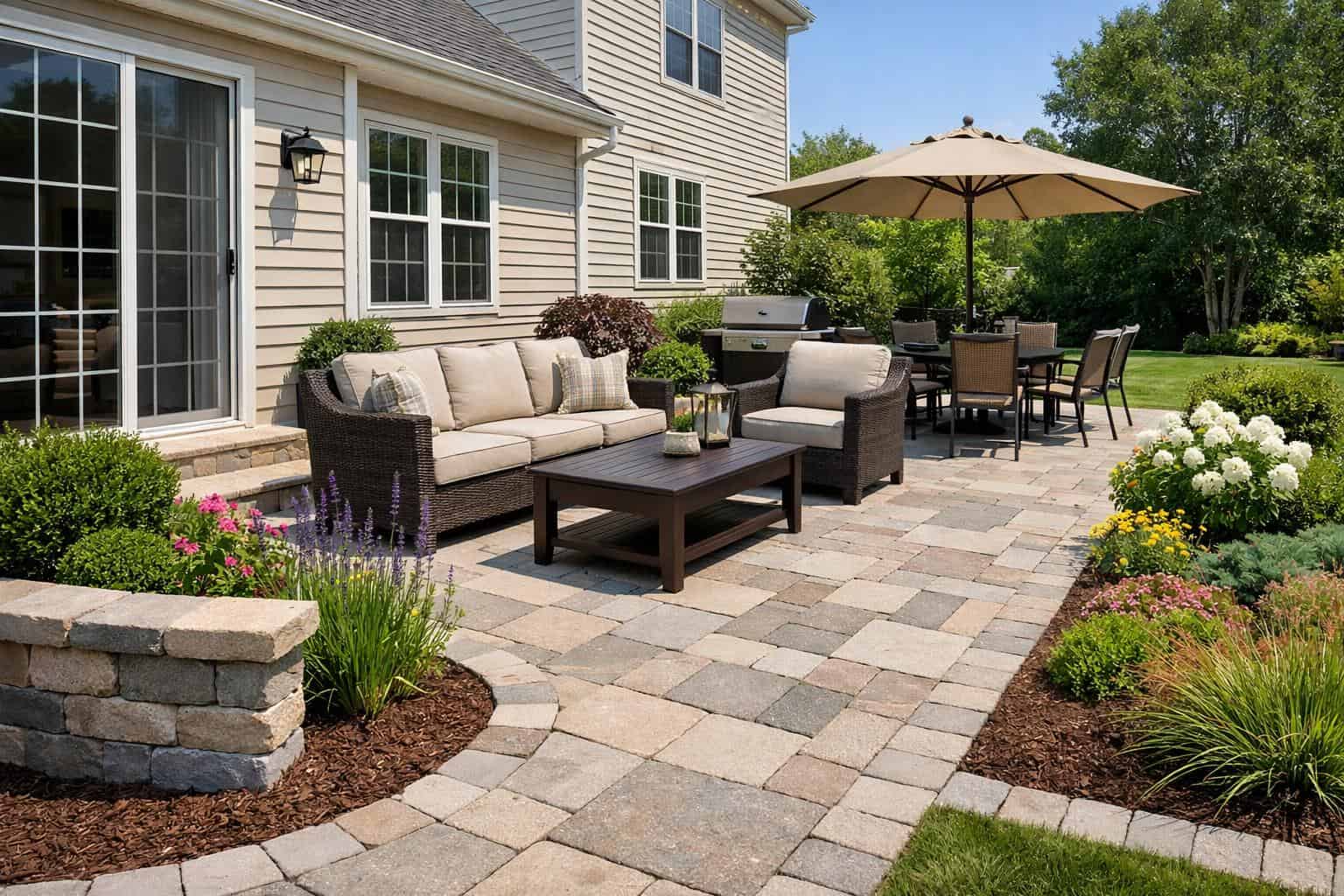
A patio project can add usable square footage, improve circulation through the yard, and make outdoor living areas feel more intentional. It can also become expensive or frustrating if homeowners jump straight to surface materials without thinking through layout, drainage, elevation, and daily use. A good patio is not just a finished surface. It is a well-planned part of the landscape.
Part of our Complete Patio and Paver Guide: materials, costs, installation, repair and hiring in one place.
This guide explains what patio installation usually includes, how to think about material and layout choices, and what homeowners should ask before hiring. Whether you are considering concrete, pavers, or natural stone, the same planning logic applies: function comes first, then finish.

What patio installation usually includes
Patio work typically begins with layout planning, excavation, sub-base preparation, grade control, and edge definition before the visible surface material is ever installed. Depending on the project, the scope may also include steps, seat walls, drainage improvements, lighting rough-ins, or connections to nearby walkways and planting beds.
- Common patio materials: poured concrete, pavers, natural stone, and concrete slabs.
- Common add-ons: seating walls, fire pit zones, pathways, landscape lighting, pergola pads, and planting-bed integration.
- Main performance factors: base preparation, drainage, slope, edge restraint, and the right surface for the way the space will be used.
Start with how the patio will be used
Before comparing materials, homeowners should define what the space needs to do. A patio for a small dining set has different size and circulation needs than one designed for entertaining, grilling, and a fire feature. If people will move between the house, lawn, pool, or outdoor kitchen, those routes should shape the layout from the beginning.
This is one reason broader planning matters. Our landscaping services guide explains how patios often work best when they are planned alongside walkways, lighting, drainage, and planting instead of as a standalone slab.

Material choice affects cost, appearance, and maintenance
Material decisions often start with appearance, but long-term upkeep matters too. Concrete can be a practical value option and works well in many contemporary layouts. Pavers offer flexibility and easier spot repair. Natural stone can look premium and organic, but may raise installation complexity and cost.
- Concrete patios: often cost less than premium stone options and can be finished in multiple ways.
- Paver patios: offer modular flexibility, pattern variety, and easier localized repairs when installed well.
- Natural stone patios: can create a distinctive high-end look, but require good planning around thickness, bedding, and edge details.
The best choice depends on budget, design goals, climate, maintenance tolerance, and how the patio connects to the rest of the property.
Drainage and slope matter more than many homeowners expect
A patio should not trap water against the house or create slippery low spots after rain. Drainage planning is one of the most important parts of the project, especially when the patio sits near the foundation, a retaining wall, or a transition into lawn and planting beds.
If your yard already struggles with pooling water or runoff, a patio project is often the right time to solve that. Our drainage solutions guide explains why water movement should be handled as part of the same plan, not after the finish surface is already installed.

How the installation process usually unfolds
While exact methods vary by material, most patio projects follow a similar sequence:
- layout confirmation and elevation planning
- excavation and removal of unsuitable material
- base preparation and compaction
- drainage and edge-detail work
- surface installation and finishing
- cleanup, curing or settlement checks, and handoff
Homeowners who want a broader overview of staging, disruption, and project rhythm should also read what to expect during a landscaping project.
Questions to ask before hiring for a patio
- How will you handle drainage and slope on this part of the property?
- What base preparation is included in the bid?
- How will the patio connect to steps, doors, walkways, or nearby beds?
- What material do you recommend for this use case, and why?
- What maintenance should I expect in the first year and beyond?
Our guide on questions to ask before hiring a landscaper is a helpful companion when you start comparing bids.
What homeowners should remember

A good patio is not only about the surface. It is about how the space functions, drains, connects to the yard, and holds up over time. The more a contractor explains layout, base work, water management, and transitions to nearby features, the more confidence you can have that the finished patio will perform well instead of simply looking good on day one.
If you are still deciding between different outdoor-living structures, also read our patio vs deck guide for homeowners.
If your patio is being planned as a social gathering area, also read our fire pit installation guide for homeowners.
Material comparison: Homeowners choosing a patio surface can also review the Paver Patio vs Stamped Concrete Patio Guide for repair and maintenance tradeoffs.
Related guide: If the patio is only one part of a larger outdoor-living plan, the Backyard Landscaping Ideas and Planning Guide for Homeowners can help connect seating, lawn, privacy, and circulation.
Related guide: Homeowners with older hardscape can compare symptoms in the Signs It Is Time to Replace a Patio Guide before deciding whether repairs are enough.
Cost guide: The What Affects Patio Cost Guide breaks down why similar-looking patio proposals can be priced very differently.
Timeline guide: Homeowners who want a clearer schedule can review the How Long Does a Patio Project Take Guide alongside installation and cost planning.
Quote guide: The patio quote guide helps homeowners compare bids by prep, drainage, and finish scope instead of price alone.
Expectations guide: The patio expectations guide helps homeowners understand disruption, excavation, finish-detail flow, and cleanup timing.
Maintenance guide: The patio maintenance guide helps homeowners stay ahead of joint wear, settling, and surface changes.
Warning signs guide: The patio warning signs guide helps homeowners judge settling, drainage trouble, and surface wear before the space worsens.
Related homeowner planning guides
Use these next-step guides to make the project more specific before comparing estimates or choosing materials.
- Patio Planting for Evening Use Guide for Homeowners: Use this when the patio needs to feel better after dark, not just look good in daytime photos.
Related homeowner planning guides
Use these next-step guides to narrow the project before choosing materials, comparing estimates, or changing the layout.
- Patio Planting for Hot Afternoon Sun Guide: Use this when heat, glare, and reflected sun are making a patio less comfortable.
More specific homeowner planning guides
Use these deeper guides when the broad project direction is clear and the next decision is about layout, materials, maintenance, or cost tradeoffs.
- Patio Container Planting Layout Guide: Use this when planning patio container planting layout to use containers to soften a patio without cluttering the walking path.
- Patio Shade Tree Placement Guide: Use this when planning patio shade tree placement to add shade without creating root, leaf, or hardscape problems later.
- Patio Planting for Cooking Areas Guide: Use this when planning patio planting near cooking areas to keep grill and cooking zones comfortable without placing fragile plants in the wrong spot.
- Patio Border Drainage Planning Guide: Use this when planning patio border drainage planning to avoid soggy patio edges and mulch washout.
- Patio Planting With Gravel Beds Guide: Use this when planning patio planting with gravel beds to use gravel as a clean edge without overheating the planting.
- Patio Pergola Planting Transition Guide: Use this when planning patio pergola planting transition to blend a pergola into the landscape instead of leaving it visually isolated.
More specific homeowner planning guides
Use these deeper guides when the broad project direction is clear and the next decision is about layout, materials, access, maintenance, or cost tradeoffs.
- Patio Planting for Paver Patios Guide: Use this when planning paver patio planting to soften paver edges without causing movement or mess.
- Patio Planting for Concrete Patios Guide: Use this when planning concrete patio planting to make concrete patios feel less stark and more comfortable.
- Patio Planting for Raised Patios Guide: Use this when planning raised patio planting to soften level changes without hiding steps or edges.
- Patio Planting for Narrow Borders Guide: Use this when planning narrow patio border planting to add greenery where planting depth is limited.
- Patio Planting for Poolside Edges Guide: Use this when planning poolside patio planting to choose plants that support poolside comfort without creating cleanup problems.
- Patio Planting for Rental Properties Guide: Use this when planning rental property patio planting to make patios look finished with less owner maintenance.