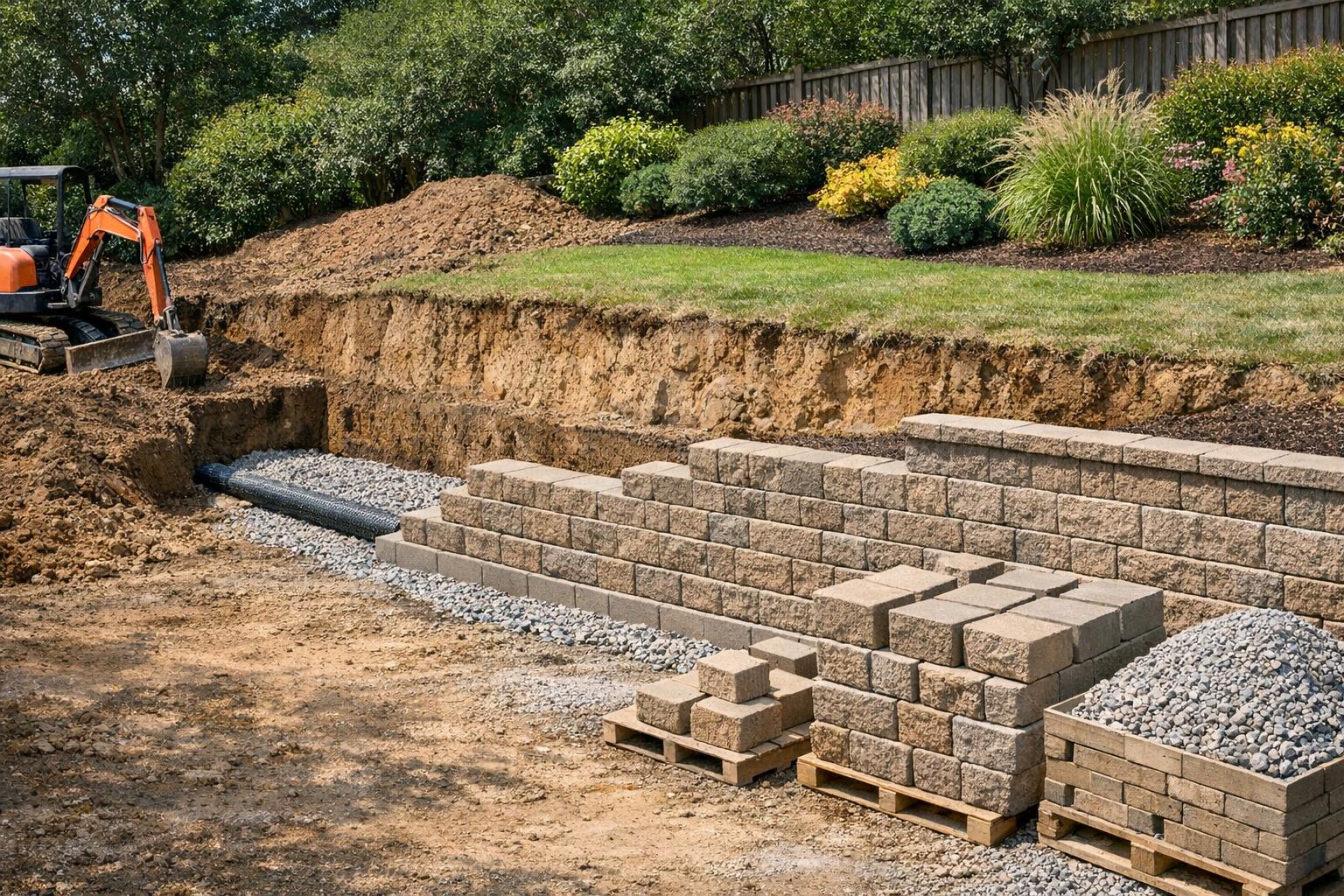
Retaining wall timelines vary more than homeowners often expect because the visible wall face is only part of the construction process. Excavation, drainage, reinforcement, site access, engineering, and the pressure the wall is meant to handle can all affect how long the project takes. A short decorative wall and a taller structural retaining wall may look related but move on very different schedules.
The more the wall is tied to slope correction or water management, the more the project tends to reflect broader site work instead of just material installation.
What takes time in a retaining wall project
Excavation, base preparation, drainage handling, backfill, reinforcement detail, and cleanup all shape the schedule. If the site is steep, tight, or already finished around the wall area, the project may take longer because the crew has less room to work and more restoration to handle.
Engineering and permits can extend the timeline
Some walls move quickly because they stay within simpler site conditions. Others need engineering, permits, or more careful drainage planning, which can extend the timeline before installation even begins. The permit guide and retaining wall guide help clarify that early planning stage.
Timeline depends on more than block stacking
Homeowners comparing schedules should focus on the whole job: excavation, drainage, reinforcement, site restoration, and whether the wall is part of a bigger drainage or grading project. The retaining wall cost guide is a good companion because many of the same complexity factors affect both price and timeline.
Leave a Reply