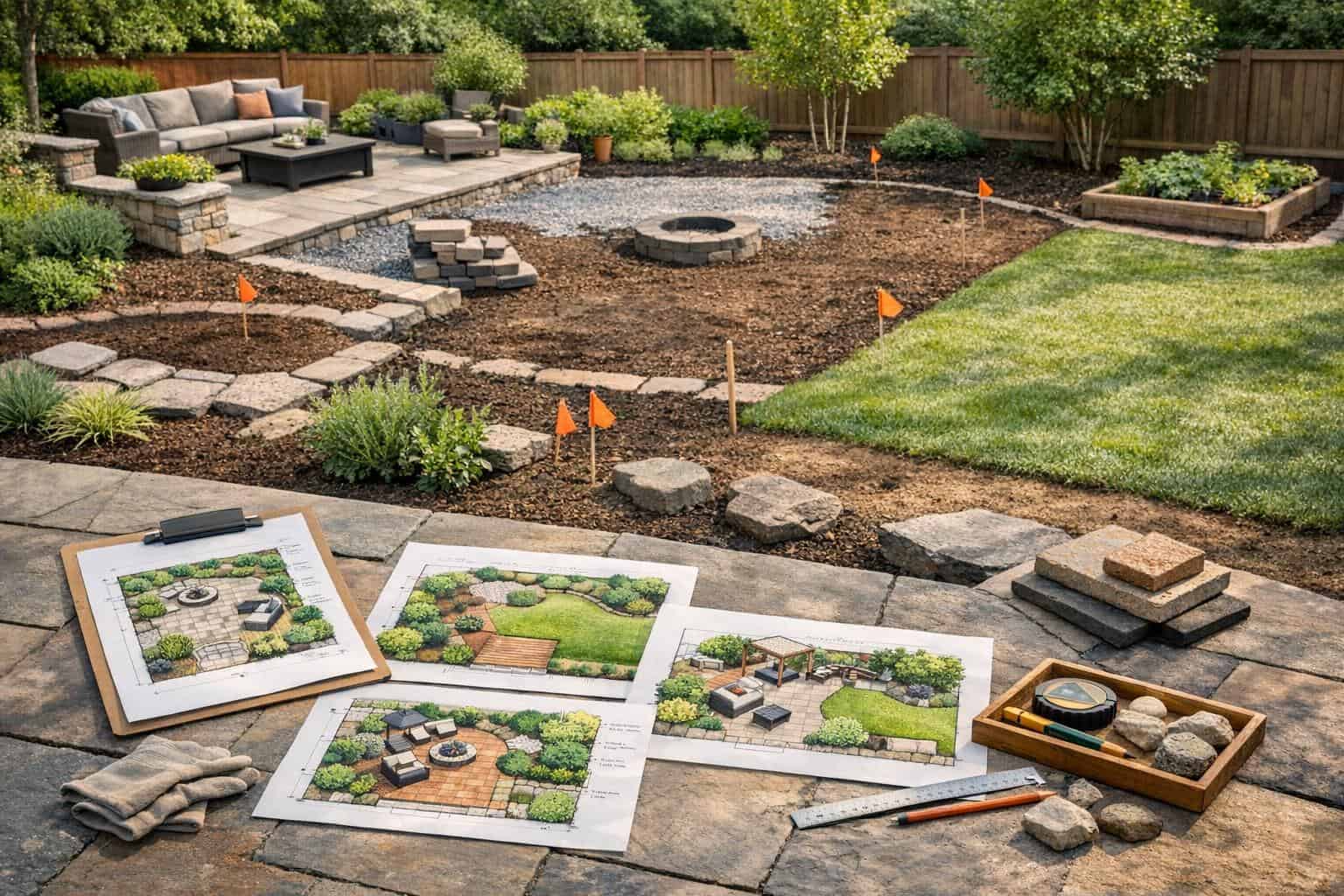
Phasing a landscaping project can be a smart way to manage budget and decision-making, but only when the yard is still planned as one larger system. Too many homeowners phase work by reacting to the next urgent problem instead of deciding what the final yard should become. That can lead to rework, conflicting design choices, and features that do not connect well once the whole project is finished.
The goal of phasing is not simply to spread out cost. It is to spread out the work without losing the logic of the larger plan.
What usually needs to happen first
Projects that affect the structure of the yard generally belong earlier in the sequence. Drainage, grading, retaining work, utility routing, and core hardscape layout often shape everything that comes later. If those decisions are postponed until after patios, planting, or lawn work are finished, homeowners may end up paying twice for the same area.
That is why the drainage guide, grading guide, and retaining wall guide often belong in the earliest planning phase.
How to phase without losing the whole-yard vision
Even if you build in stages, it helps to know the intended long-term layout of the yard. Where will entertaining happen? Where will privacy planting go? Will future lighting, irrigation, lawn, or kitchen features need routing or space now? Those questions should be answered before phase one starts, not only when later phases arrive.
The backyard planning guide and front yard guide are helpful because they frame the yard as a system rather than a list of separate upgrades.
A common phasing pattern
- Phase 1: drainage, grading, access, utilities, and structural site work
- Phase 2: major hardscape such as patios, walkways, walls, or core outdoor-living features
- Phase 3: planting, lawn, lighting, and finishing details
- Phase 4: optional upgrades such as fire features, kitchens, or additional decorative improvements
This is not the right order for every yard, but it illustrates why invisible site work often belongs ahead of visible finishing elements.
How to keep phased work realistic
Homeowners should ask contractors what future phases need to be anticipated now. If irrigation sleeves, electrical runs, drainage routes, or patio dimensions will matter later, the earlier phases should account for them. That prevents tearing up finished work to add something that could have been prepared up front.
Phasing is most successful when homeowners start with a clear destination. The more the long-term plan is understood before phase one begins, the better each stage tends to feel and perform.
Leave a Reply