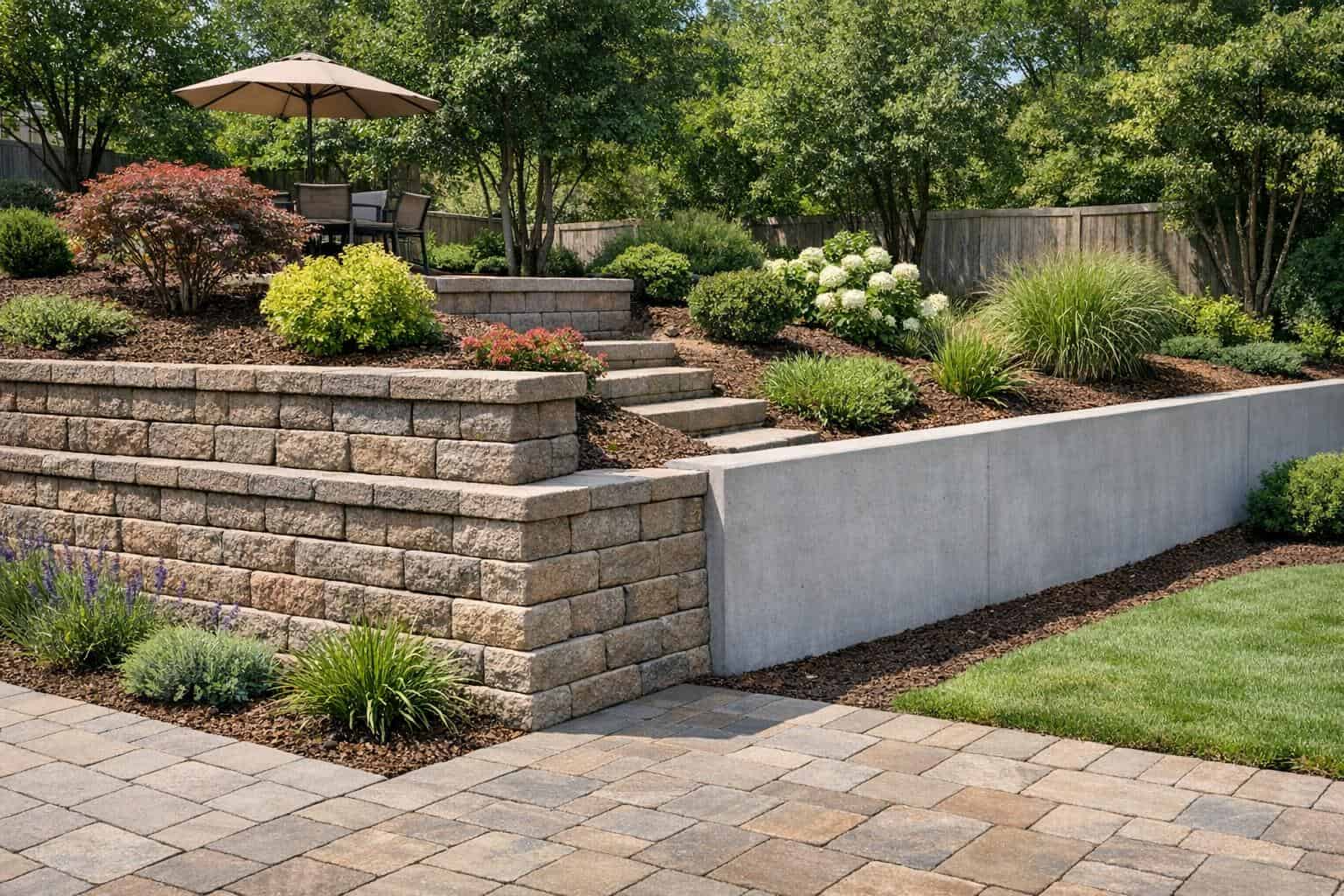
Retaining wall block and poured concrete can both work well in residential landscapes, but they are not interchangeable in every situation. Homeowners often compare them based on appearance alone, yet the better choice also depends on drainage, wall height, site conditions, engineering requirements, and the look they want the yard to have over time.
Understanding the difference between these systems early can make estimate comparisons much easier. One contractor may recommend segmental wall block because it fits the site, drains well, and offers a textured finished look. Another may recommend poured concrete for a cleaner modern style or for structural reasons. The right answer depends on the project, not just the material category.
How segmental retaining wall block works
Segmental retaining walls are built from interlocking or stacked concrete blocks installed over a prepared base with drainage considerations behind the wall. They are common in residential work because they come in many sizes and finishes, can look natural or contemporary, and often integrate well with planting and patio design. The modular system can make curves, steps, and terraced layouts easier to achieve.
Block systems still require proper excavation, base prep, drainage stone, and the right construction method. Homeowners should not assume they are simple just because they are modular. The broader retaining wall guide explains the installation basics and when a wall may need engineering or permits.
How poured concrete retaining walls differ
Poured concrete walls usually create a smoother, more monolithic appearance. They are often chosen for modern aesthetics or for projects where the design calls for crisp lines and a continuous structural form. Depending on the wall, reinforcement and formwork may be part of the build, which can increase complexity and labor.
Poured concrete can perform very well, but drainage and waterproofing detail still matter. A strong-looking wall can still fail if water pressure is allowed to build behind it. That is why retaining wall decisions often overlap with the drainage planning process.
Appearance and design flexibility
Segmental block tends to offer more visual texture and more finish options right out of the box. It can work in rustic, traditional, and many contemporary yards depending on the block style. It is also well suited to tiered gardens, curved beds, and blended planting zones.
Poured concrete generally creates a cleaner and more minimal look. In the right design, that can feel architectural and upscale. But some homeowners find it too stark unless it is softened by planting, lighting, or surrounding hardscape. If appearance is the main driver, ask contractors to show examples of completed walls in yards similar to yours.
Drainage and site performance
Drainage is one of the biggest practical differences homeowners should discuss. Segmental systems are often designed with drainage stone and can be more forgiving visually if small movement occurs over time. Poured concrete walls can be very durable, but poor drainage detailing behind the wall can create serious pressure issues.
If runoff or slope water is already a concern, it is worth reviewing the erosion control guide and the drainage vs regrading comparison before choosing a wall system in isolation.
Cost and construction complexity
Costs vary by wall height, access, drainage demands, engineering, finish choice, and labor conditions. Some block walls are very cost-effective for residential sites. Some poured concrete walls become expensive because of forming, reinforcement, and finish detail. Conversely, a highly detailed block wall with curves and terraces can also become a major project.
The key is comparing complete scope, not just wall material. Ask whether the estimate includes excavation, export, drainage stone, backfill, engineering, geogrid if needed, permits, and final grading. That will give you a more useful comparison than material pricing alone.
Which choice fits which kind of project
Segmental block often makes sense for decorative-yet-functional garden walls, terracing, and residential slopes where homeowners want texture and design flexibility. Poured concrete may make more sense where the desired look is very clean and modern or where the design and engineering call for that system specifically. Neither choice is automatically better in every yard.
- Choose block when you want texture, modular flexibility, and a system commonly used in residential garden and slope projects.
- Choose poured concrete when the design requires a cleaner monolithic appearance or when a structural approach points in that direction.
- In either case, make drainage, base preparation, and overall site design part of the conversation from the beginning.
For most homeowners, the best decision comes from looking at the whole site: water, grade, wall purpose, and the surrounding yard design. A retaining wall should solve a problem and still feel like it belongs in the landscape.
Leave a Reply