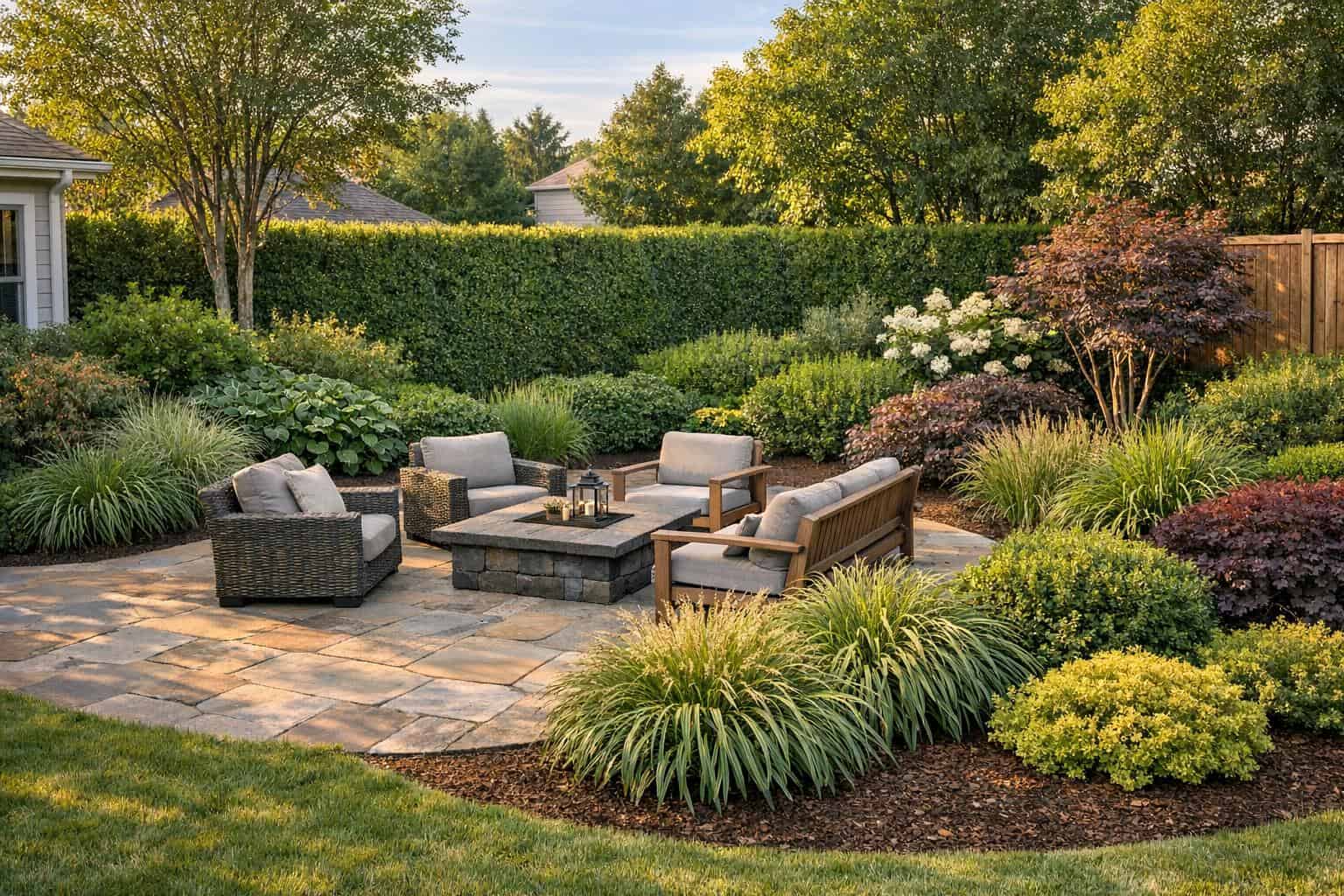
Privacy landscaping helps homeowners create separation without making the yard feel closed off or harsh. Instead of relying only on a fence or wall, privacy planting uses hedges, small trees, shrubs, grasses, and layered beds to block views, soften boundaries, and make outdoor living spaces feel more comfortable.
Part of our Complete Fence and Privacy Guide: materials, costs, rules, installation and plant screens in one place.
The best privacy plan depends on what you are screening and how quickly you need results. Some homeowners want year-round backyard privacy from nearby windows. Others want to soften a fence line, separate a patio from a neighboring property, or create visual screening around a pool, fire pit, or outdoor dining area. Those are different goals, and they lead to different planting choices.
How privacy landscaping usually works
Most privacy landscapes use layering rather than one single row of plants. A solid hedge can work well in the right location, but layered planting often looks better and can be easier to maintain over time. A common approach is to combine taller anchor plants with medium shrubs, ornamental grasses, and lower planting that finishes the bed. This creates more depth and helps the screen look intentional from inside the yard.
If the privacy area is part of a larger outdoor-living zone, it should be planned together with hardscape and seating. Homeowners creating a patio, fire feature, or dining space may also want to review the outdoor kitchen guide or fire pit guide so the privacy planting supports how the space will actually be used.

Choosing the right type of screen
Evergreen hedges are popular because they offer year-round coverage and a clean look, but they are not the only solution. Small trees can raise the screening higher where neighbor sightlines come from upper windows. Ornamental grasses can soften views in a modern landscape. Mixed shrub borders can create privacy while still looking natural and varied.
The right choice depends on mature size, maintenance needs, sun exposure, irrigation access, and how much room the bed has to grow. A plant that looks tidy at installation can become a constant pruning chore if spacing is too tight or the variety is wrong for the site.
Spacing, growth, and maintenance
One of the biggest mistakes in privacy landscaping is planning only for day one. Plants are often installed closer together than their mature size allows because the homeowner wants instant coverage. That can create crowding, poor airflow, disease pressure, and expensive maintenance later. It is usually smarter to design for healthy mature growth and accept that privacy builds over time.
Irrigation also matters. New privacy plantings often need regular establishment watering, and ongoing water needs depend on climate and plant type. If the bed will be irrigated automatically, the irrigation system guide can help clarify what should be planned before planting begins.

Blending privacy with overall yard design
Privacy planting should not feel like an isolated wall of green unless that is the explicit style goal. The most successful screens are integrated into the rest of the yard through edging, lighting, mulch, and surrounding bed design. Lighting can make privacy planting useful at night while also adding security and atmosphere. If that matters for the space, the landscape lighting guide is worth reviewing alongside the planting plan.
Privacy beds also benefit from a clear maintenance strategy. Homeowners who want lower upkeep may prefer broader, simpler masses of durable plants. Those who want a more layered and refined look should expect more pruning, cleanup, and seasonal attention. The low-maintenance landscaping guide can help set realistic expectations.

What privacy landscaping may cost
Privacy landscaping costs depend on plant size, quantity, soil preparation, irrigation, access, and whether any hardscape or grading is included. Larger material may provide more immediate screening, but it usually costs substantially more to buy, transport, and install. A mixed border can also cost more than a single-species hedge because it uses more plant types and design labor.
When comparing quotes, ask how the contractor is balancing mature size, installation spacing, irrigation, and maintenance. A cheaper initial layout may not stay attractive or practical over time.
Questions to ask before moving forward

- What view or exposure is this planting intended to block?
- How large will these plants get at maturity, and how much pruning will they need?
- Will this screen provide privacy year-round or only seasonally?
- What irrigation plan supports establishment and long-term health?
- How does this privacy bed fit into the rest of the yard design?
Privacy landscaping is at its best when it solves a practical need and improves the feel of the yard at the same time. Homeowners who plan for growth, maintenance, and overall layout usually get a softer, more useful result than those who rush into a single quick screen.
Related guide: If privacy planting is no longer screening well or is making the yard harder to use, the Signs Privacy Landscaping Needs an Upgrade Guide can help clarify whether trimming is enough.
Cost guide: If you are budgeting for screening, the Privacy Landscaping Cost Guide breaks down the biggest price drivers.
Quote guide: The privacy landscaping quote guide helps homeowners compare screening strategy, plant size, irrigation support, and bed-finish scope.
Timeline guide: The privacy landscaping timeline guide helps homeowners compare sourcing, bed prep, installation, and finish timing.
Expectations guide: The privacy landscaping expectations guide helps homeowners understand plant staging, bed prep, irrigation changes, and finish timing.
Mistakes guide: The privacy landscaping planning mistakes guide helps homeowners catch screening, spacing, and irrigation mistakes before planting begins.
Maintenance guide: The privacy landscaping maintenance guide helps homeowners manage watering, pruning, and long-term screen density.
Warning signs guide: The privacy landscaping attention signs guide helps homeowners judge thinning, weak density, and irrigation-related stress before the screen declines further.
Related homeowner planning guides
Use these next-step guides to make the project more specific before comparing estimates or choosing materials.
- Privacy Screening for Balcony Views Guide for Homeowners: Use this when the problem is an elevated sightline into a patio, deck, or gathering area.
- Evergreen Screen Gap Filling Guide for Homeowners: Use this when an existing privacy screen has weak spots that need repair before replacement.
Related homeowner planning guides
Use these next-step guides to narrow the project before choosing materials, comparing estimates, or changing the layout.
- Privacy Screening for Side Yards Guide for Homeowners: Use this when the privacy issue is a narrow access zone, side window, or tight property-line view.
More specific homeowner planning guides
Use these deeper guides when the broad project direction is clear and the next decision is about layout, materials, maintenance, or cost tradeoffs.
- Privacy Screening for Hot Tubs Guide: Use this when planning hot tub privacy screening to protect a soaking area without trapping moisture or making service difficult.
- Privacy Screening for Townhomes Guide: Use this when planning townhome privacy screening to add privacy where space is limited and rules may be tighter.
- Privacy Screening for Sloped Yards Guide: Use this when planning privacy screening on sloped yards to screen the real line of sight instead of overplanting the entire slope.
- Privacy Screening With Small Trees Guide: Use this when planning privacy screening with small trees to soften elevated views without relying only on fences or hedges.
- Privacy Screen Maintenance Access Guide: Use this when planning privacy screen maintenance access to keep screens maintainable after they mature.
More specific homeowner planning guides
Use these deeper guides when the broad project direction is clear and the next decision is about layout, materials, access, maintenance, or cost tradeoffs.
- Privacy Screening for Driveway Views Guide: Use this when planning driveway privacy screening to soften views without making the driveway unsafe.
- Privacy Screening for Trash Bin Areas Guide: Use this when planning trash bin privacy screening to hide utility storage while keeping it easy to use.
- Privacy Screening for Side Yard Windows Guide: Use this when planning side yard window privacy screening to target awkward window sightlines without overplanting.
- Privacy Screening With Trellis and Vines Guide: Use this when planning trellis and vine privacy screening to add vertical privacy where shrubs need too much space.
- Privacy Screening for Small Backyards Guide: Use this when planning small backyard privacy screening to create enclosure without making the yard feel smaller.
- Privacy Screening for Front Yard Sitting Areas Guide: Use this when planning front yard sitting area privacy to make a front sitting area feel comfortable without walling it off.