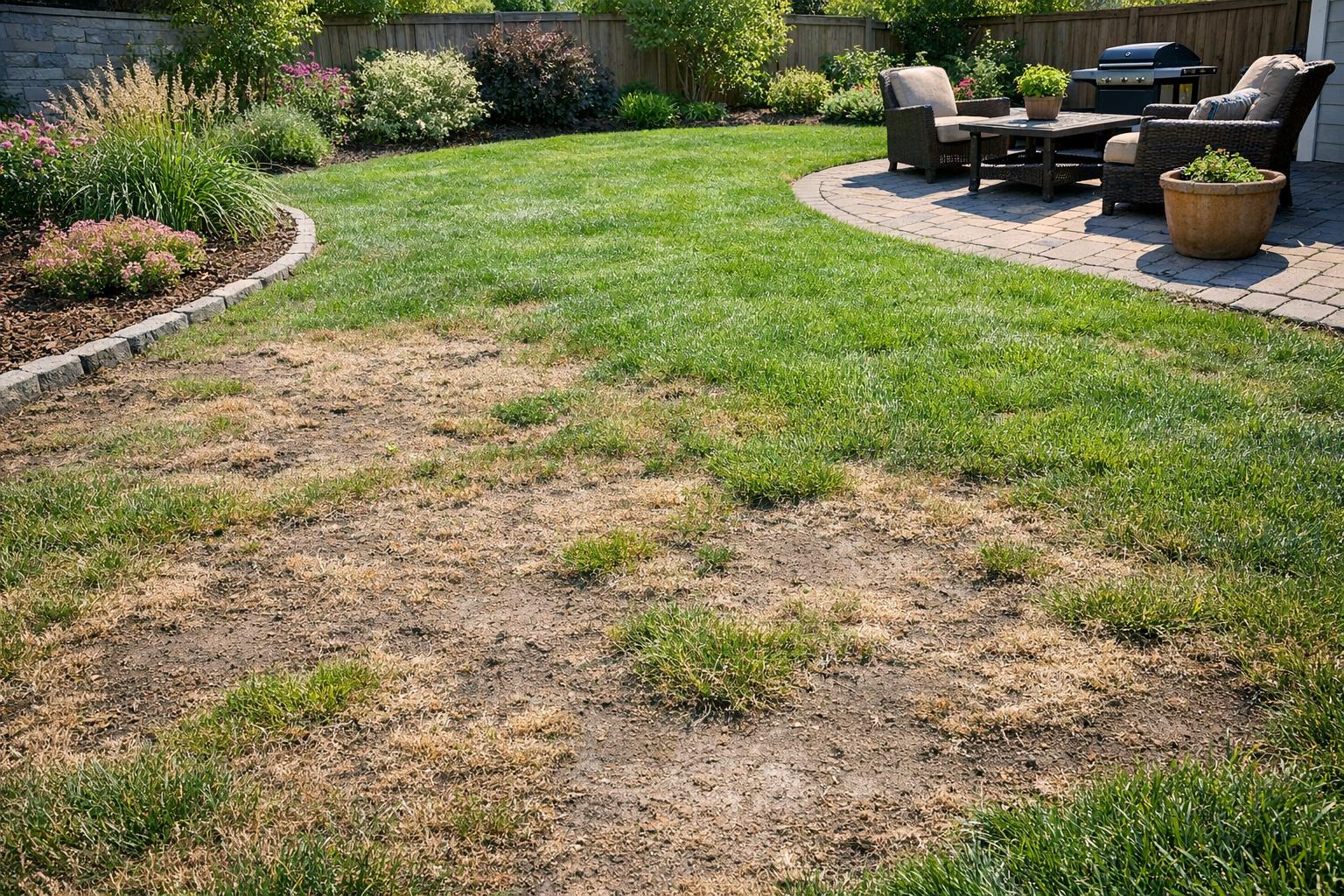
Not every struggling lawn needs to be replaced, but some lawns reach a point where repeated patching, fertilizing, or seasonal repair stops making sense. Homeowners usually notice the same trouble coming back: thin turf, muddy sections, patchy growth, compaction, or areas that never recover even after extra attention. When the underlying problem is more structural, lawn replacement can be a cleaner solution than another round of surface fixes.
The key is recognizing when the lawn issue is no longer just cosmetic.
Common warning signs
Chronic bare patches, areas that stay thin year after year, recurring mud, compaction, uneven growth, or sections that fail after repeated overseeding or patch repair are common signs that a lawn may need replacement. In some yards, the grass itself is not the only issue. Drainage, grade, irrigation, or traffic pattern problems may be making the lawn difficult to keep healthy.
Why replacement can make more sense
If the same areas keep failing, homeowners should ask whether the lawn is actually being supported by the site conditions underneath it. The sod and lawn installation guide, sod vs seed guide, and lawn cost guide help frame what a more complete reset would involve.
Look beyond the grass
Homeowners should also consider whether drainage, irrigation, or backyard use patterns are contributing to the problem. A replacement lawn will only perform better if the conditions around it support success. That is why it often helps to review the drainage warning-sign guide and irrigation warning-sign guide before replacing turf blindly.
Leave a Reply