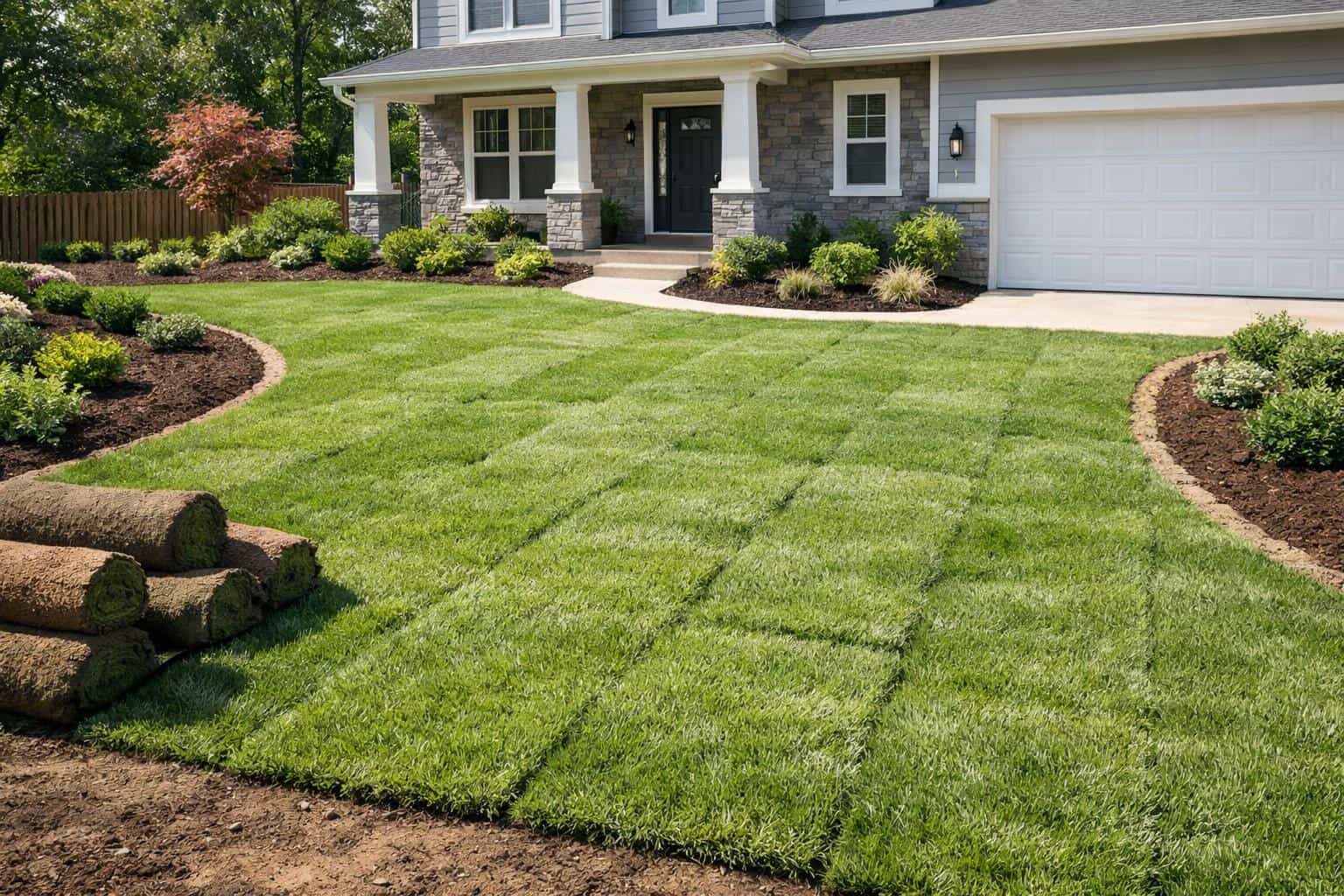
A new lawn can make a property look instantly more complete, but lawn installation is not just about putting down sod or seed and hoping it takes. Good results depend on grading, soil prep, irrigation coverage, traffic expectations, and what kind of lawn surface actually makes sense for the property.
Part of our Complete Lawn Guide: seed vs sod, grass types, costs, care calendar and hiring in one place.
This guide explains what sod and lawn installation usually includes, when homeowners should think beyond the grass itself, and what to ask before hiring.
What lawn installation usually includes
Residential lawn work may include removal of old turf or weeds, grading, soil preparation, amendments, irrigation adjustments, sod installation or seeding, rolling, watering instructions, and follow-up care expectations. On some properties, lawn installation is the final cosmetic layer over more important prep work like drainage correction or regrading.
- Common lawn goals: cleaner curb appeal, a more usable backyard, improved transitions around patios, and replacement of patchy or failing turf.
- Common project types: new sod installation, lawn renovation, spot area rebuilds, or full reshaping after other landscape work.
- Main performance factors: grade, soil quality, water coverage, foot traffic, and realistic maintenance expectations.

Soil and grading usually matter more than the sod itself
Homeowners often compare grass varieties before solving the more important issues underneath. If the grade is uneven, the soil is compacted, or water collects in low spots, even good sod can struggle. That is why lawn installation often belongs later in the sequence, after drainage and grading concerns are addressed.
Our drainage guide and project expectations guide can help explain why the prep stage matters so much.
Sod versus seed
Sod gives immediate visual coverage and can make a yard look finished quickly. Seed may cost less upfront in some situations, but it usually takes longer to establish and requires more patience during early growth. The right choice depends on timing, budget, site conditions, and how quickly the space needs to become usable.

Irrigation is part of the lawn decision
New lawns need consistent watering during establishment, and long-term health depends on whether irrigation coverage actually matches the layout. Overspray on hardscape, dry stripes, and persistently wet zones can all create problems after installation. If irrigation performance is uncertain, read our irrigation system guide alongside this page.
What affects lawn installation cost
Pricing is influenced by square footage, access, removal needs, grading, soil amendments, irrigation changes, sod quality, and whether the project is part of a larger renovation. A simple open lawn area is very different from a property that needs regrading, drainage adjustments, tree-root work, or hand-carried material access.
If you are comparing broader project budgets, our landscaping costs guide is a useful companion.

Questions to ask before hiring for sod or lawn work
- What grading or soil prep is included before the lawn goes in?
- How will irrigation be adjusted for this layout?
- Is sod or seed the better fit for this property and timing?
- How long before the lawn can handle normal use?
- What first-month care is essential for success?
What homeowners should remember

A healthy lawn is usually the result of good prep, consistent water, and realistic use expectations. The more clearly a contractor explains grade, soil, irrigation, and establishment care, the more likely the lawn is to look good beyond the first week after installation.
If you are still deciding what kind of finished lawn surface fits the property best, compare the tradeoffs in our artificial turf vs natural grass guide.
Related comparison: If you are still deciding how to establish a natural lawn, the Sod vs Seed Guide for Homeowners compares speed, cost, and watering demands.
Cost guide: If you are comparing lawn proposals, the What Affects Sod and Lawn Installation Cost Guide explains why prep and irrigation matter so much.
Related guide: Homeowners unsure whether the lawn still makes sense to repair can compare symptoms in the Signs Your Lawn Needs Replacement Guide.
Alternative surface: The Artificial Turf Installation Guide is a useful comparison if you are weighing turf against new sod installation.
Quote guide: The landscape lighting quote guide helps homeowners compare fixture count, transformer assumptions, and adjustment scope across bids.
Quote guide: The sod and lawn quote guide helps homeowners compare removal, grading, irrigation, and establishment scope.
Timeline guide: The sod installation timeline guide helps homeowners compare preparation, installation day, and early establishment expectations.
Expectations guide: The sod expectations guide helps homeowners understand prep, installation day, and early-care flow.
Maintenance guide: The sod and lawn maintenance guide helps homeowners protect early establishment and long-term lawn performance.
Warning signs guide: The sod and lawn warning signs guide helps homeowners judge thinning, stress, and irrigation trouble before the lawn declines further.