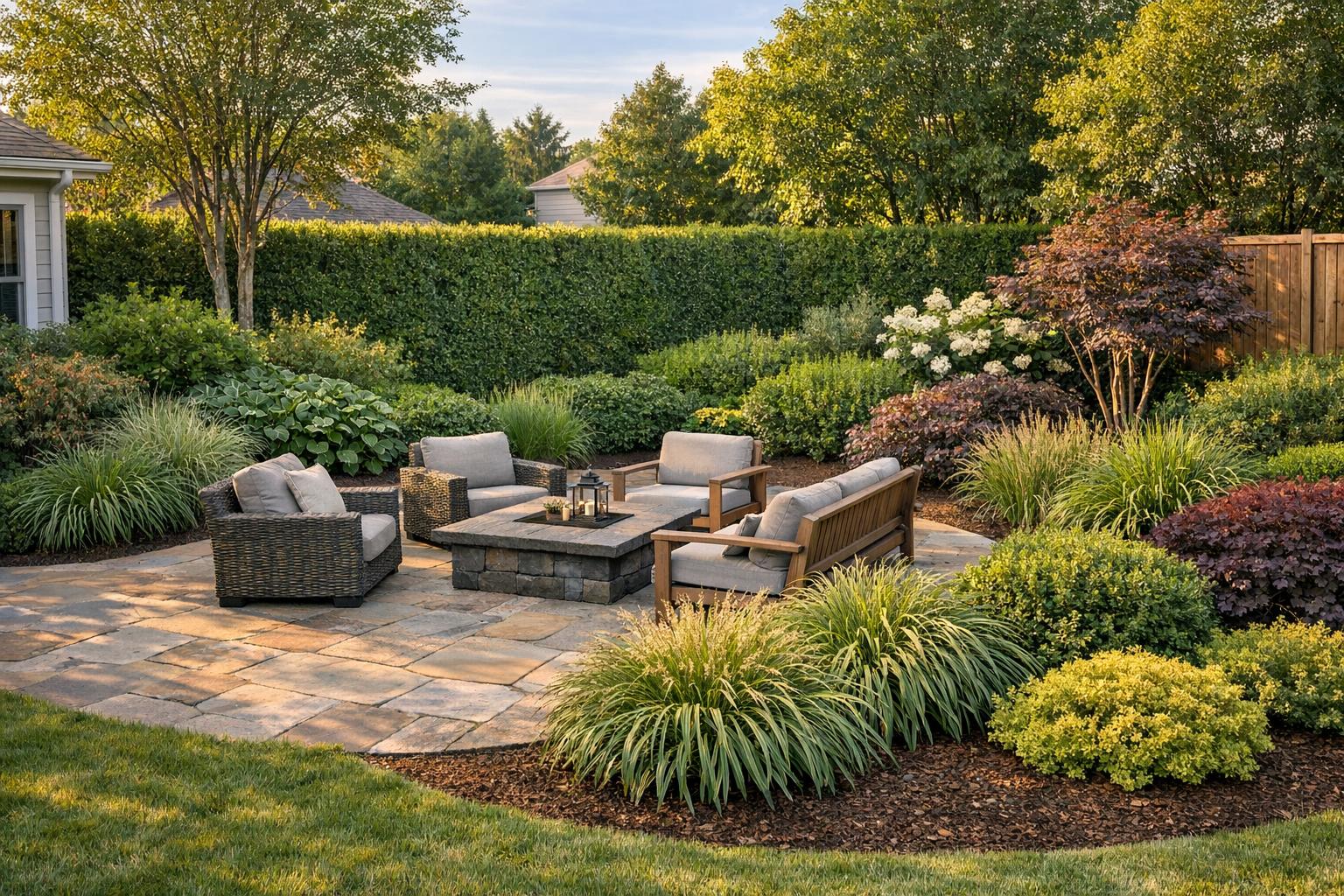
Privacy landscaping can range from a modest screening upgrade to a more substantial planting project that reshapes the feel of a yard. Cost usually depends on plant size, spacing, irrigation needs, soil conditions, layout length, and how quickly the homeowner wants privacy to take shape. A project built around smaller plants may cost less up front but take longer to create screening. Larger material can deliver faster visual impact but usually increases both plant and labor cost.
That tradeoff is one of the biggest reasons privacy landscaping bids vary so much.

Plant size and density matter
Evergreens, layered shrub screens, ornamental trees, mixed borders, and tight planting layouts all carry different cost profiles. Homeowners should compare not just species, but also plant size, spacing, and whether the plan is trying to create immediate coverage or long-term growth.
Irrigation and site conditions can change the budget
Screening projects often require irrigation updates, soil improvement, grading adjustments, or bed preparation along fences and property edges. If the site is narrow, shaded, sloped, or hard to access, labor and installation complexity may increase.
Privacy should be planned as a system
Homeowners often get the best results when privacy landscaping is considered alongside maintenance goals, backyard use, and overall yard design. The privacy landscaping guide, privacy upgrade signs guide, and backyard planning guide all help connect budget decisions to long-term function.
Leave a Reply