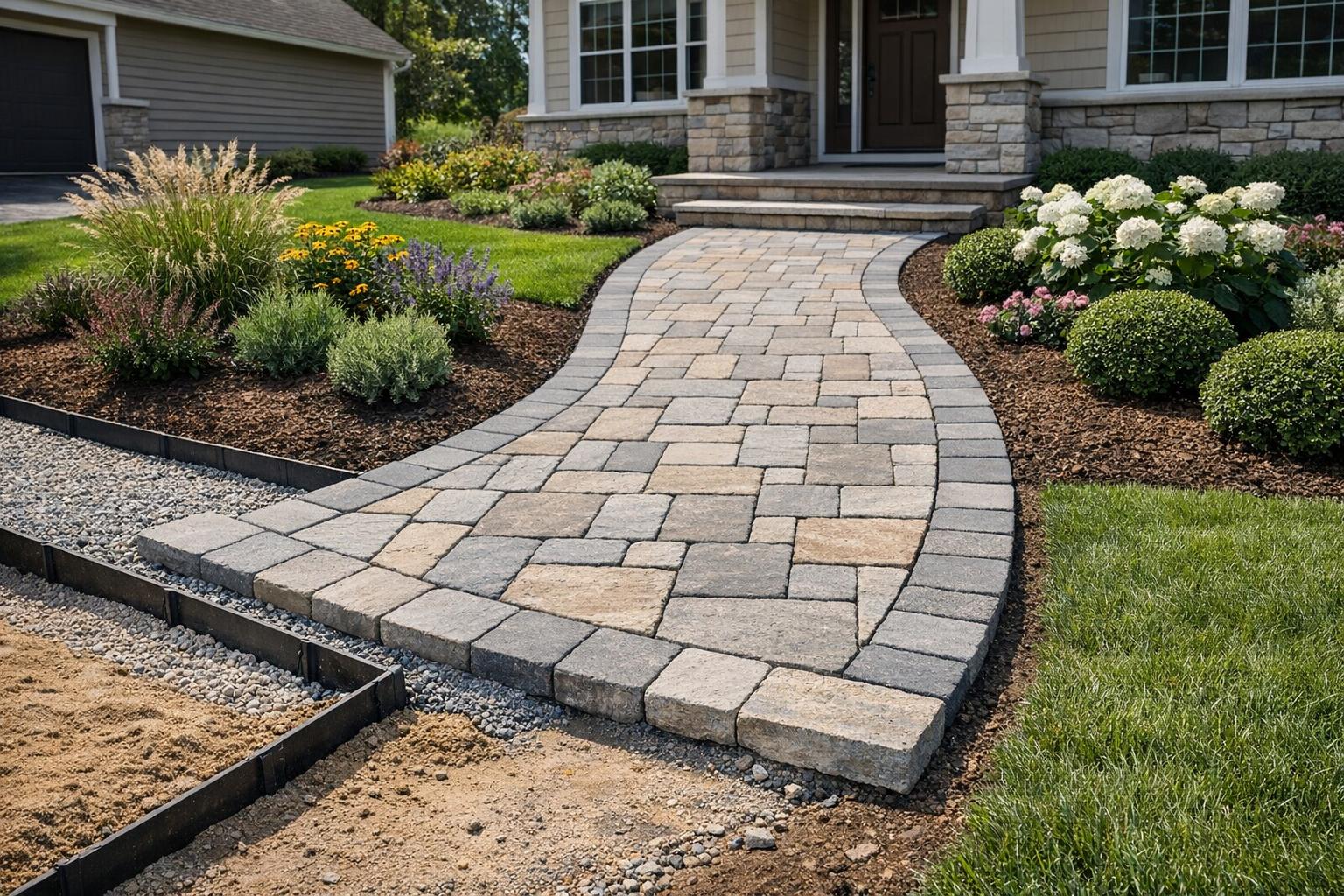
Walkway and pathway costs depend on more than the visible surface. Homeowners often compare projects by square footage alone, but a path price usually reflects excavation, base preparation, layout shape, edging, drainage handling, and how the walkway ties into the rest of the yard. A straight path from driveway to front door is different from a winding backyard connection through beds, slopes, and outdoor living areas.
The more the path has to solve access, grade, or design transitions, the more the cost reflects broader site work instead of just surface materials.

Material and layout both affect price
Pavers, natural stone, poured concrete, gravel, and stepping-stone style paths all carry different labor and material profiles. Curves, borders, steps, widened landings, and transitions to patios or driveways can also add cost because they increase cuts, finishing detail, and site time.
Preparation under the surface matters
Excavation, base depth, edging, drainage corrections, and tie-ins to nearby hardscape often affect price as much as the top material. If the walkway crosses slopes, poor drainage areas, or tree-root zones, the project can become more complex quickly.
Connect cost to function
Homeowners comparing bids should look at what the path is meant to do: improve entry flow, connect a patio, manage grade changes, or support year-round use. The walkway and pathway installation guide, landscape lighting guide, and quote comparison guide all help homeowners compare scope more accurately.
Materials pricing: The Landscaping Materials Cost Guide helps connect path-surface decisions to broader yard-material budgets.
Leave a Reply