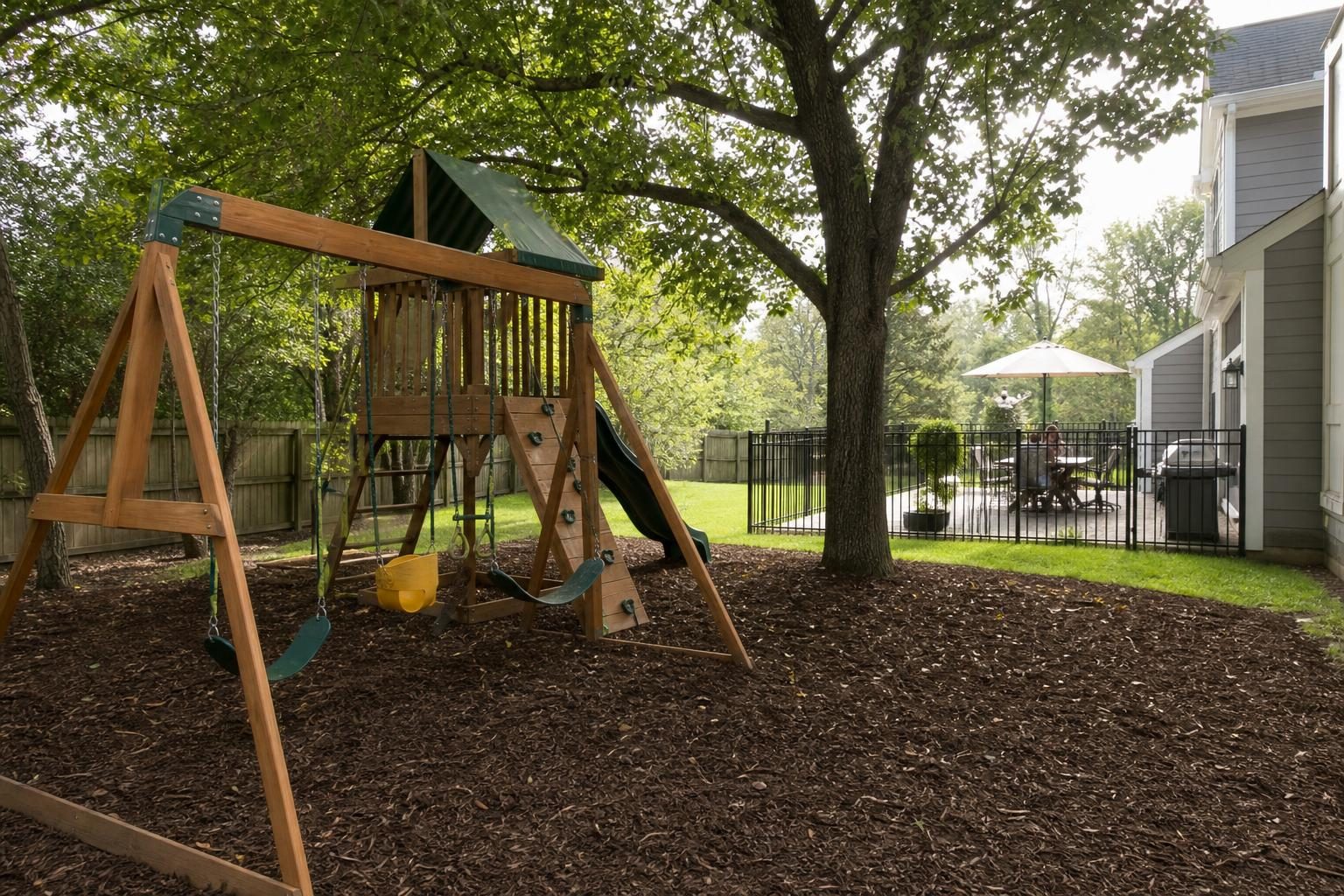
The most common kid-friendly backyard mistakes are designing for how the yard looks instead of how children actually use it, putting play areas where adults cannot see them, choosing surfaces that turn to mud or get too hot, and building fixed features that kids outgrow in a few years. A good plan starts with sight lines, safe surfaces, and flexible open space, then adds play equipment and plants around them.
Part of our Complete Yard Design and Planning Guide: layouts, ideas by yard type, phasing and budgets in one place.
Mistake 1: Putting the play area out of sight
A swing set tucked behind the garage may look tidy, but if no one can see it from the kitchen window or patio, it either goes unused or creates constant trips outside to check. Before choosing a location:
- Stand at the windows and doors you use most and note what you can see.
- Keep younger children’s play zones within clear view of the main living area and patio.
- Avoid tall shrubs, sheds, or fences that block sight lines into the play zone.
- Keep play away from driveways, pool areas, and side yards that open to the street.
Mistake 2: Skipping proper surfacing under play equipment
Grass and packed dirt wear out fast under swings and slides, and they do little to soften falls. Public playground guidance from the U.S. Consumer Product Safety Commission recommends shock-absorbing surfacing under and around equipment, extending beyond its footprint. Common home options:
| Surface | Pros | Cons |
|---|---|---|
| Engineered wood fiber or playground mulch | Affordable, cushioning, easy to install | Needs raking and topping up; can migrate |
| Rubber mulch | Long-lasting, good cushioning | Gets hot in sun; higher upfront cost |
| Poured rubber or rubber tiles | Clean, accessible, low upkeep | Highest cost; needs a proper base |
| Sand or pea gravel | Inexpensive | Compacts when wet; gets tracked indoors; cats may use sand |
| Artificial turf with padding | Clean look, no mud | Costly; heats up in sun; needs shock pad for fall zones |
Whatever you choose, the depth and the use zone around equipment matter more than the material name. Follow the equipment maker’s guidance.

Mistake 3: Filling the yard with fixed features
Built-in play structures, sandboxes, and elaborate forts are fun for a few years. Then children want open lawn for ball games, then a place to hang out with friends. Plan in phases:
- Keep the largest open space as flexible lawn or turf.
- Put play equipment where it can later become a garden bed, shed pad, or patio extension.
- Choose freestanding equipment over items set in concrete if you expect to remove them.
- Run conduit or irrigation sleeves under future patio zones now, so later upgrades do not mean tearing out hardscape.
Our guide on how to phase a landscaping project covers planning upgrades over several years.

Mistake 4: Choosing the wrong lawn or groundcover
Kids are hard on grass. Common missteps include planting a delicate ornamental grass type in a play zone, laying sod in deep shade where it will thin out, or using gravel where kids run barefoot. Better approaches:
- Choose a traffic-tolerant grass suited to your climate.
- Accept that high-wear paths, like the route to the swing, may need stepping stones or a mulch path.
- Consider artificial turf only where heat, cost, and drainage tradeoffs make sense; our artificial turf vs natural grass guide lays them out.
Mistake 5: Overlooking plant safety and thorny edges
Some common landscape plants are toxic if eaten, and some have thorns or sharp leaves at kid height. Before planting near play areas:
- Check each plant against a poison control or extension service list for toxicity.
- Avoid thorny shrubs like barberry or roses along paths and play edges.
- Skip plants with heavy bee attraction directly beside swings and sandboxes.
- Put edible gardens in raised beds so kids can help without trampling them.

Mistake 6: Ignoring drainage, shade, and heat
A play area in a low spot becomes a mud pit. A slide in full afternoon sun can get hot enough to burn skin. Check:
- Where water collects after rain, and keep play zones off those spots or fix the drainage first.
- Afternoon sun angles; add shade with a tree, sail, or pergola, and orient slides away from direct western sun where possible.
- That metal surfaces and dark rubber are tested by hand on hot days before kids use them.
Mistake 7: Weak fencing, gates, and storage
- Use self-closing, self-latching gates on any fence that separates the yard from a street or pool.
- Check fence gaps and climbable rails; local pool barrier codes are much stricter than ordinary fence rules.
- Plan lockable storage for tools, chemicals, and the grill propane tank.
- Provide easy storage for toys so they do not end up under the mower.

Budget and contractor questions
Costs vary widely by region and scope. A simple setup with playground mulch and a freestanding swing set can be done for a modest budget, while poured rubber surfacing, turf, and a custom shade structure can reach several thousand dollars or more. When getting quotes, ask:
- What surfacing depth and use-zone size are you planning under equipment?
- How will water drain from the play area?
- Which plants are you specifying near play zones, and are any toxic or thorny?
- Can the layout convert easily when kids outgrow the equipment?
- What maintenance will the surfaces need each year?
For broader ideas and layouts, see our kid-friendly backyard landscaping guide, and if you have dogs too, the pet-friendly backyard guide.
Frequently asked questions
What is the safest surface under a swing set?
Shock-absorbing surfaces like engineered wood fiber, rubber mulch, or poured rubber, installed at the depth and extent recommended by the equipment maker. Grass and dirt provide little cushioning.
Is artificial turf good for kids?
It stays green and mud-free, but it can get hot in direct sun and needs a shock pad under play equipment. Shade helps.
How big should a kid play area be?
Large enough for the equipment plus the recommended clear zone around it, with open lawn nearby for running games.
How do I make the yard work as kids get older?
Keep the central space open, use freestanding equipment, and plan where future patios, fire pits, or gardens could go.