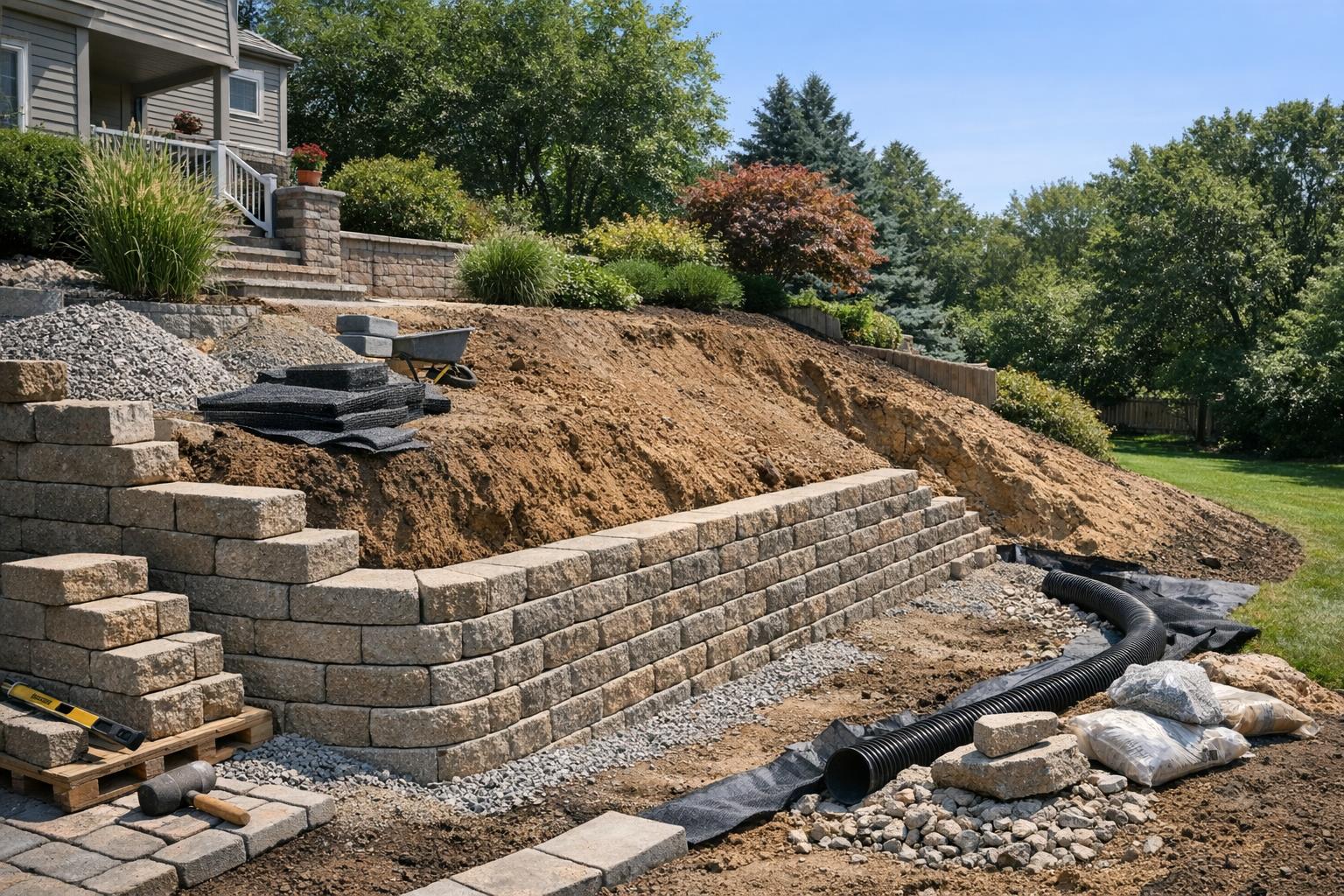
A retaining wall should be planned as a site problem first and a visible landscape feature second. Homeowners often start with block color, wall face, or price per square foot, but the wall’s real job is usually tied to slope, drainage, soil pressure, access, and how the yard will be used after the wall is built.
This retaining wall planning guide helps homeowners organize the decisions that should happen before comparing estimates. It also points into the deeper retaining-wall guides on permits, access, materials, drainage, and bid review when a project needs more detail.
Start with what the wall must do
The first planning question is the wall’s purpose. A low decorative border, a garden terrace, a patio support wall, and a structural slope-retention wall have very different risks. If the purpose is unclear, contractors may price different assumptions and the homeowner may end up comparing bids that are not really the same job.
- Decorative wall: mainly defines beds, edges, or small grade changes.
- Terrace wall: creates flatter planting or lawn areas on a slope.
- Patio or driveway support wall: protects usable hardscape from grade movement.
- Slope-stability wall: may need engineering, permits, geogrid, and heavier drainage planning.
For broader retaining-wall basics, start with Retaining Wall Guide for Homeowners.
Check height, slope, and drainage before choosing materials
Wall height, soil type, surcharge load, slope above or below the wall, and water movement affect the design more than the visible block style. Drainage behind the wall is especially important because trapped water can add pressure, stain the wall face, push soil, or shorten the useful life of the project.

- Measure the approximate height change the wall must hold back.
- Watch where roof runoff, irrigation, and storm water move during wet periods.
- Ask whether the wall needs drain rock, pipe, filter fabric, weep holes, or surface drainage changes.
- Clarify whether fences, patios, driveways, trees, or structures add load near the wall.
Estimate retaining wall and drainage planning ranges
Use these calculators to test how wall size, material, drainage, and broader site assumptions can change a rough planning range before reviewing contractor bids.
Retaining Wall Cost Calculator
Estimate retaining wall pricing with wall size, material type, drainage, and access assumptions.
Retaining wall cost estimate
- Wall face area
- –
- Low estimate
- –
- Mid estimate
- –
- High estimate
- –
- Estimated range per sq ft of wall face
- –
Drainage Cost Calculator
Estimate drainage project pricing for swales, French drains, and catch basin style systems.
Drainage cost estimate
- Estimated treatment length
- –
- Low estimate
- –
- Mid estimate
- –
- High estimate
- –
- Estimated range per linear ft
- –
Plan access and staging early
Retaining walls usually require excavation, base material, backfill, drainage aggregate, block or concrete, and debris removal. A narrow side yard, steep slope, tight gate, protected planting area, or limited street access can change labor time and equipment options. These access details should be part of the estimate, not a surprise after the project starts.
- Where can material be delivered and staged without blocking daily use?
- Can small equipment reach the wall area, or will more work be done by hand?
- What existing irrigation, lighting, plants, fences, or hardscape must be protected?
- How will excavated soil and demolition debris leave the property?
If access is tight, review Retaining Wall Access and Staging Guide before approving scope.
Know when permits or engineering may matter
Permit rules vary by location, wall height, surcharge, and nearby structures. Homeowners should ask contractors how they handle permit checks, drawings, engineering, inspection, and code-related changes. Even when a permit is not required, a wall that holds meaningful grade still needs a build plan that explains base, drainage, reinforcement, and backfill.
For more detail, use Retaining Wall Permit Prep Guide and Retaining Wall Geogrid Planning Guide.
What a retaining wall estimate should explain
A strong estimate should make the hidden work visible. The proposal should explain wall purpose, height, length, material, base, excavation, drainage, backfill, reinforcement, access, cleanup, permits, and exclusions. If a quote focuses only on the wall face, the homeowner may not be seeing the performance-critical parts of the project.

- Wall dimensions, material, cap, and finish assumptions
- Base preparation, excavation depth, and compaction approach
- Drainage system, backfill material, and water outlet plan
- Permit, engineering, access, demolition, and cleanup responsibilities
Before choosing a contractor, compare this page with What a Retaining Wall Estimate Should Include and Retaining Wall Contractors Near Me.
How to use this guide
Use this page as the planning hub before turning a retaining wall idea into a quote request. The goal is not to design the wall yourself. The goal is to understand enough about purpose, water, soil, access, permits, and scope that contractor conversations become clearer and the final estimate is easier to compare.
Leave a Reply