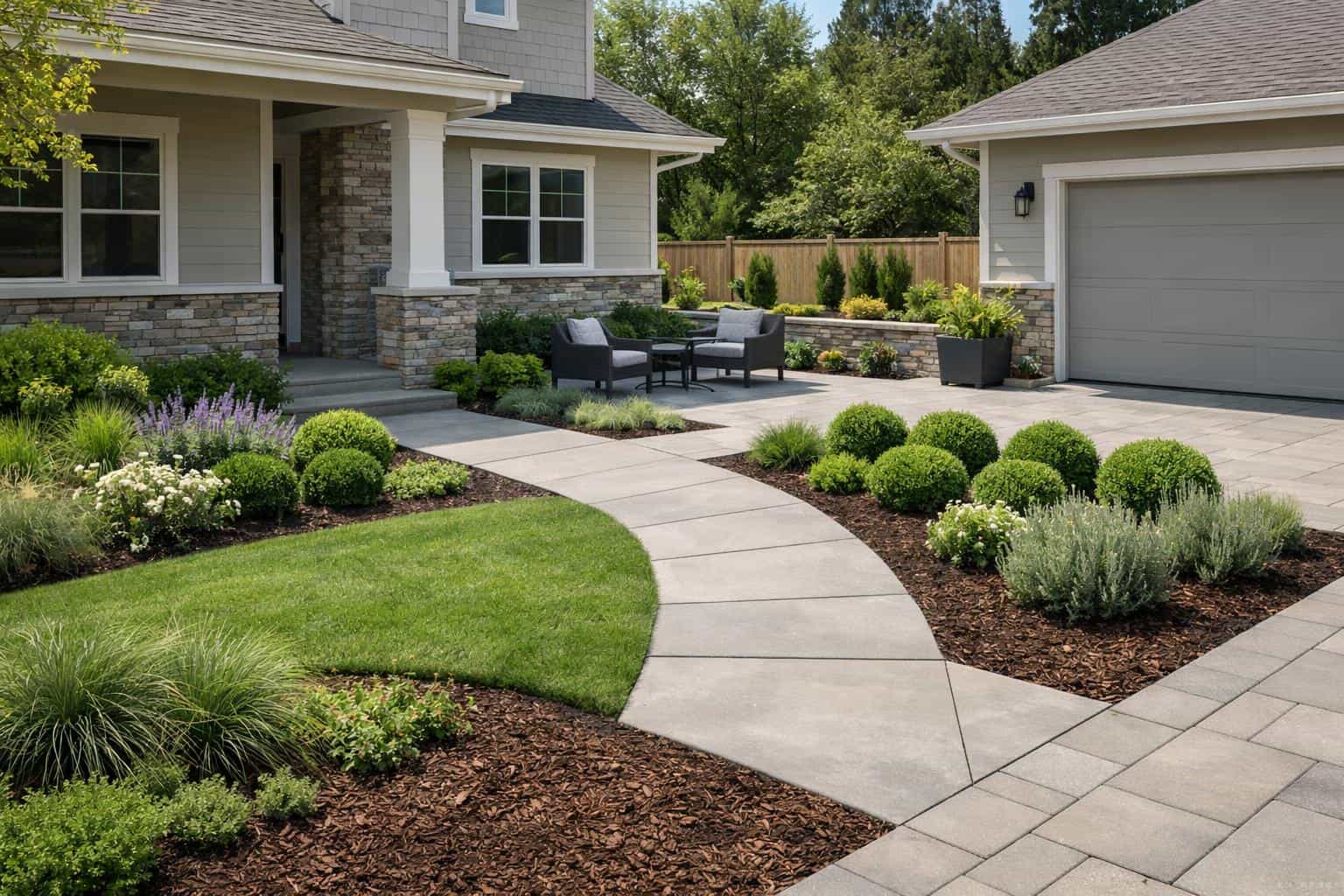
Low-maintenance landscaping does not mean zero maintenance. It means the yard is easier to care for because the right plants, materials, irrigation, and layout decisions reduced the amount of ongoing work.
What good upkeep looks like
Low-maintenance landscaping should not feel like random chores. Good maintenance means knowing what to inspect, what to clean, what to adjust, and when to bring in help before small issues grow.

- Check mulch, decorative rock, and ground covers so they stay neat and properly contained
- Adjust irrigation seasonally instead of overwatering easy-care plantings
- Trim plants before they block paths, crowd windows, or lose their intended shape
- Watch for weeds at edges, joints, and bare spots before they spread
- Refresh small details like lighting, edging, and cleanup so the yard keeps its finished look
How often homeowners should check in
Most low-maintenance yards need light regular attention rather than rare major cleanup days.
- Weekly or biweekly: quick visual check and cleanup
- Monthly: irrigation, edging, and weed review
- Seasonally: pruning, replenishment, and material touch-ups
When maintenance turns into repair
Some signs point to a bigger issue than routine upkeep. If you notice repeated failures, movement, drainage problems, dead areas, loose components, or safety concerns, it is time to stop treating the issue as simple maintenance.

- Irrigation overspray or runoff is damaging plants or washing out materials
- Plants are outgrowing their spaces and creating constant pruning pressure
- Mulch, gravel, or turf is shifting because the base or edging is failing
- The yard still feels high effort because the layout never solved the original pain points
Bottom line
A consistent homeowner maintenance routine protects the appearance, function, and lifespan of low-maintenance landscaping.
For broader planning context, revisit the main Low-Maintenance Landscaping Guide for Homeowners and make sure the original design goals still match how you use the space today.
Leave a Reply