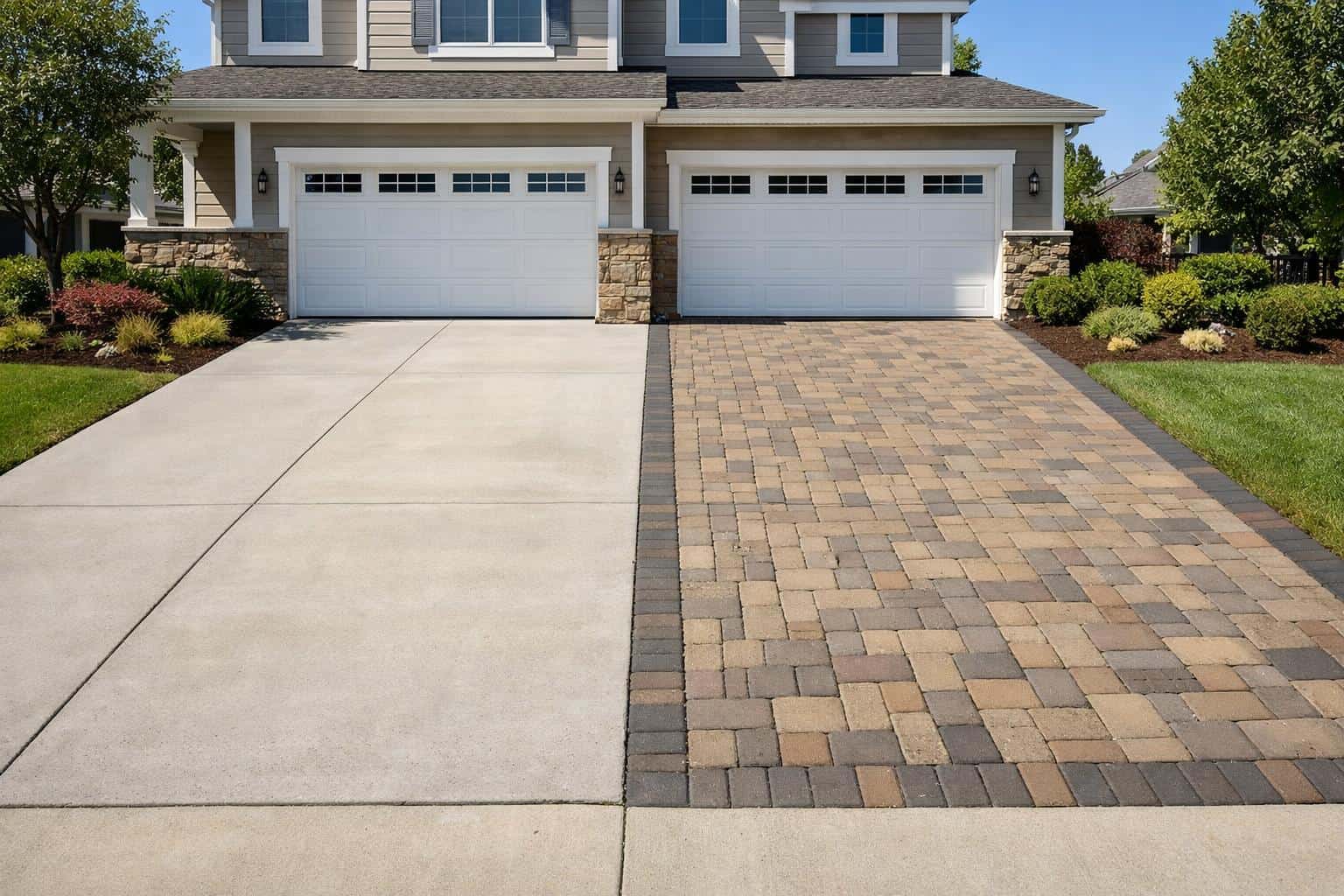
Durability is not just about the surface material. Climate, drainage, base work, and movement under the driveway often matter just as much.
How climate affects concrete
- Concrete can struggle when freeze-thaw cycles, deicing salts, or poor drainage accelerate cracking and surface wear.
- Hot climates can intensify expansion, shrinkage, and appearance changes if joints and curing are weak.
- Stable base preparation makes a major difference.
How climate affects pavers
- Pavers can flex with some movement, which helps in certain freeze-thaw or root-pressure situations.
- Heavy runoff, weak edge restraint, or poor bedding can still cause shifting and unevenness.
- Weed pressure and sand loss can make durability feel worse even if the individual units remain strong.
What homeowners should evaluate
- Local weather patterns and moisture load.
- Drainage and site movement history on the property.
- Whether selective repair or a monolithic surface is more attractive for your situation.
Bottom line
The more movement or weather stress a driveway sees, the more the installation details and repair strategy matter alongside the material choice itself.

For the broader overview, continue with Concrete vs Paver Driveway Guide for Homeowners.

Leave a Reply