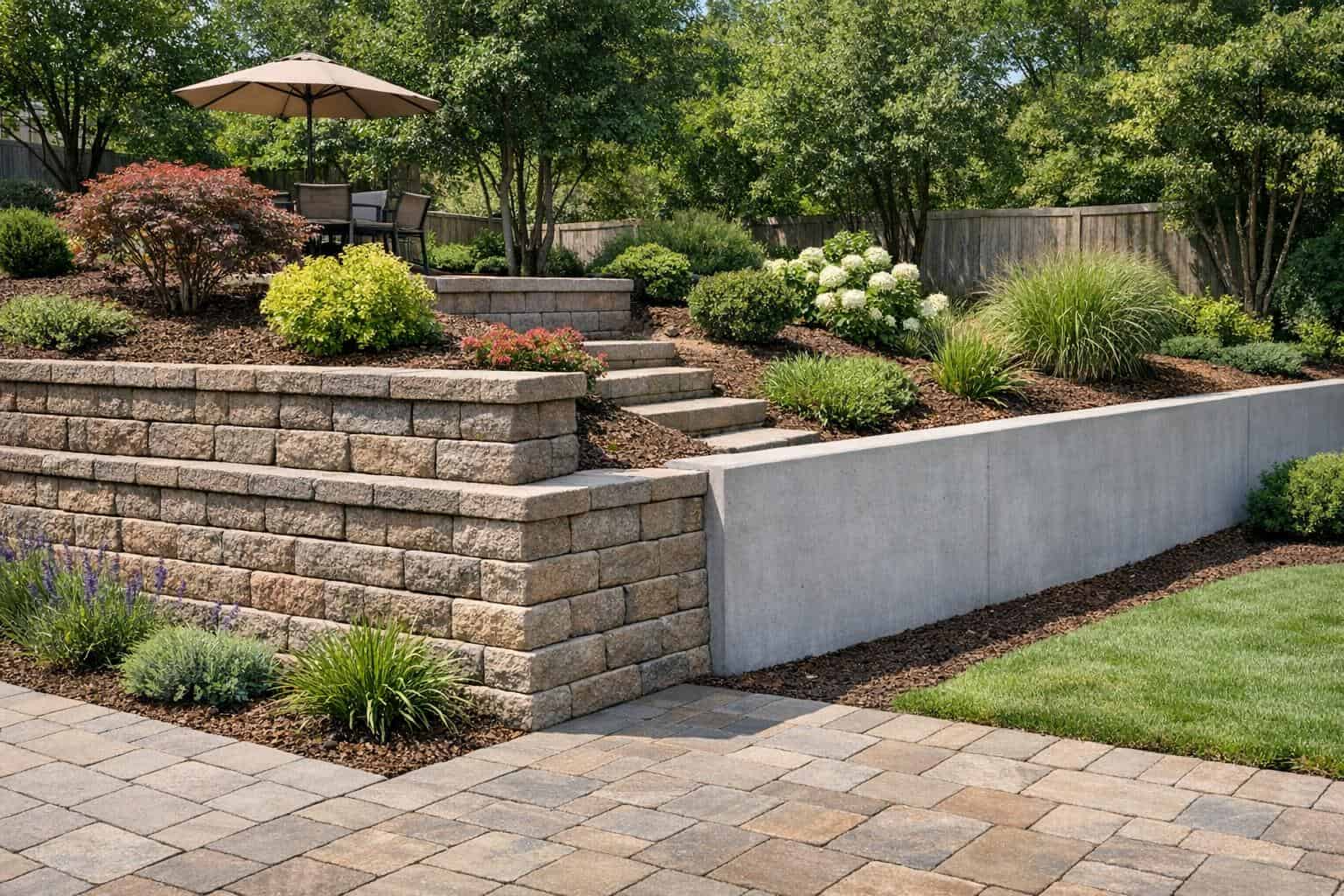
Block and poured concrete retaining walls can both be major investments, but the cost story changes with wall height, engineering needs, access, finish expectations, and drainage complexity.
Where block wall cost changes
- Unit choice, wall size, cap details, base work, and reinforcement strategy.
- Labor for setting, leveling, and handling many individual components.
- Corners, curves, stairs, and stepped grades that increase complexity.
Where poured concrete cost changes
- Formwork, reinforcement, engineering, finish level, and access for the pour.
- Wall height and the complexity of tying the structure into the site.
- Decorative facing or finish work if the raw concrete look is not the end goal.
How to compare fairly
- Match drainage handling, structural scope, and finish expectations.
- Ask what engineering or permit requirements are assumed in each quote.
- Compare how each system handles the site’s height and pressure demands.
Bottom line
The cost winner depends on structure, finish goals, and site access as much as on the wall system itself.
For the broader overview, continue with Retaining Wall Block vs Poured Concrete Guide for Homeowners.
Leave a Reply