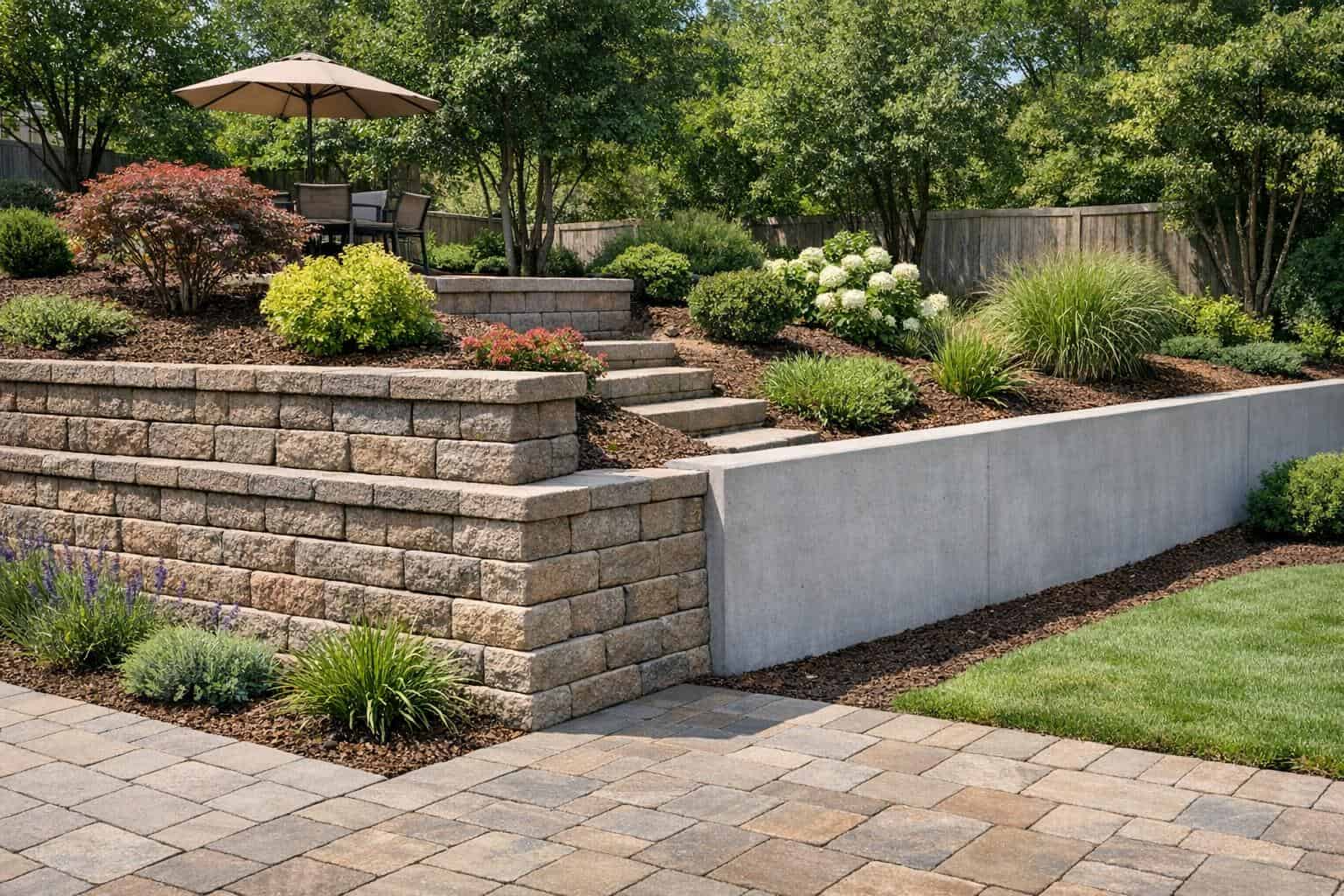
Maintenance matters because retaining walls are not just decorative. They hold soil, manage water pressure, and need to stay structurally trustworthy over time.
What block-wall maintenance often involves
- Watching for movement, bulging, or separation between units.
- Checking caps, joints, and surrounding drainage conditions.
- Handling isolated repairs where movement is local rather than system-wide.
What poured-concrete maintenance often involves
- Watching for cracking, spalling, drainage problems, and structural movement.
- Monitoring whether visible damage is cosmetic or tied to pressure and settlement.
- Addressing finish wear if appearance matters.
What owners should pay attention to regardless of type
- Water movement behind and around the wall.
- Changes in slope, settlement, or pressure from above.
- Whether early signs of distress are isolated or spreading.
Bottom line
The lower-maintenance wall is the one that suits the site’s drainage and structural demands, not just the one that looks tougher at first glance.
For the broader overview, continue with Retaining Wall Block vs Poured Concrete Guide for Homeowners.
Leave a Reply