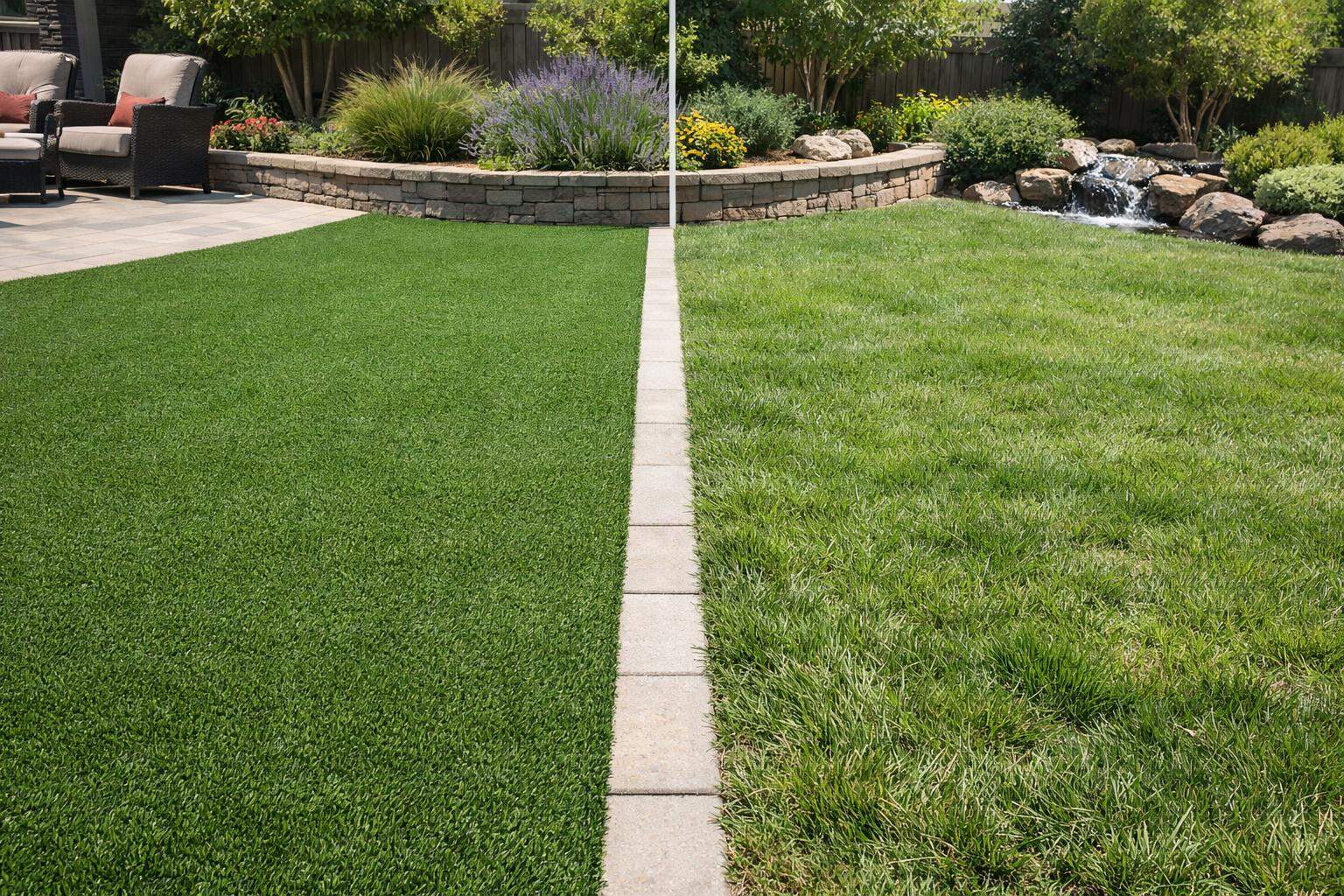
Artificial turf and natural grass create very different cost patterns because one front-loads material and installation while the other spreads cost over watering, mowing, treatment, and replacement cycles.
Where turf cost usually climbs
- Removal, base prep, edging, infill, and drainage detail.
- Premium turf products designed for a more realistic look or heavier use.
- Extra shaping or transitions where the turf meets planting, patios, or walkways.
Where natural grass cost usually changes
- Soil prep, irrigation, sod or seed choice, and ongoing lawn-care inputs.
- Repair cycles for worn or damaged areas.
- Water use and seasonal upkeep over time.
How homeowners should compare the spend
- Look at installation plus five-year ownership, not just day-one price.
- Ask what upkeep costs will remain either way.
- Be realistic about water, repairs, and how heavily the lawn area will be used.
Bottom line
The cheaper option depends on whether you care more about lower upfront spend or lower ongoing lawn-management effort.

For the broader overview, continue with Artificial Turf vs Natural Grass Guide for Homeowners.

Compare turf and lawn establishment ranges
Use these calculators to compare artificial turf with sod, seed, and hydroseed ranges for the same lawn area before choosing a direction.
Artificial Turf Cost Calculator
Estimate artificial turf pricing with turf grade, removal needs, access, and install complexity.
Artificial turf cost estimate
- Estimated area
- –
- Low estimate
- –
- Mid estimate
- –
- High estimate
- –
- Estimated range per sq ft
- –
Sod vs Seed Cost Calculator
Compare rough installed cost ranges for sod, seed, and hydroseed on the same lawn area.
Lawn establishment comparison
- Estimated area
- –
- Seed estimate
- –
- Hydroseed estimate
- –
- Sod estimate
- –
- Fastest visible result
- –
Leave a Reply