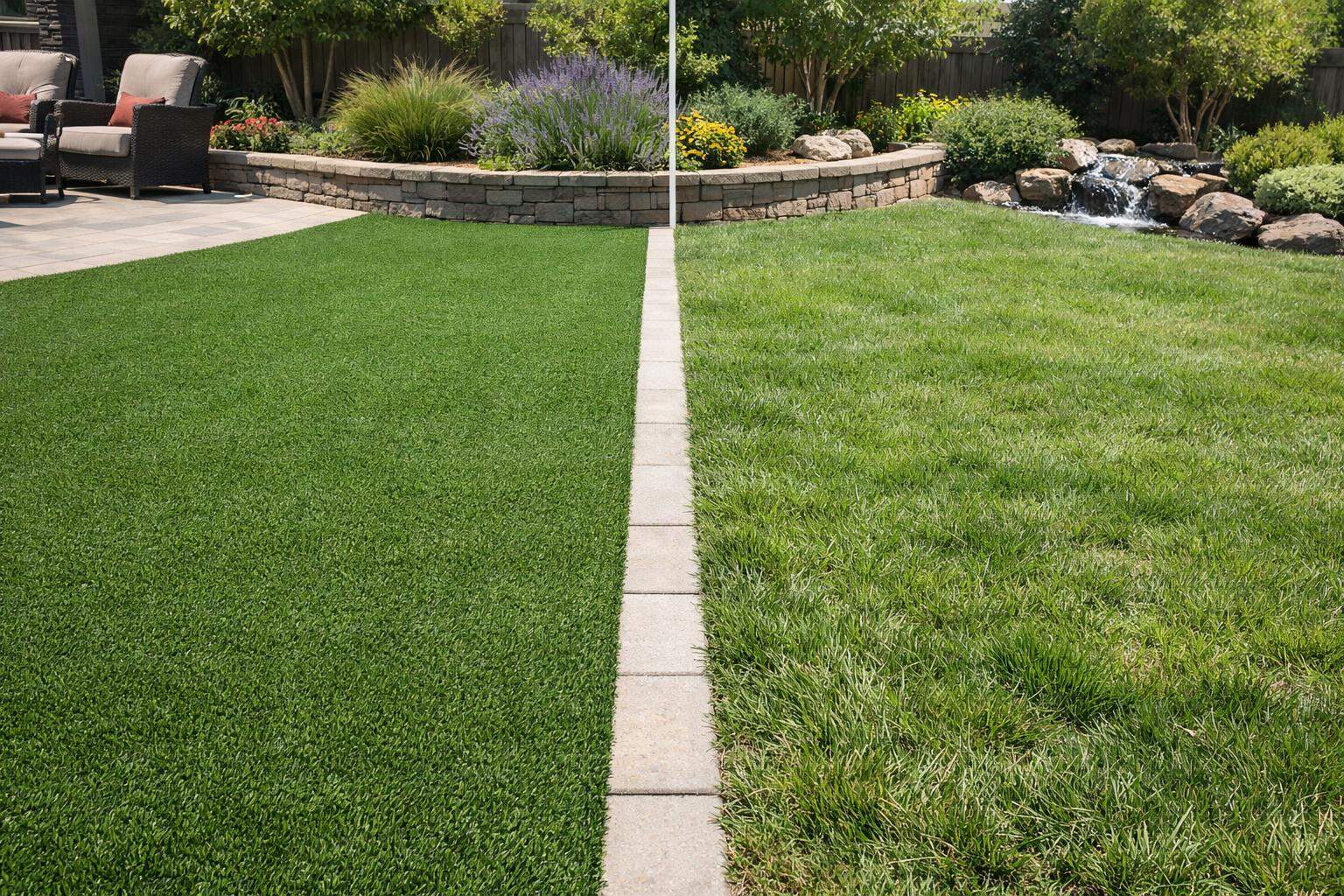
Turf and natural grass can both look great, but the maintenance pattern is completely different and should shape the decision as much as the appearance does.
What artificial turf upkeep usually involves
- Debris cleanup, brushing, spot cleaning, and watching seams or edges.
- Managing heat and use patterns in sunny or pet-heavy areas.
- Occasional infill adjustment and minor repair if sections shift or wear.
What natural grass upkeep usually involves
- Mowing, watering, seasonal feeding, weed control, and repair of worn spots.
- Adjustment for weather, irrigation performance, and soil condition.
- More visible weekly upkeep during the growing season.
Which one feels easier
- Artificial turf often reduces routine lawn chores but still needs active cleanup.
- Natural grass demands more recurring work but can feel cooler and more forgiving in some climates.
- The easier option depends on whether you want less mowing or fewer synthetic-surface concerns.
Bottom line
The best maintenance choice is the one that fits your climate, use pattern, and tolerance for either lawn chores or synthetic-surface management.

For the broader overview, continue with Artificial Turf vs Natural Grass Guide for Homeowners.

Leave a Reply