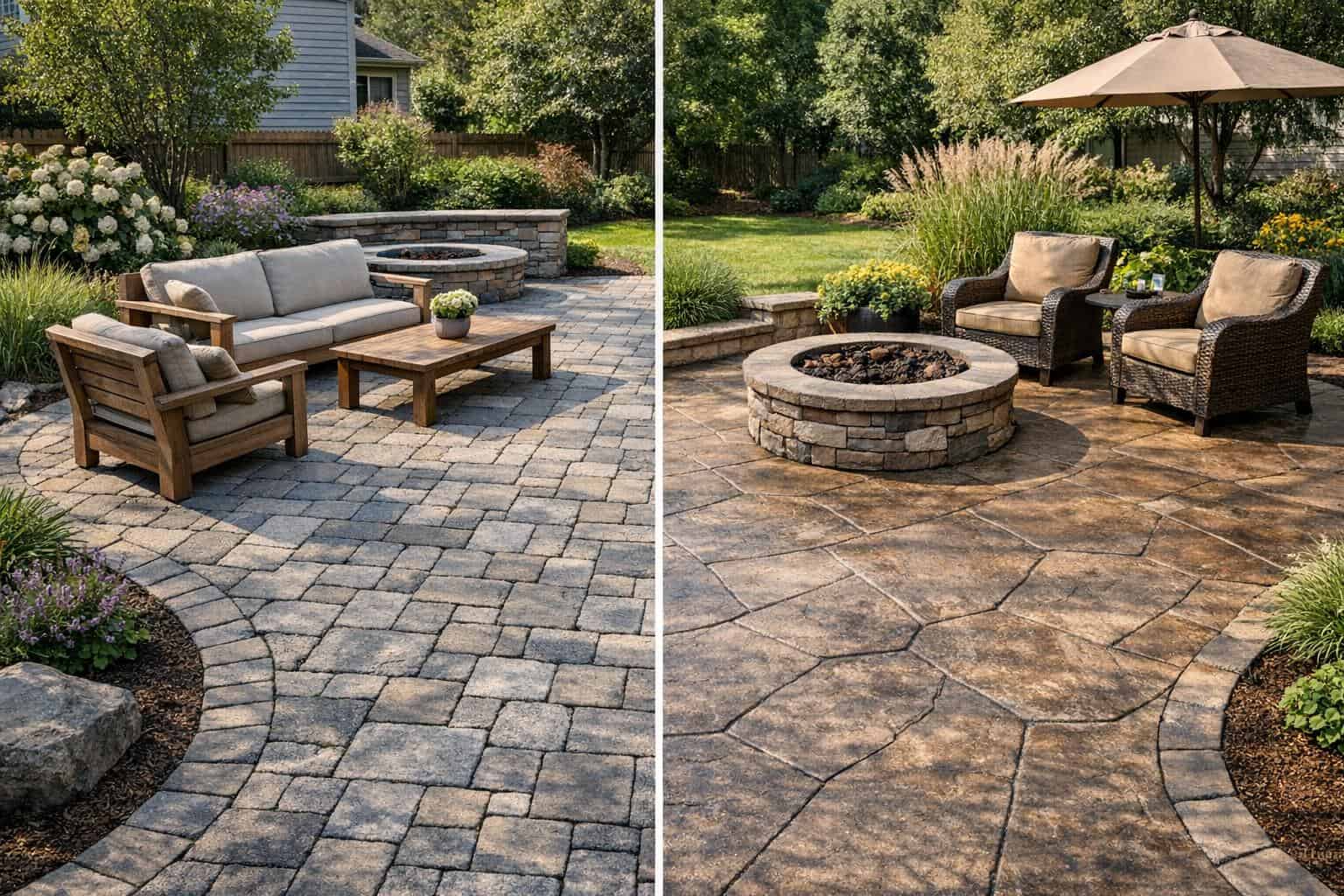
Pavers and stamped concrete can both create strong visual results, but they age differently and homeowners should think about that aging pattern before deciding.
How pavers tend to age
- The surface keeps its unit-based pattern even as some pieces shift or weather differently.
- Color variation can help repairs blend in when done well.
- Edges and joints matter a lot to the long-term appearance.
How stamped concrete tends to age
- The surface reads as one decorative slab, so visible cracks or finish breakdown can feel more noticeable.
- Color and sealer performance shape how long the decorative effect looks sharp.
- Good installation and drainage strongly influence durability.
How to judge the finish honestly
- Decide whether you prefer a unit-based look or a decorative slab look.
- Think about how visible future repairs would feel to you.
- Compare the finish to the house, nearby hardscape, and overall yard style.
Bottom line
The better-looking patio over time is the one whose aging pattern you are more comfortable living with, not just the one that looks best on day one.

For the broader overview, continue with Paver Patio vs Stamped Concrete Patio Guide for Homeowners.

Leave a Reply