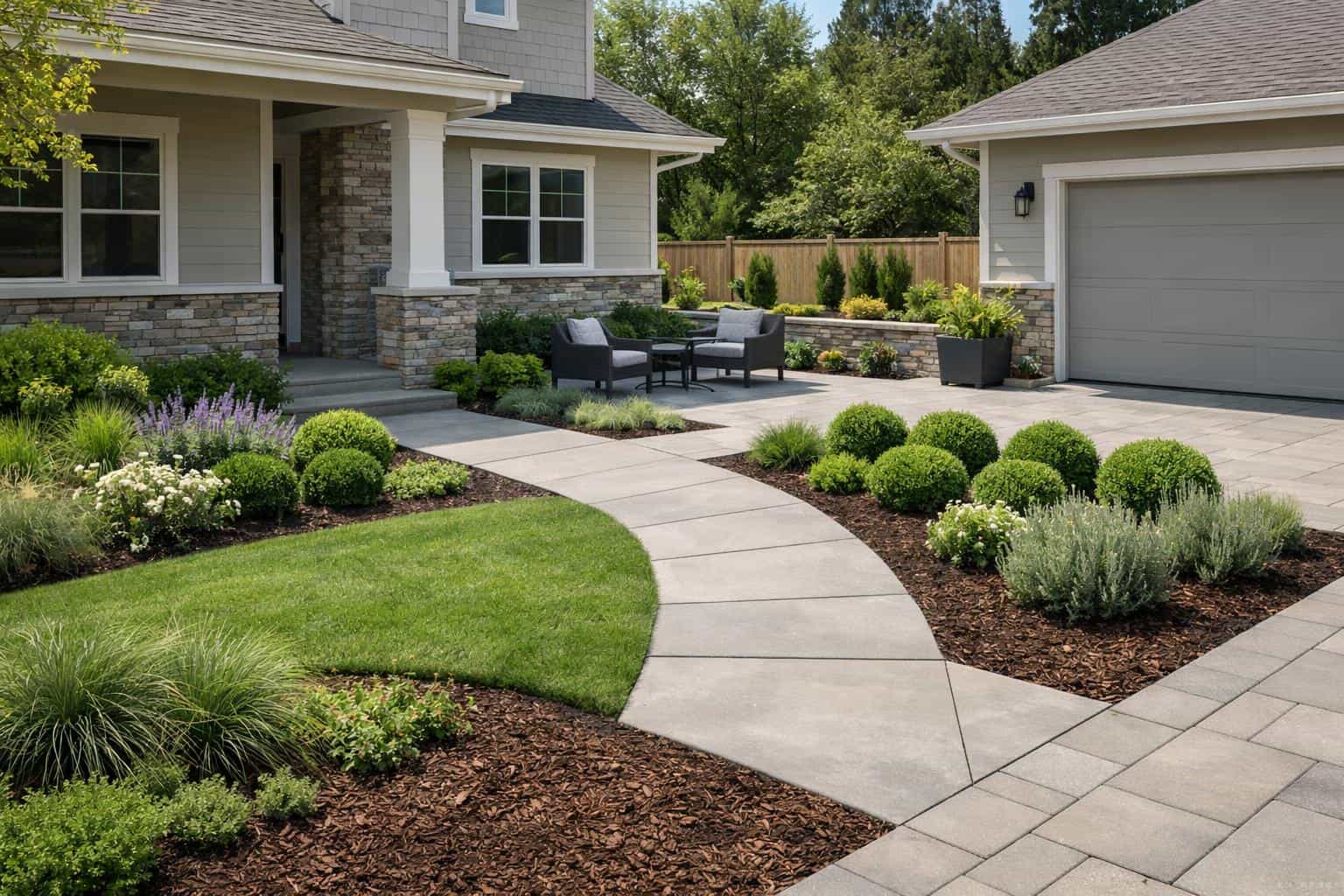
Low-maintenance landscaping starts with materials that stay stable, look intentional between cleanup days, and do not create more upkeep than they save.
Materials that often reduce upkeep
- Stable edging systems, durable hardscape, and finishes that suit the site’s drainage and traffic.
- Mulch or rock choices that make sense for the planting and climate.
- Walkable surfaces that clean easily and do not constantly shift or trap debris.
What makes a material truly low maintenance
- It fits the site’s water movement and sun exposure.
- It does not create constant migration, staining, or cleanup headaches.
- It supports the planting plan instead of fighting it.
What homeowners should avoid
- Materials chosen only for trend value without considering heat, debris, or weed pressure.
- Finish combinations that multiply cleanup points.
- Any surface that solves one chore but creates two new ones.
Bottom line
The best low-maintenance material is the one that works with the yard’s real conditions and use pattern, not just the one advertised as easy.
For the broader overview, continue with Low-Maintenance Landscaping Guide for Homeowners.
Leave a Reply