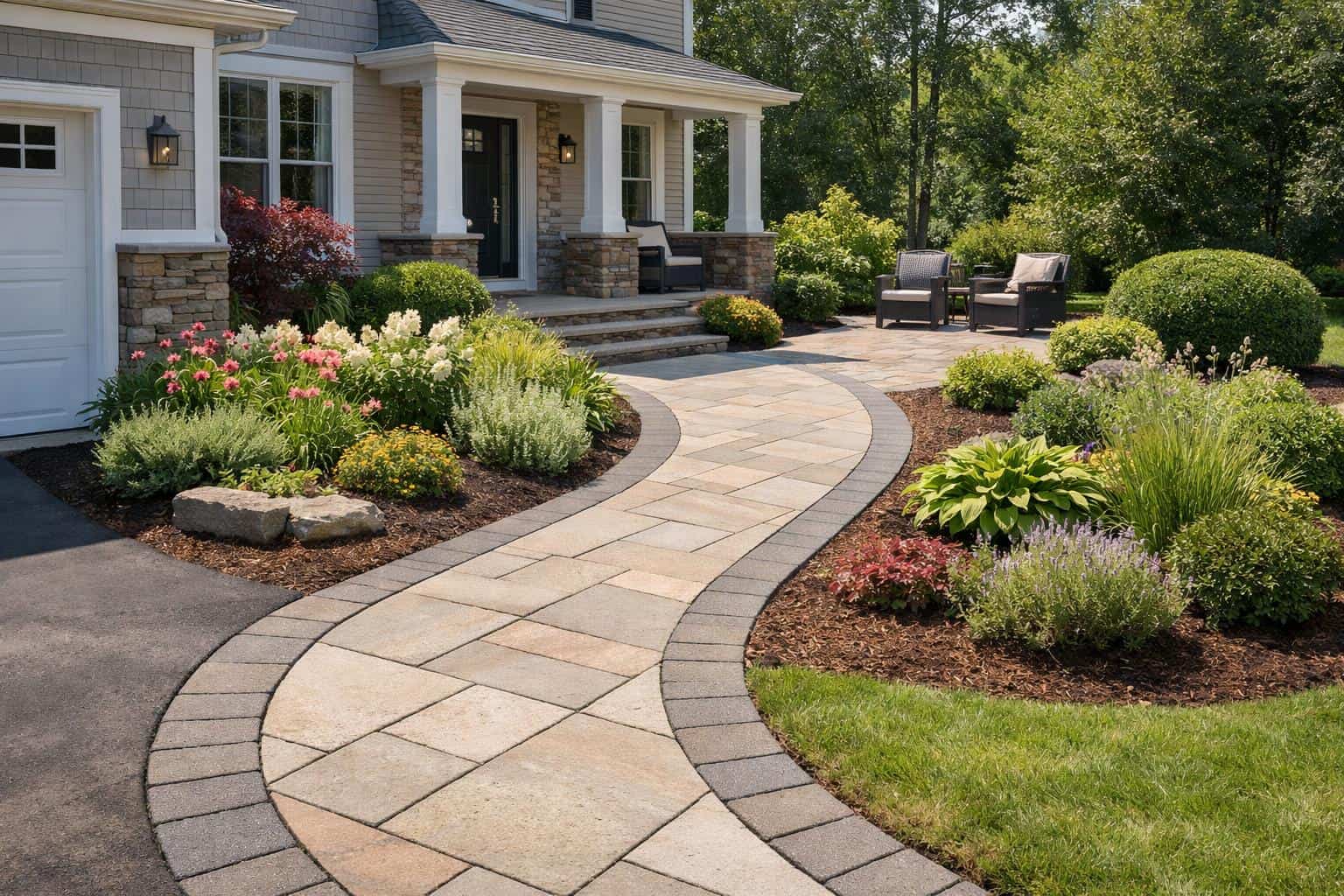
Walkway shape changes how the front or backyard feels before you ever choose the surface material. A straight path can feel direct and formal. A curved path can feel softer and more landscape-driven. The right choice depends on the house, the available space, and how people are meant to move.
Use straight paths for direct movement
Straight walkways often work well where the route is obvious and the architecture is clean or formal. They can also feel more efficient in tighter spaces where there is no room for a softer sweep.
Use curves when the landscape needs gentler movement
Curved walkways can help the yard feel less rigid and can create better relationships with planting beds or naturalized areas. That said, curves should still feel purposeful. They should not wander without a reason.

Let the house and site lead the decision
If you are still building the broader circulation plan, use this with our Walkway and Pathway Installation Guide for Homeowners before locking in the final route.

What homeowners should remember
The best walkway shape is usually the one that makes movement feel natural while matching the character of the house and yard.
Leave a Reply