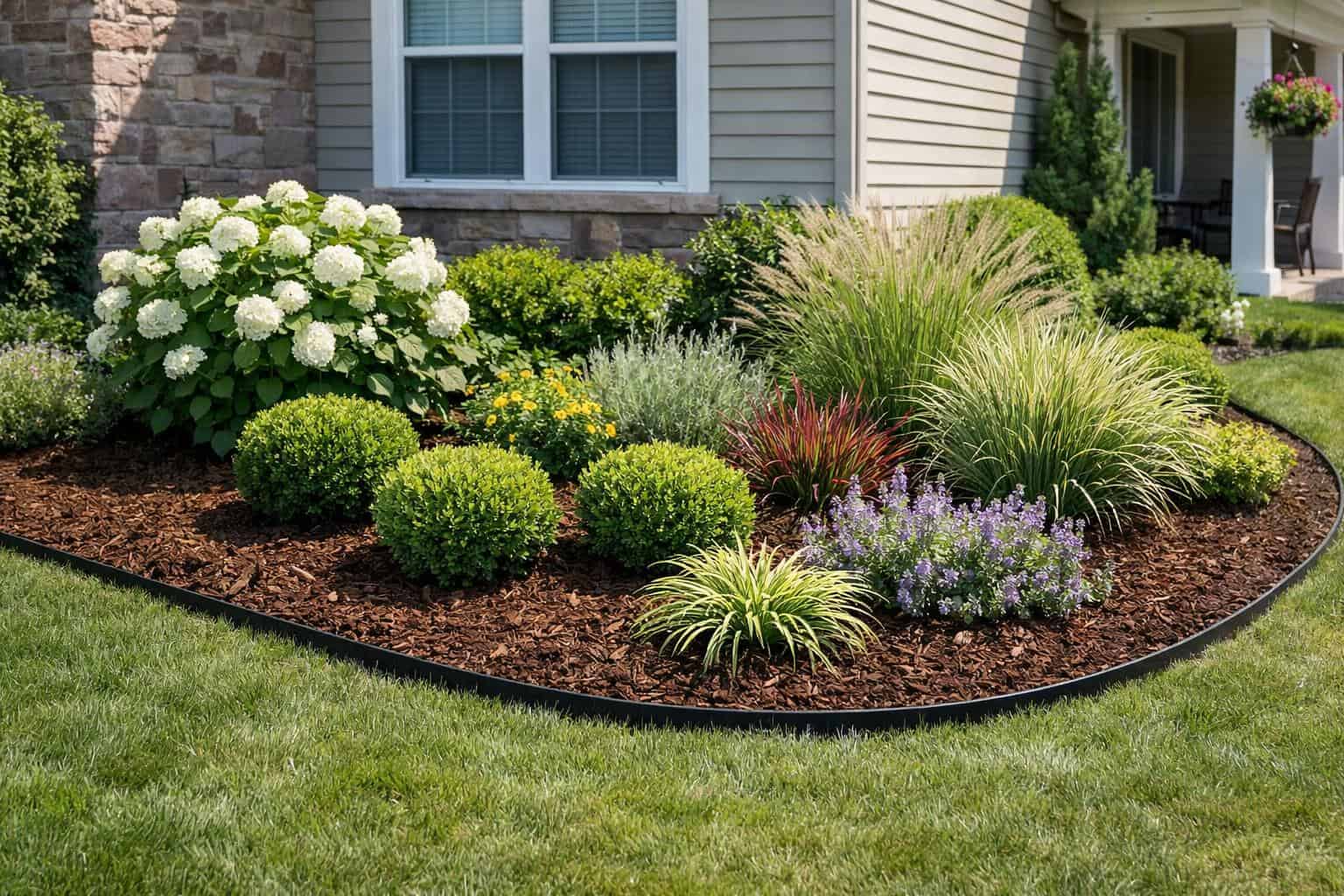
Plant spacing mistakes often do not show up right away. A bed can look great when everything is newly planted, then become crowded, awkward, or hard to maintain a few seasons later. The best front-yard layouts think about how plants will grow together over time, not just how full the bed looks on day one.
Do not plant for the nursery size
Many front-yard problems start when spacing decisions are based on how small the plants look at purchase time instead of how they will mature.
Give repeated plants room to read clearly
Repetition looks stronger when individual groupings still have room to form their intended shape. Pair this with our Front Yard Repetition in Planting Guide for Homeowners if rhythm and grouping are also part of the plan.
Leave maintenance access in the design
Proper spacing also helps with pruning, cleanup, and keeping edges readable over time.
What homeowners should remember
The best plant-spacing decisions make the front yard easier to live with because the bed can mature without constantly being corrected.
Leave a Reply