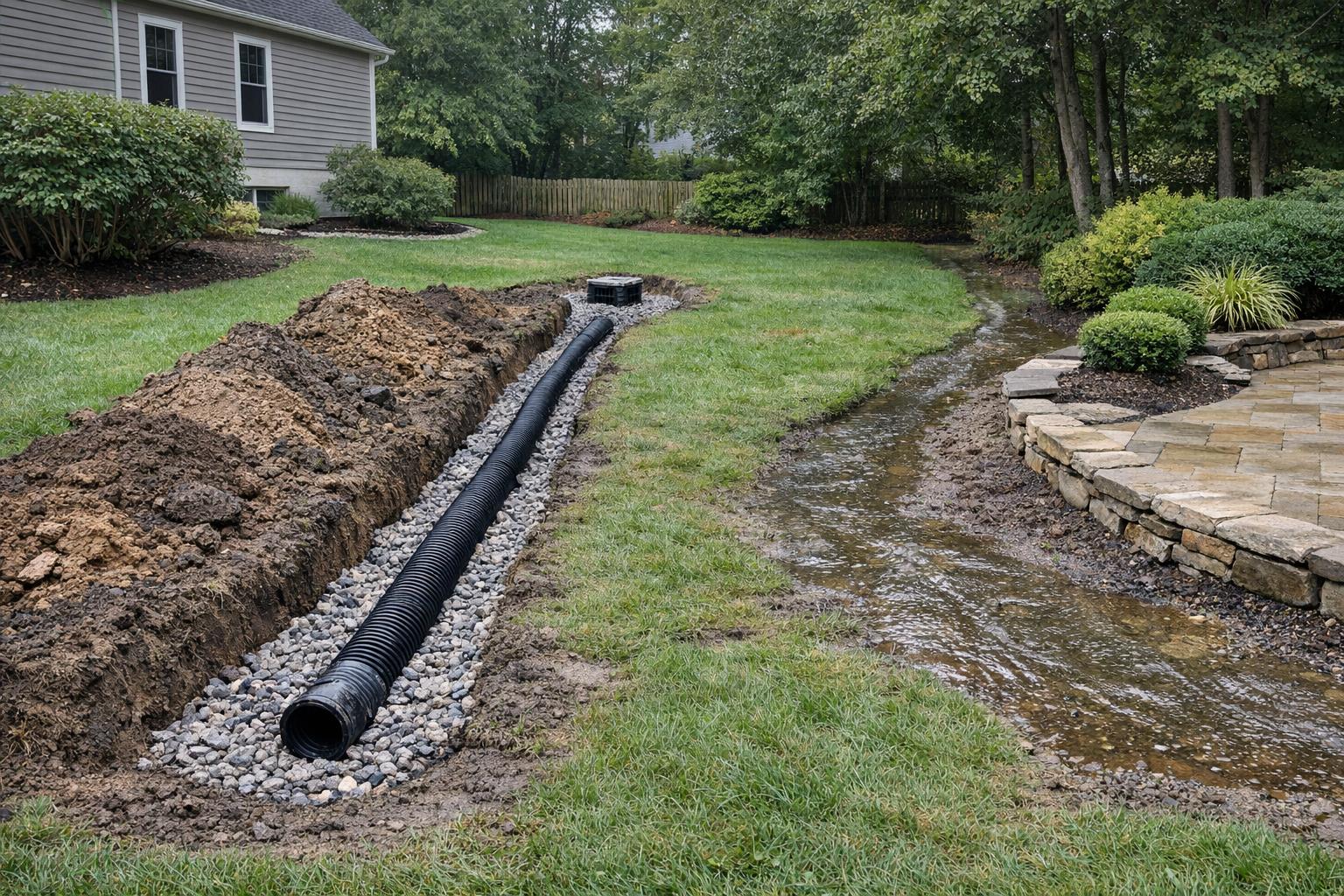
Drainage project costs vary because the water problem itself can vary so much. Some yards need localized corrections. Others require more extensive trenching, grading, runoff management, or integration with existing hardscape. Homeowners often expect a simple solution until the real drainage pattern is understood. That is why drainage pricing can feel inconsistent from one quote to another.
The most useful way to compare drainage costs is to think about how much water is moving, where it is moving from and to, and how much of the finished yard has to be worked around or rebuilt.
Water pattern and site slope drive the problem
The more complicated the runoff pattern, the more likely the project will involve multiple moving parts. Concentrated water from slope, patio runoff, downspouts, or low spots can make the correction more involved than homeowners first expect.
Trenching, grading, and access shape labor
Drainage corrections often become expensive because of the labor needed to open the yard, route water correctly, and restore affected areas. If access is tight or the yard is already heavily finished, the cost can rise because more care and restoration work are required.

Drainage often overlaps with bigger site work
Some drainage projects are really grading projects, patio projects, or erosion-control projects in disguise. That is why homeowners should compare this guide with the drainage solutions guide, drainage vs regrading guide, and drainage warning-sign guide.

Leave a Reply