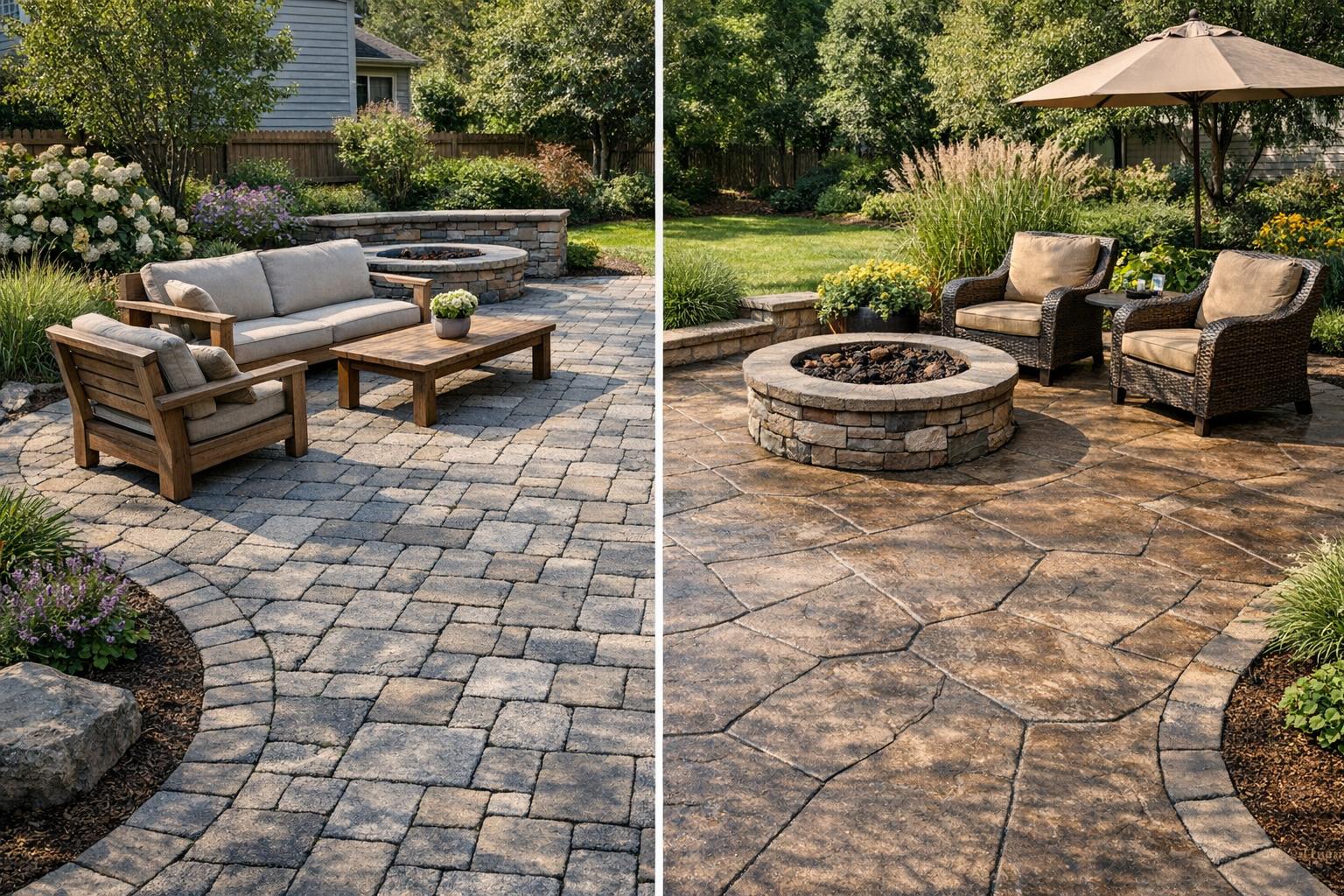
The best patio or walkway material depends on your budget, your climate, how the surface will be used, and how much upkeep you will accept. Poured concrete is usually the most affordable hard surface, pavers offer the most flexibility and easy repairs, natural stone looks the most premium, and gravel is the cheapest but needs the most attention. Here is how they compare side by side.
Part of our Complete Patio and Paver Guide: materials, costs, installation, repair and hiring in one place.
Materials compared at a glance
Cost ranges below are typical installed prices in the US and vary by region, site access and base requirements.
| Material | Typical installed cost per sq ft | Upkeep | Best for |
|---|---|---|---|
| Gravel / decomposed granite | $3 to $8 | Rake, top up, weed | Casual paths, budget patios, dry climates |
| Poured concrete | $8 to $15 | Low; seal optional | Simple, durable patios and main walks |
| Stamped concrete | $14 to $25 | Reseal every few years | Decorative look on a budget below stone |
| Concrete pavers | $15 to $30 | Joint sand top-up, occasional reset | Freeze-thaw areas, curves, future repairs |
| Brick | $18 to $35 | Moss and joint care in shade | Traditional homes, garden paths |
| Flagstone / natural stone | $20 to $45+ | Low on concrete base; joints on sand base | High-end patios, natural settings |
| Stepping stones in groundcover | $10 to $25 | Trim plants around stones | Low-traffic side paths |

Poured concrete
Concrete is a strong, practical choice for patios and main walkways. It goes in quickly and needs little routine maintenance.
Stamped and colored concrete add pattern and color at a lower price than stone, but they can be slippery when wet without a textured sealer and need resealing.
- Pros: low cost per square foot for a hard surface, smooth for furniture and wheelchairs, easy to sweep.
- Cons: it will crack at some point; control joints decide where. Repairs show, and a broken slab often has to be replaced in sections.
- Watch for: thickness (often 4 inches for patios and walks), reinforcement, slope for drainage, and joint spacing.

Concrete pavers
Pavers are individual units set on a compacted aggregate base with sand joints. They are popular because they flex with ground movement instead of cracking.
- Pros: wide range of colors, sizes and textures; individual pavers can be lifted and reset; good in freeze-thaw climates when the base is built right.
- Cons: higher cost than plain concrete; joints can grow weeds or wash out without polymeric sand and edge restraint.
- Watch for: base depth, compaction, edge restraint and joint sand type.
For help picking a look, see our guide to paver colors and finishes.
Natural stone
Flagstone, bluestone, travertine, limestone and slate give a patio a distinctive, natural look. Each stone behaves differently.
- Pros: premium appearance, long life, natural color variation.
- Cons: highest cost; irregular pieces take skilled labor; some stones get hot in full sun or slick when wet; softer stones can stain or flake.
- Watch for: whether stone is set dry on sand and gravel or mortared to a concrete slab. Mortared installations are firmer but cost more and can crack if the slab moves.
Brick as an alternative
Clay brick pavers suit traditional and historic homes. They hold their color for decades because the color runs through the brick rather than sitting on the surface, and they can be laid in basketweave, herringbone or running bond patterns. Use paving brick rated for ground contact, not wall brick, which can crumble in wet or freezing conditions. Brick in shade can grow moss and get slippery, so plan on occasional cleaning.

Gravel and decomposed granite
Gravel is the lowest-cost option and drains well, which suits dry climates and casual garden paths.
- Pros: inexpensive, permeable, easy to install, easy to change later.
- Cons: shifts underfoot, migrates into lawns and beds, hard for strollers and wheelchairs, needs weeding and topping up.
- Watch for: solid edging, a compacted base and the right depth. Our walkway gravel depth guide explains how deep each layer should be.
Climate and site considerations
The same material can perform very differently from one region to another.
- Cold winters: water that gets into cracks or porous stone freezes and expands. Choose dense materials, make sure surfaces slope to drain, and avoid de-icing salt on new concrete and soft stone.
- Hot, sunny climates: dark pavers and some stones get very hot underfoot. Lighter colors, shade and textured finishes help.
- Wet or shady yards: brick, smooth stone and sealed surfaces can grow algae and moss and become slippery. Plan for good drainage and occasional cleaning.
- Clay or expansive soils: flexible systems such as pavers on a deep compacted base tolerate movement better than rigid slabs.

Matching the material to the job
Patios and walkways do not have to use the same material, but they should look related.
- Main entry walk: choose a firm, even surface with good traction, such as concrete, pavers or stone set on a solid base.
- Dining patio: a flat surface keeps chairs and tables steady. Very irregular flagstone can make furniture wobble.
- Pool areas: look for slip resistance and surfaces that stay cooler in sun, such as lighter colors.
- Side yards and garden paths: gravel or stepping stones are often enough.
- Freeze-thaw climates: pavers and well-built concrete with proper joints hold up best; avoid soft stones that absorb water.
Questions to ask before you choose
- How deep is the base, and what is it made of?
- How will the surface drain, and which direction does it slope?
- Will it be slippery when wet or hot in afternoon sun?
- What maintenance will it need in the first five years?
- If a section is damaged, how is it repaired?
If you are weighing the two most common options, our paver patio vs concrete patio comparison goes deeper, and our patio cost guide breaks down what drives price.
Frequently asked questions
What is the most durable patio material?
Well-installed concrete pavers and dense natural stones such as granite and bluestone are among the most durable. Durability depends more on base preparation than on the surface material.
What is the lowest-maintenance walkway material?
Poured concrete needs the least routine care. Pavers and stone on a mortar bed are close behind. Gravel needs the most ongoing attention.
Can I mix materials on one project?
Yes. Many designs use a cost-effective field material with a border of brick or stone, or a concrete patio connected to gravel side paths. Keep colors and textures related so it looks planned.